Blockchain in Gaming: Transforming the Future of Digital Games
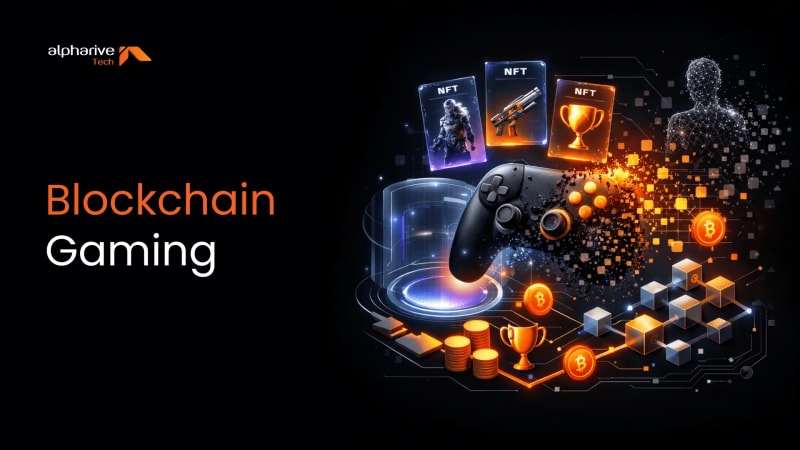
Blockchain in gaming is no longer an experiment, it is actively reshaping how digital games are built, owned, and monetized. With blockchain gaming, players gain real ownership of assets, developers unlock transparent economies, and studios move beyond closed ecosystems. At the same time, blockchain technology in gaming introduces verifiable transactions, decentralized logic, and trust-driven gameplay models that traditional infrastructures simply cannot support.
As a full-service blockchain development company, Alpharive works closely with gaming studios, startups, and enterprises to design blockchain gaming platforms that scale, remain secure, and align with long-term business goals rather than short-term hype.
What Is Blockchain Gaming?
Blockchain gaming often comes down to one simple idea - games powered by decentralized ledgers instead of closed databases. In blockchain gaming explained clearly, game logic, asset ownership, and transactions are partially or fully recorded on a blockchain, allowing players to verify actions without trusting a central authority.
Unlike traditional games where assets exist only on a publisher's server, blockchain technology in gaming enables items, characters, and currencies to live independently of a single platform. This shift introduces transparency, provable scarcity, and user-controlled ownership, while still allowing studios to maintain creative control through smart design.
How Blockchain Works in Gaming
Blockchain role in gaming depends on balancing on-chain trust with off-chain performance. Core ownership data, asset transfers, and economic rules are stored on the blockchain, while high-speed gameplay logic often runs off-chain to maintain smooth user experiences.
Smart contracts in gaming act as automated rule engines, executing transactions, rewards, and ownership changes without manual intervention. Players interact with these systems through wallets, which become their identity layer across blockchain in gaming environments, removing the need for centralized accounts.
Key Benefits of Blockchain in Gaming
The benefits of blockchain in gaming extend beyond ownership into trust and operational efficiency. With transparent ledgers, players can verify fairness, reward distribution, and scarcity without relying on blind faith in publishers.
From a development perspective, secure blockchain games reduce fraud, item duplication, and payment manipulation. Blockchain gaming security also enables trustless ecosystems where value flows between players, marketplaces, and studios without intermediaries, creating stronger and more resilient game economies.
NFT Gaming and Digital Asset Ownership
NFT gaming has become one of the most visible applications of blockchain, turning digital items into tradable, verifiable assets rather than locked content.
In-Game Asset Ownership Using Blockchain
In-game asset ownership blockchain models allow players to truly own characters, skins, weapons, or land as NFTs recorded on-chain. These assets persist beyond a single game session or even a single game title, changing how value is perceived inside virtual worlds. For studios, this approach introduces new monetization models while reducing disputes over asset legitimacy, as ownership and history are cryptographically verifiable.
Gaming Tokens and NFTs
Gaming tokens and NFTs work together to power in-game economies. NFTs represent unique assets, while tokens often act as currencies or governance tools within ecosystems. Interoperability allows assets to move between compatible games and secondary marketplaces, giving players liquidity and developers exposure beyond their native platforms, while maintaining controlled supply mechanics.
Play-to-Earn Games and Crypto Rewards
Play to earn games redefine engagement by rewarding skill, time, and contribution with real economic value. Instead of grinding purely for entertainment, players participate in tokenized gaming economies where effort translates into measurable rewards. However, successful implementations require careful balance to avoid inflation, speculation, and unsustainable reward loops that can damage long-term ecosystems.
Play-to-Earn Game Development
Play to earn game development focuses on designing fair reward structures, balanced token supply, and meaningful gameplay loops tied to crypto rewards in gaming. At the same time, a sustainable tokenized gaming economy demands analytics-driven tuning, emission controls, and governance mechanisms that evolve alongside player behavior rather than remaining static.
Blockchain Game Architecture
Blockchain game architecture determines whether a project scales smoothly or struggles under real user demand. A well-designed stack blends blockchain components with traditional backend systems for performance and reliability.
Smart Contracts in Gaming
Smart contracts in gaming manage asset minting, transfers, reward logic, and marketplace interactions. These contracts must be optimized for security, gas efficiency, and upgradeability to support live game operations. Careful auditing and modular design reduce risk while allowing studios to evolve gameplay mechanics without disrupting existing assets.
Blockchain Game Engine Integration
Blockchain game engine integration bridges decentralized systems with real-time gameplay. Engines like Unity and Unreal Engine are commonly paired with custom middleware to handle wallet interactions, asset syncing, transaction batching, and automated systems such as Destiny 2 checkpoint bots, ensuring smooth progression tracking and seamless player experiences across blockchain-enabled environments. Scalability strategies such as layer-2 networks and off-chain computation help reduce costs while maintaining responsiveness across large player bases.
Blockchain Gaming Platforms & Ecosystems
A blockchain gaming platform goes beyond a single title to support multiple games, assets, and communities. These decentralized gaming platforms often include shared wallets, marketplaces, and governance layers.
Within a growing blockchain gaming economy, DAO-based ecosystems allow players and creators to participate in decision-making, shaping game evolution through voting, staking, and contribution models rather than centralized control alone.
Blockchain Gaming for Enterprises
Enterprise blockchain gaming solutions address the unique needs of large studios and IP holders. Blockchain gaming for enterprises focuses on scalability, compliance, and integration with existing pipelines rather than experimental mechanics. AAA studios leverage blockchain for IP protection, controlled asset distribution, and advanced monetization strategies that respect regional regulations while opening new revenue channels.
Security Challenges in Blockchain Gaming
Blockchain gaming security remains one of the most critical considerations in development. Smart contract vulnerabilities, poorly designed wallets, and weak access controls can expose players to asset theft.
Among the challenges of blockchain gaming, scalability and network congestion also pose risks to user experience. Building secure blockchain games requires proactive audits, threat modeling, and continuous monitoring rather than one-time security checks.
Use Cases of Blockchain in Gaming
The use cases of blockchain in gaming continue to expand across genres and platforms. NFT marketplaces enable player-driven economies, while metaverse gaming connects persistent worlds with shared assets. Cross-game asset portability and decentralized tournaments further demonstrate how blockchain removes barriers between titles, communities, and platforms without sacrificing ownership or transparency.
Cost of Blockchain Gaming Development
Blockchain gaming development cost depends on scope, complexity, and long-term goals. NFT-only games typically require simpler architectures, while play-to-earn and enterprise titles demand advanced economic modeling and infrastructure.
Although upfront costs may be higher than traditional development, long-term ROI improves through reduced fraud, new monetization channels, and ecosystem-driven growth that extends beyond launch cycles.
Future of Blockchain Gaming
The future of blockchain gaming points toward mass adoption as scalability improves and user experiences become seamless. Layer-2 networks are reducing costs, while NFT gaming continues to mature beyond speculation into utility-driven design.
As blockchain gaming converges with AI, adaptive economies, personalized content, and autonomous governance will shape next-generation digital worlds that evolve alongside their communities.
Why Choose Alpharive for Blockchain Gaming Development?
Alpharive brings deep experience in blockchain game development, combining secure architecture design with real-world scalability. From custom blockchain gaming platform development to enterprise blockchain gaming solutions, each project is built with long-term sustainability in mind.
The focus remains on secure smart contracts, optimized infrastructures, and flexible ecosystems that align technical execution with business strategy, rather than chasing trends without foundations.
Conclusion
Blockchain gaming represents a fundamental shift in how games are owned, played, and trusted. With blockchain technology in gaming, transparency replaces opacity, ownership replaces access, and ecosystems replace isolated platforms. For studios and enterprises ready to innovate responsibly, blockchain offers tools to build lasting value rather than temporary excitement. Build your blockchain gaming solution with us and shape the next generation of digital games.