


Services
Cryptocurrency Wallet Development Company
Alpharive builds crypto wallets: multi-chain apps, non-custodial and custodial models, NFT support, swaps, fiat on-ramps and browser extensions, with the custody and security model agreed in writing.

Trusted by Global Brands


Our success stories
0+
Projects completed
0+
Awards Received
0+
Years of experience
0+
Team members
Cryptocurrency Wallet Development Company
The first question for any wallet is who controls the keys. Everything else, from security design to regulation, follows from that answer. Alpharive builds wallet apps, browser extensions and the services behind them: blockchain node or provider connections, price feeds, notifications and transaction signing.
We work across EVM and non-EVM chains, including Ethereum, BNB Chain, Solana and Polygon. The chains in your build, and how many tokens each supports, are fixed in the specification.

Crypto Wallet Development Services
Multi-Chain Wallet
One wallet app that holds assets on several blockchains, with a balance view, send and receive, and network switching.
Non-Custodial Wallet
Users hold their own keys. The app signs transactions on the device. This is the model behind most self-custody wallets.
NFT Wallet
Storage, display and transfer of NFTs, alongside token balances.
Browser extensions
A wallet extension that connects users to decentralized apps from the browser.


White Label Cryptocurrency Wallet
A white label wallet is a pre-built core that you brand and configure. It launches faster than a custom build, and the core architecture stays with the vendor. Before you choose one, ask which chains it supports, who controls the keys, who owns the source code, how updates ship, and whether it has been independently reviewed.
Custody Model: Who Holds the Keys?
| Model | Who holds the keys | Typical use | Regulatory weight |
|---|---|---|---|
| Non-custodial | The user | Self-custody apps and extensions | Lower. The operator never holds or moves user assets |
| Custodial | The operator | Exchange wallets, fintech apps | Higher. The operator safeguards assets and usually needs registration or licensing |
| Multi-signature or MPC | Shared between user and operator, or across parties | Shared control, recovery options | Depends on who can move funds alone |
Two reference points. FinCEN guidance FIN-2019-G001 treats hosted wallet providers as money transmitters in general, and unhosted wallets, where the user controls the value, as not requiring the provider to register on that basis. State licensing is separate. In India, safekeeping or administering virtual digital assets for others is a notified activity that requires FIU-IND registration. See the FIU registration guide and custodial vs non-custodial wallets.
We build the software. The operator carries the regulatory duties. Confirm your model with qualified counsel before launch.
Features of our Cryptocurrency Wallet Solution
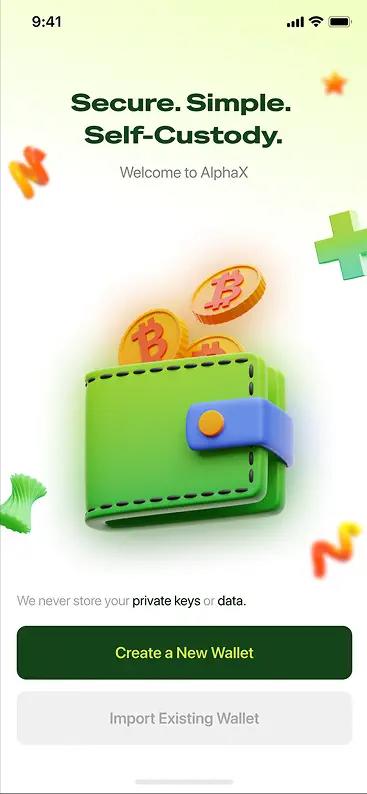
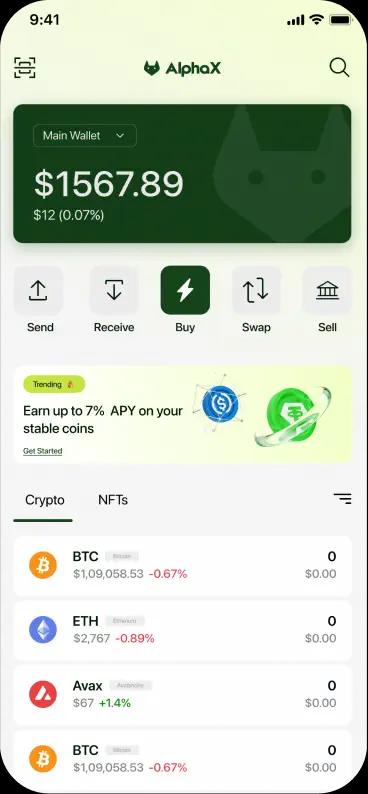
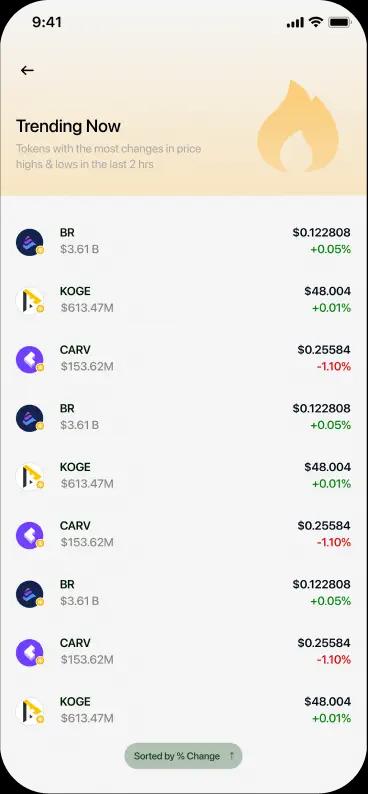
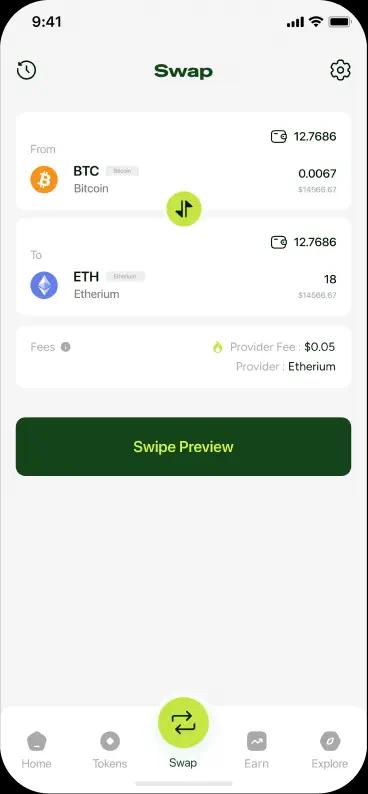
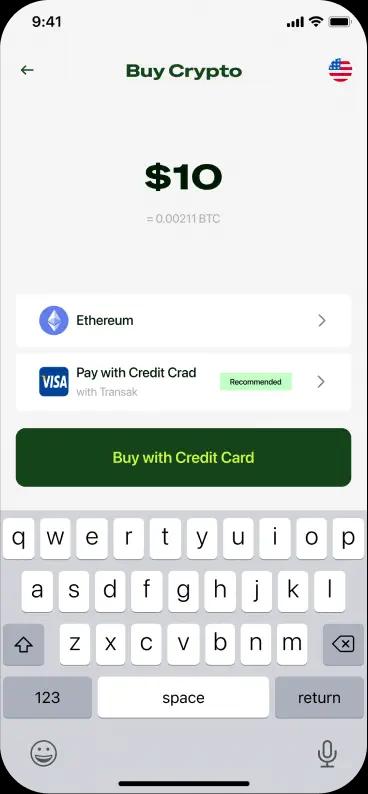
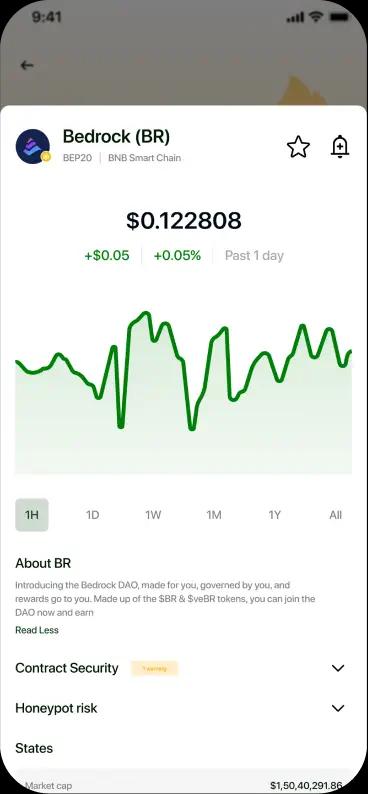
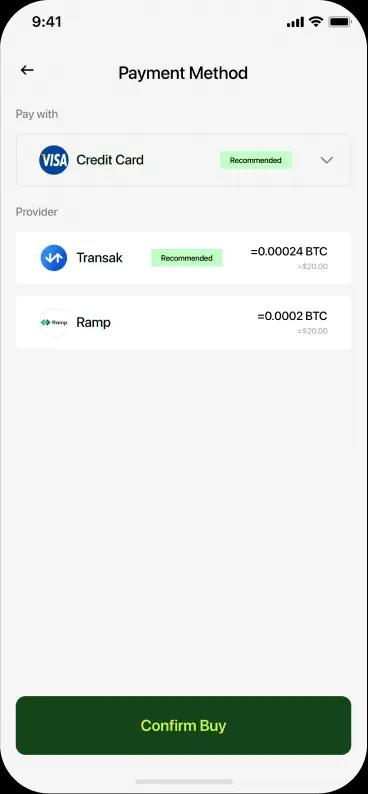
Dapp Integration
Connect to decentralized apps from the wallet or extension.
A Closer Look at Our Crypto Wallet App Solution
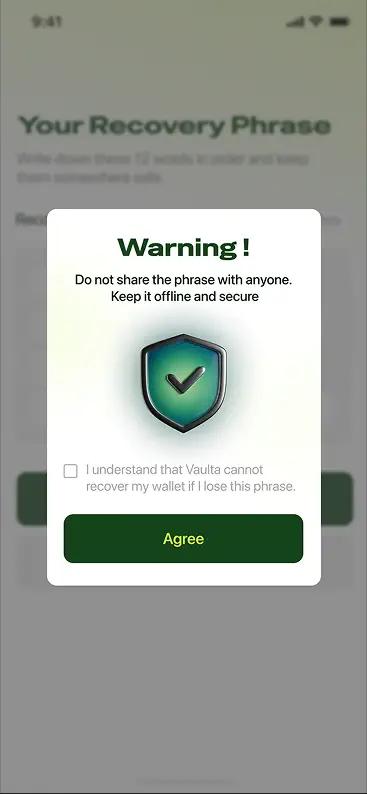
Walkthrough of the wallet app demo. The video shows Ethereum, BNB, Solana, Polygon, Tron and more. In the demo, the app warns users that the wallet cannot be recovered if the recovery phrase is lost.
What Is Built Into Every Wallet

Security Architecture
Key handling follows your custody model. For non-custodial wallets: on-device key generation, device-level secure storage where the platform offers it, biometric unlock and encrypted local data. For custodial wallets: hot and cold storage separation, withdrawal limits and approval rules. Multi-signature or MPC where the design calls for shared control.

Customizable Wallet
Branding, supported chains, features and screens are configured to your product.

Web3 Ready Architecture
Connections to dApps, staking and DeFi services through integrations. Each protocol carries its own risk, which the wallet surfaces to users where it can.

Cross-Platform Sync
iOS, Android, web and extension builds. How wallet state syncs across devices depends on the custody model.
Crypto Wallet App Development Process


Requirement Analysis
Vision, use cases, users and must-have features: token support, NFTs, staking, dApp access.

Blockchain & Token Selection
Networks and token standards your wallet needs to support.

UI/UX Wireframing
Flows for sending, receiving, tracking assets and using dApps safely.

Core Wallet Logic
Transaction signing, multi-asset handling and balance tracking.

Integration Layer
APIs, node providers, price feeds, push notifications, KYC and AML tools, swap and staking services.

Security Architecture Planning
Custody model, key handling, biometric authentication and data encryption.

QA & Penetration Testing
Functional, device and security tests, manual and automated. We share the findings.

Deployment & Maintenance Setup
Store and web release, CI/CD pipelines and an update plan with version control.
Benefits and Trade-offs of Building a Crypto Wallet App

Integration
A wallet can be the entry point to your own DeFi app, NFT marketplace or chain.

Scurity Responsibility
You own the user experience of security. Poor key handling or a weak recovery flow leads to user losses that you answer for.

Revenue Streams
Transaction fees, staking commissions, swap fees or premium features. Revenue depends on users and volume, and third-party providers set their own terms.

Growing Market
The crypto market is growing each day, and the future seems to be strong. It's time to scale up your business, focusing on the future market growth and demand.

Customization
Chains, features and branding can be extended as your product grows.

Token Listing
A dashboard to list tokens on the supported networks, within your listing policy.
Blockchain Networks We Support
 Polygon
 Ethereum
 BNB Chain
 Stellar
 Avalanche
 SUI
 Solana
 Polkadot
Tech Stack We Work


Why Choose Alpharive for Crypto Wallet App Development Company?
A wallet fails where key handling is weak. We settle the custody model first, write the security design before build, and test before launch.

Blockchain Expertise
Delivered wallet and blockchain projects, with references on request.

Tailored to Your Use Case
DeFi, NFT storage, Web3 login or enterprise wallets, designed for your ecosystem.

Design that build trust
Clear flows for sending, receiving and recovery.

Security-First
Custody model, key handling and recovery designed around threats such as phishing and device theft.

Fast & Transparent
A written plan with each phase, regular updates and agreed acceptance criteria.

Support
Updates and performance improvements after launch under your agreement.

FAQ
FAQs Related To Cryptocurrency Wallet Development
Cost follows features, platforms, custody model, security work and the number of blockchains. We quote after scoping.
Yes. Chains, custody model, features and branding are set to your product.
It depends on the same factors. The proposal gives a dated plan.
They depend on the custody model. Typical controls are on-device key generation, biometric unlock, encrypted storage, transaction confirmation screens and, for custodial builds, hot and cold storage and withdrawal rules. Penetration test findings are shared.
Yes. The chains are fixed in the specification, and each adds testing work.
A template is faster. A custom build gives control over keys, chains, security design and updates. The custody model is the main design choice. See custodial vs non-custodial wallets.
Awards & Recognition





Scope Your Wallet
Bring your target users, chains, custody preference, fiat and swap providers, and launch markets. You leave with a scoped plan, a custody recommendation and a list of regulatory questions for your counsel.