
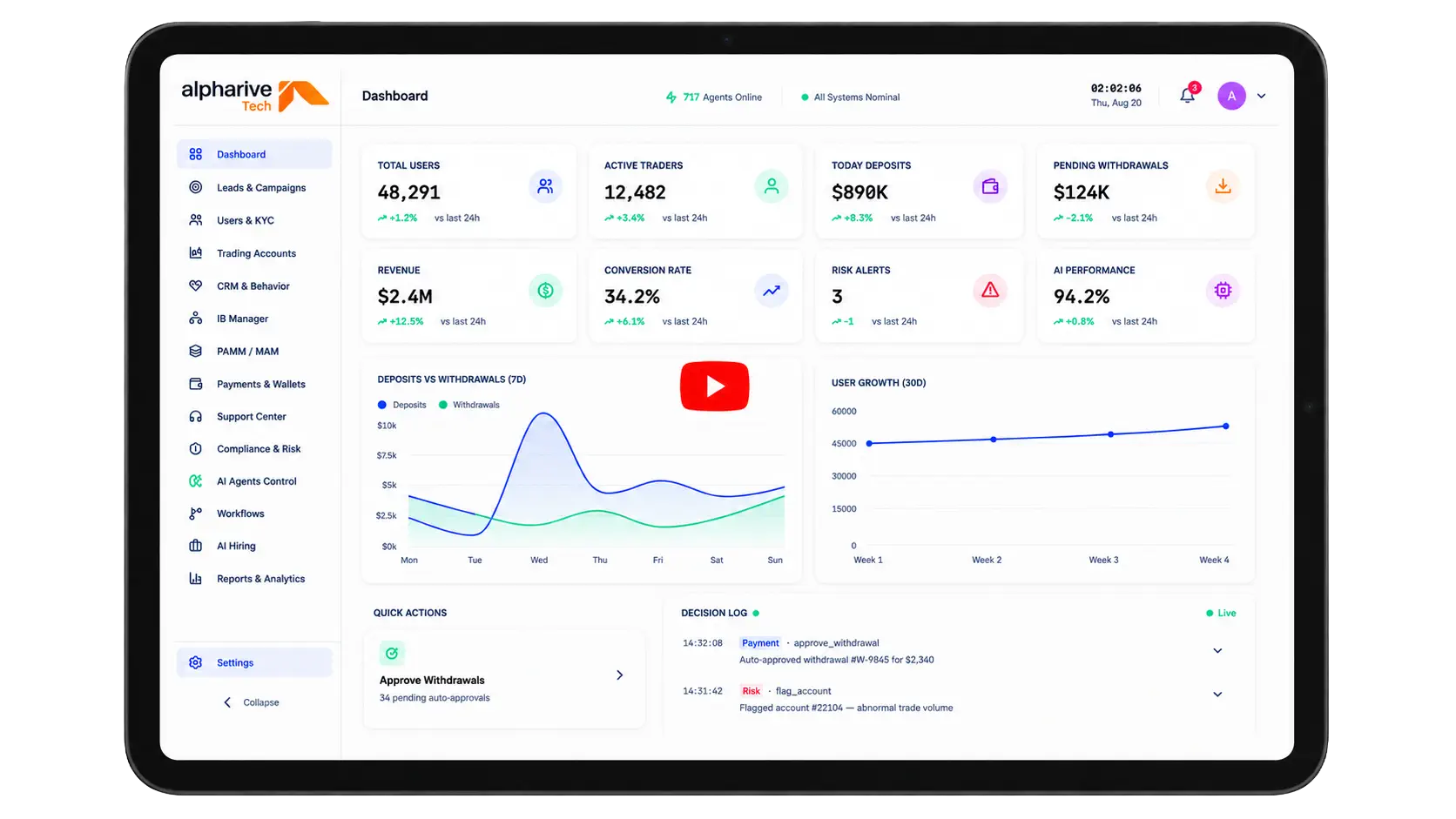
Alpharive provides AI-powered Forex CRM software for brokerage businesses, helping Forex, CFD, crypto, and multi-asset companies automate lead management, client onboarding, KYC & AML workflows, IB management, sales operations, and back-office processes. Built for startup and growing brokerages, our customizable CRM platform enables faster launches, smarter automation, and scalable brokerage growth.











Our success stories
0+
Projects completed
0+
Awards Received
0+
Years of experience
0+
Team members
Launching a brokerage is exciting. Scaling one is where operational complexity begins. As brokerages grow, managing leads, onboarding traders, maintaining compliance, supporting clients, and managing partner networks requires more than a traditional CRM.
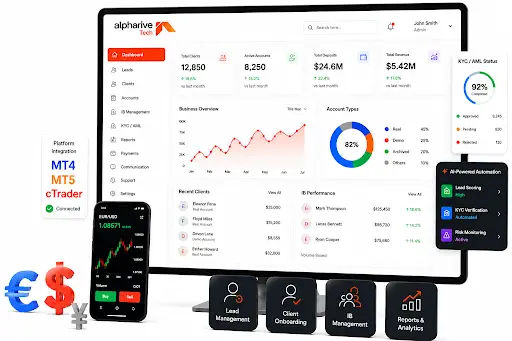
Alpharive is a Forex CRM software provider that develops custom and white-label CRM solutions for Forex, CFD, crypto, and multi-asset brokerages. Our unified & purpose-built CRM solution connects lead management, client onboarding, KYC and AML workflows, IB management, trader lifecycle management, reporting, and trading platform integrations into one unified brokerage ecosystem.
Built for brokerage founders, financial service providers, and growing enterprises, Alpharive helps businesses automate operations, improve efficiency, and scale their brokerage with flexible, future-ready technology.
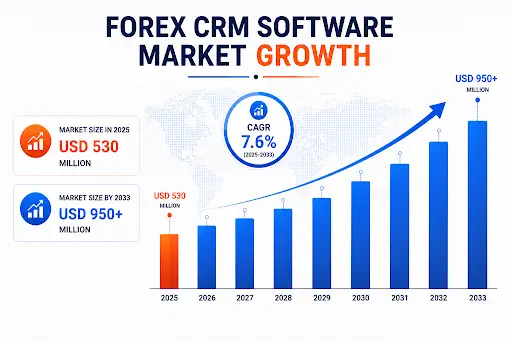
The global forex market continues to expand, with the Bank for International Settlements (BIS) reporting that average daily trading volume reached USD 9.51 trillion in April 2025, the highest level ever recorded. Alongside this growth, the Forex CRM software market is valued at approximately USD 530 million in 2025 and is projected to exceed USD 950 million by 2033, driven by rising demand for automation, regulatory compliance, AI-powered customer engagement, and intelligent brokerage management solutions.
As competition intensifies, brokers are investing in Forex CRM software to automate client onboarding, KYC and AML verification, IB and affiliate management, lead management, trader retention, and real-time reporting. Automated workflows reduce manual effort, accelerate account activation, and improve operational efficiency, while AI-powered analytics help brokers deliver personalized experiences and increase customer lifetime value. As a result, Forex CRM software has become a strategic technology investment for brokerages looking to scale faster, improve compliance, and gain a competitive advantage.
A brokerage can attract traders quickly. But when growth accelerates, operational gaps start creating problems.
These challenges don't just affect internal teams — they directly impact revenue, client experience, and long-term growth. A modern Forex CRM creates a connected Forex brokerage infrastructure where sales, onboarding, compliance, partners, and support teams work together seamlessly.
A brokerage journey does not begin when a trader opens an account. It starts from the first marketing interaction and continues through onboarding, trading, retention, and long-term relationship management.
Alpharive's Forex brokerage CRM software connects every stage of the brokerage lifecycle into one unified system. With this brokerage business ready solution, every stage of the brokerage journey works together — replacing disconnected tools with one scalable Forex CRM ecosystem built for growth.
Attract potential traders through multiple channels and bring every customer interaction into one centralized platform. Track campaigns, understand lead sources, and identify opportunities that generate real business growth.
Capture, organize, and prioritize every prospect with structured sales workflows. Help your team follow up faster, manage sales pipelines, and convert more leads into active clients.
Create a complete view of every client journey. Manage communication history, sales activities, customer data, and internal workflows from one intelligent brokerage CRM platform.
Simplify client verification with automated KYC and compliance workflows. Reduce onboarding delays while maintaining secure processes for customer identification and regulatory requirements.
Attract potential traders through multiple channels and bring every customer interaction into one centralized platform. Track campaigns, understand lead sources, and identify opportunities that generate real business growth.
Capture, organize, and prioritize every prospect with structured sales workflows. Help your team follow up faster, manage sales pipelines, and convert more leads into active clients.
Create a complete view of every client journey. Manage communication history, sales activities, customer data, and internal workflows from one intelligent brokerage CRM platform.
Simplify client verification with automated KYC and compliance workflows. Reduce onboarding delays while maintaining secure processes for customer identification and regulatory requirements.
Connect client profiles with trading accounts through seamless platform integrations. Enable faster account setup and provide teams with complete visibility into trader activity.
Manage deposits, withdrawals, payment activities, and transaction visibility through connected workflows that improve operational efficiency and customer experience.
Monitor trader engagement, account activity, and client behavior through centralized dashboards. Give brokerage teams the insights needed to support clients and improve retention.
Manage IBs, affiliates, and partner networks with structured commission tracking, performance monitoring, and automated partner workflows.
Build stronger customer relationships through personalized communication, automated follow-ups, and AI-powered engagement workflows designed to improve lifetime value.
Transform brokerage data into actionable insights with reporting dashboards that help teams monitor sales performance, client growth, revenue, and operational efficiency.
Every brokerage spends money and effort acquiring leads. Alpharive helps your team capture, organize, and manage those prospects with structured sales workflows. Follow-ups happen on time, conversions go up, and fewer opportunities slip through the cracks.
First impressions matter. A smooth onboarding process builds trust from the moment a trader signs up. Alpharive simplifies registration, verification, and account activation with automated workflows — so there are fewer delays and a better experience for the client.
Give your traders full control with a secure client portal built for account management, deposits, withdrawals, trading data, and profile updates. It puts more in the trader's hands and takes work off your team's plate.
Strong partnership networks fuel brokerage growth. Alpharive helps you manage IBs, affiliates, commissions, and partner performance with clear, transparent tracking and automated workflows that grow alongside your business.
Compliance shouldn't slow you down — it should support your growth. Automate KYC, AML checks, verification steps, and compliance recordkeeping, all while keeping your operations secure and efficient.
Every successful brokerage runs on a strong operations team behind the scenes. Alpharive centralizes client data, reporting, and operations with Forex Back Office Software built for growing brokerages.
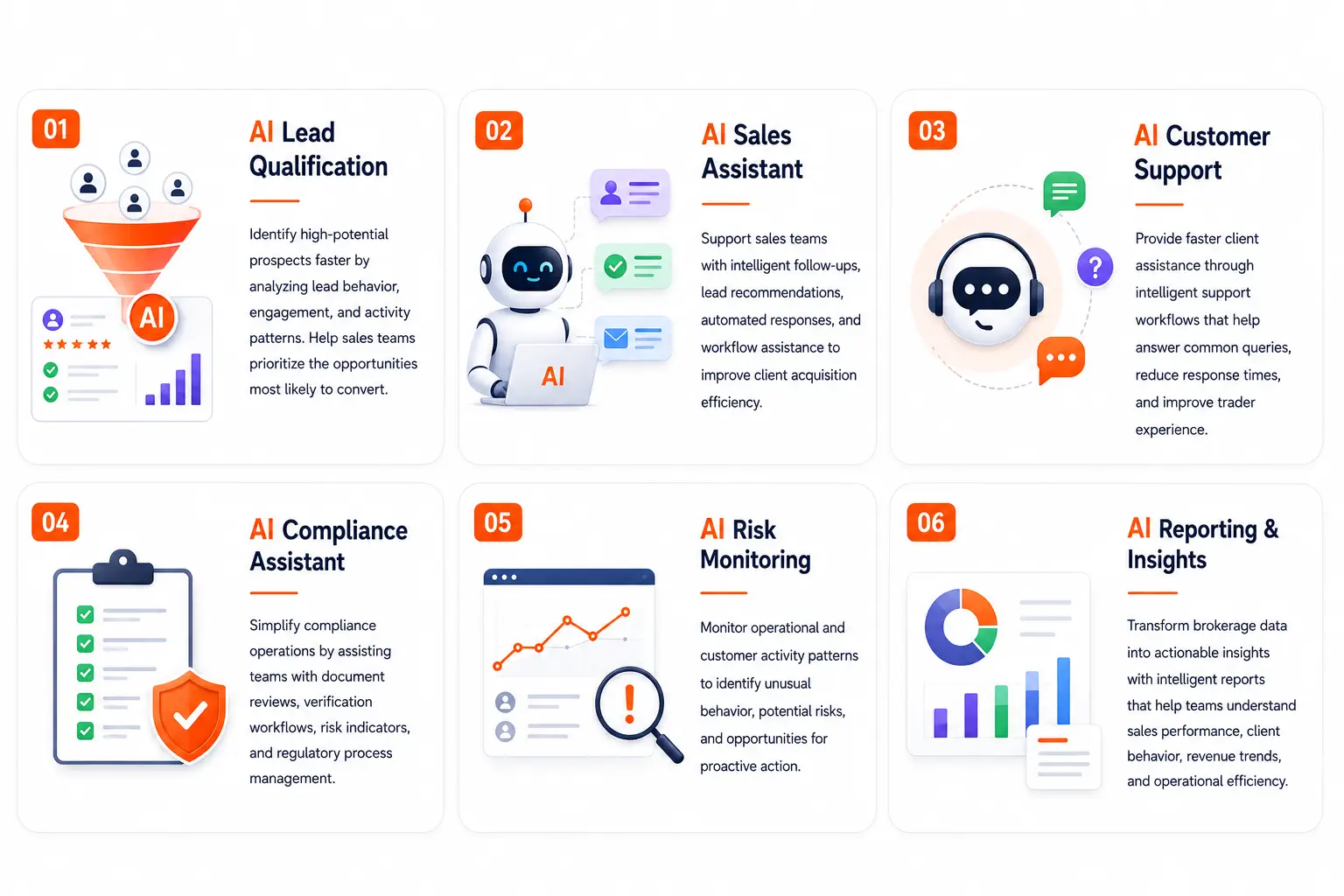
AI is not about replacing your brokerage team. It is about removing repetitive tasks, improving decision-making, and helping your people focus on conversations that create business value.
Alpharive’s AI-powered Forex CRM integrates intelligent automation into brokerage workflows to help improve lead conversion, customer support, compliance efficiency, and operational visibility.
Modern brokers operate across multiple systems, from trading platforms and payment providers to compliance tools and communication channels. Alpharive connects these essential technologies into one unified Forex CRM ecosystem.

Connect your CRM with leading trading platforms to synchronize client accounts, trading activity, and operational workflows. Extend your brokerage ecosystem with custom Forex development services that integrate trading platforms, client accounts, and operational workflows seamlessly with your CRM.

Simplify funding workflows by connecting payment solutions that support deposits, withdrawals, transaction tracking, and smoother client experiences.

Improve onboarding efficiency by connecting verification providers and compliance tools to automate identity checks and regulatory workflows.

Keep clients and teams connected through integrated communication channels that support notifications, follow-ups, and customer engagement.

Bring operational data together with analytics tools to understand client behavior, sales performance, and brokerage growth metrics.
Every brokerage operates differently. A startup needs speed, an enterprise needs scalability, and specialized brokers need workflows built around their business model.
Alpharive's Forex CRM software adapts to different brokerage structures with flexible workflows, automation, integrations, and scalable infrastructure.
Startup Brokers
Enterprise Brokers
Prop Firms
CFD Brokers
Crypto Brokers
Multi-Asset Brokers
Alpharive supports brokerage businesses operating across different regulatory and market environments with flexible technology solutions.

Building a brokerage platform from scratch takes time, resources, and ongoing maintenance. Alpharive's White Label Forex CRM gives you a ready-to-customize solution that helps you launch your brokerage in just 15–20 days while maintaining full control over your brand.
Designed for Forex, CFD, crypto, and multi-asset brokers looking for faster deployment without sacrificing flexibility or scalability.
A white label solution should not limit your vision. Alpharive helps you launch with speed while keeping the flexibility to build a brokerage experience that belongs to your brand.
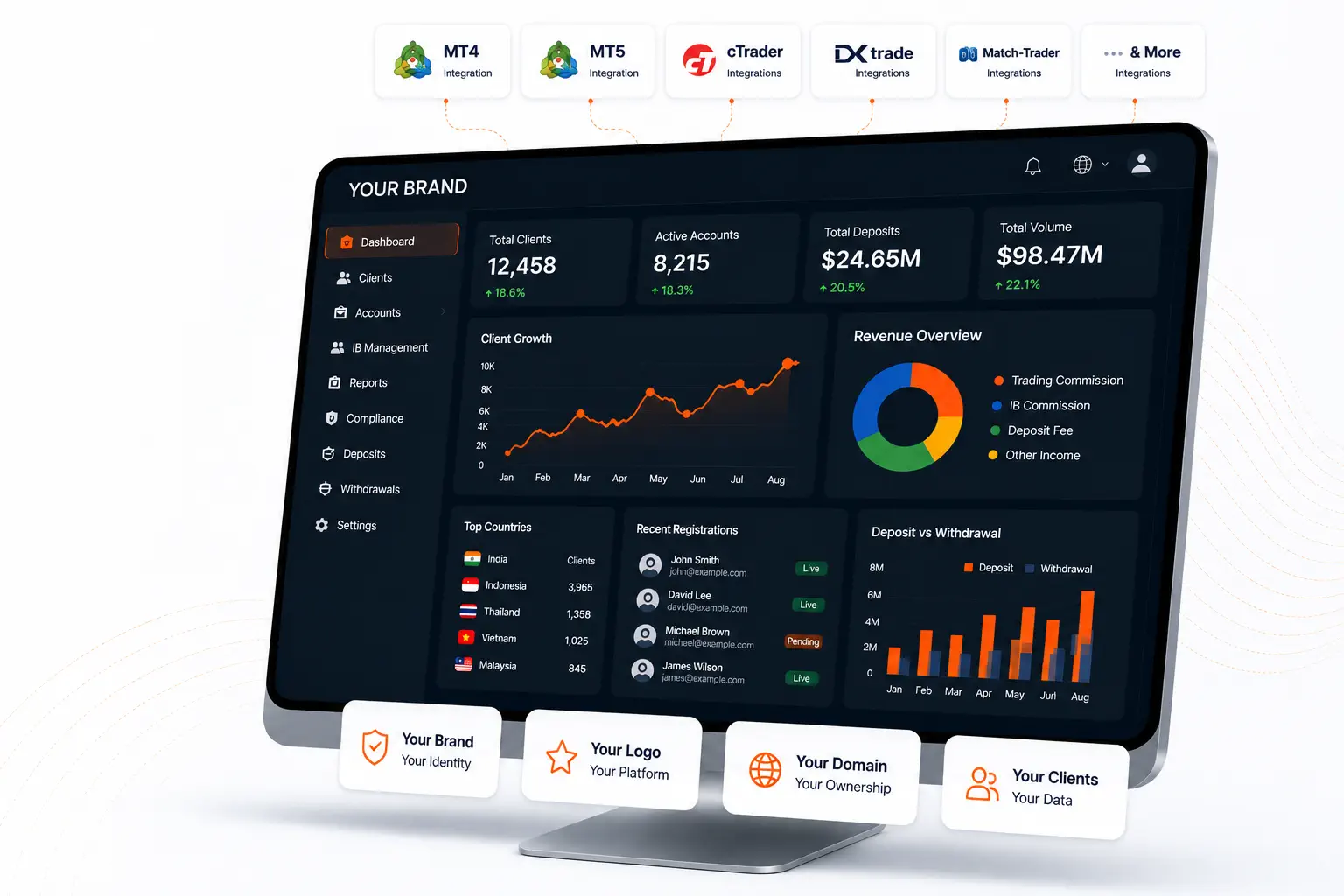
Launching brokerage software should not become a long development journey. Alpharive helps brokerage teams become operational faster with a structured implementation process — from planning and configuration to integrations, testing, and launch — while preparing the platform for long-term growth.
Understand your brokerage model, operational requirements, user roles, workflows, branding needs, and integration requirements to create the right implementation roadmap.
Understand your brokerage model, operational requirements, user roles, workflows, branding needs, and integration requirements to create the right implementation roadmap.
Configure CRM modules, user permissions, workflows, branding elements, and business processes based on your brokerage operations.
Connect essential systems including trading platforms, payment gateways, KYC providers, communication tools, and other required third-party services.
Validate workflows, test integrations, prepare your team, and ensure the platform is ready for operational use.
Go live with a scalable Forex CRM foundation designed to support client management, automation, and future business growth.
Your CRM is not just a tool — it becomes part of your brokerage infrastructure.
While subscription-based platforms provide access to software, owning a Forex CRM solution gives brokerages greater control, flexibility, and long-term technology ownership.
Alpharive helps businesses explore ownership-based CRM solutions designed around their operational requirements, growth plans, and business model.
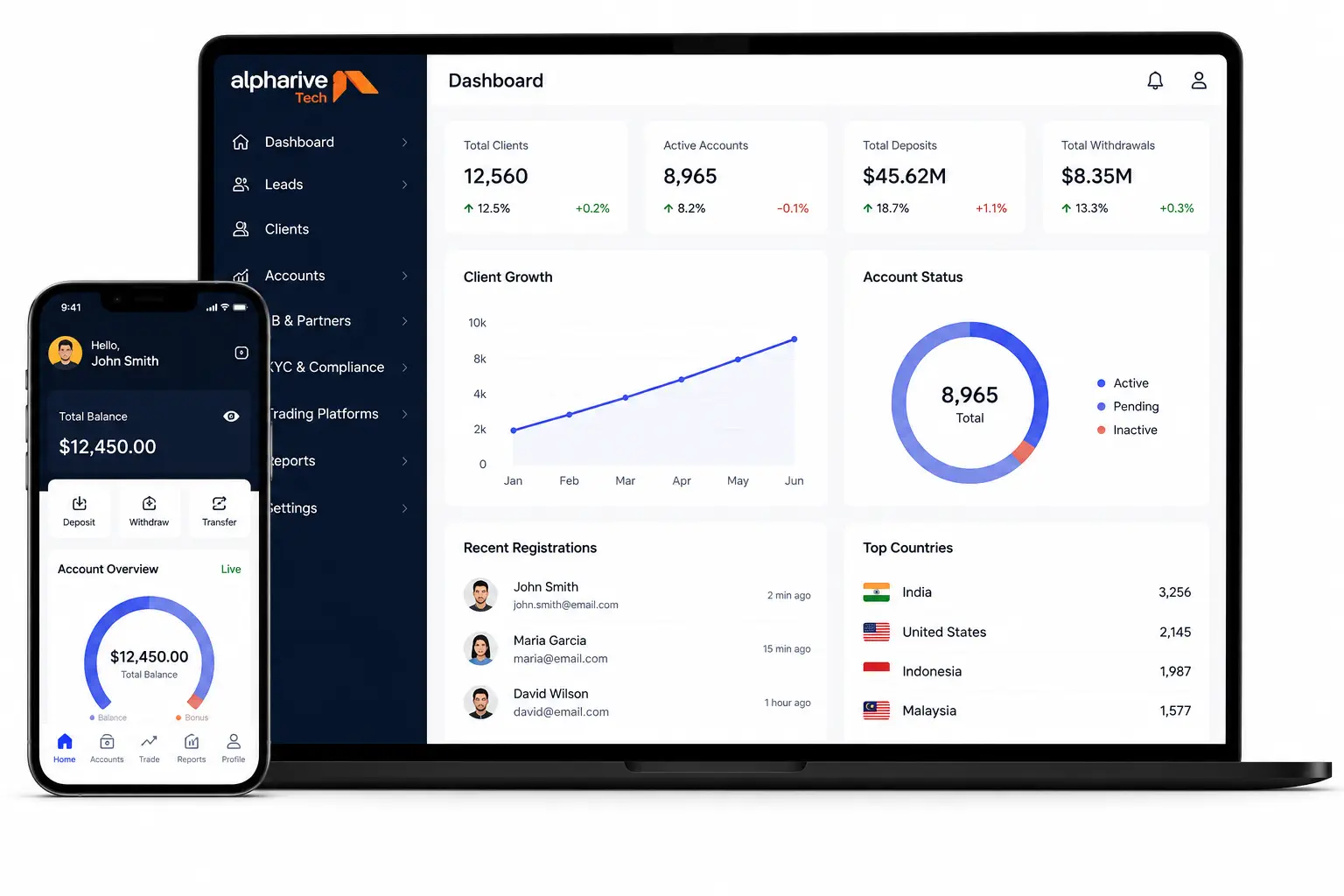
Reduce dependency on recurring software fees and create a technology investment that supports your brokerage operations over time.
Customize workflows, modules, integrations, user roles, and features based on your brokerage requirements without being restricted by generic software limitations.
Maintain stronger control over your customer data, workflows, reports, and business processes through an infrastructure designed around your organization.
Expand your CRM capabilities as your brokerage grows — adding new modules, integrations, automation, and operational improvements when needed.
Instead of only renting access to software, create a long-term technology foundation that becomes part of your brokerage ecosystem.
Deliver a seamless mobile experience while protecting every client interaction. Alpharive's Forex Mobile App combines powerful trader features with enterprise level security, giving brokerages everything they need to manage clients confidently from a single mobile platform.
Provide traders with a dedicated mobile platform to access their accounts, profile information, and trading-related activities securely.
Allow clients to view account details, manage preferences, and access important brokerage services from one convenient mobile application..
Enable smoother funding experiences with integrated payment workflows for deposits, withdrawals, and transaction tracking.
Connect mobile experiences with trading environments through integrations with platforms such as MT4, MT5, cTrader, and other brokerage systems.
Keep traders informed with real-time notifications for account updates, transactions, market activities, and important communications.
Launch a customized mobile application aligned with your brokerage identity, user experience, and business requirements.
Protect sensitive client information with secure data handling practices designed to keep customer and business data protected across the platform.
Maintain complete visibility into important actions, user activities, and operational changes with detailed audit trails for better accountability.
Control access across teams by assigning permissions based on roles, responsibilities, and operational requirements.
Protect critical brokerage information with reliable backup processes designed to support business continuity and data recovery.
Identify unusual activities, monitor system performance, and maintain operational visibility through proactive monitoring capabilities.
Support regulatory requirements with structured processes for KYC, AML, reporting, and secure client management.
A generic CRM is built to manage customer relationships. A modern brokerage needs much more — it needs a system that understands trading workflows, compliance requirements, and operational complexity.
Alpharive is a Forex CRM provider built specifically for brokerage businesses, bringing sales, client management, compliance, operations, and automation into one connected ecosystem. Our Alpharive software solutions are designed to support evolving brokerage needs with flexible and scalable technology.






Whether you're launching a new brokerage, migrating from another CRM, or expanding into new markets, we'll help you build an operational foundation that supports long-term growth.