

AI and ML Supply ChainSoftware Development
/ TRUSTED BY GLOBAL BRANDS


Custom AI and ML software for demand forecasting, inventory, logistics and supplier risk, built on your ERP, warehouse and transport data.
Get a Scoped Quote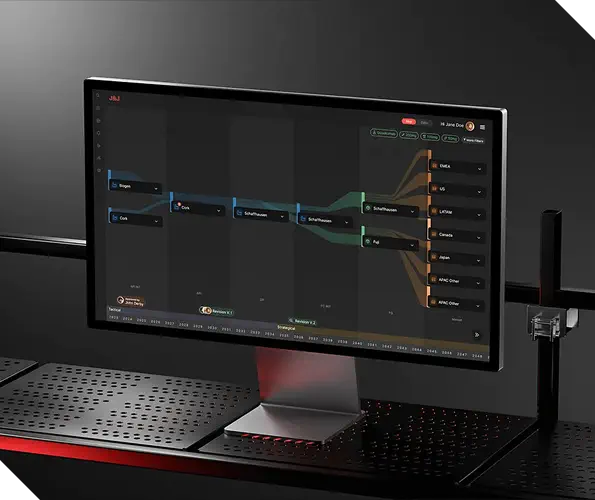
AI Supply Chain Software
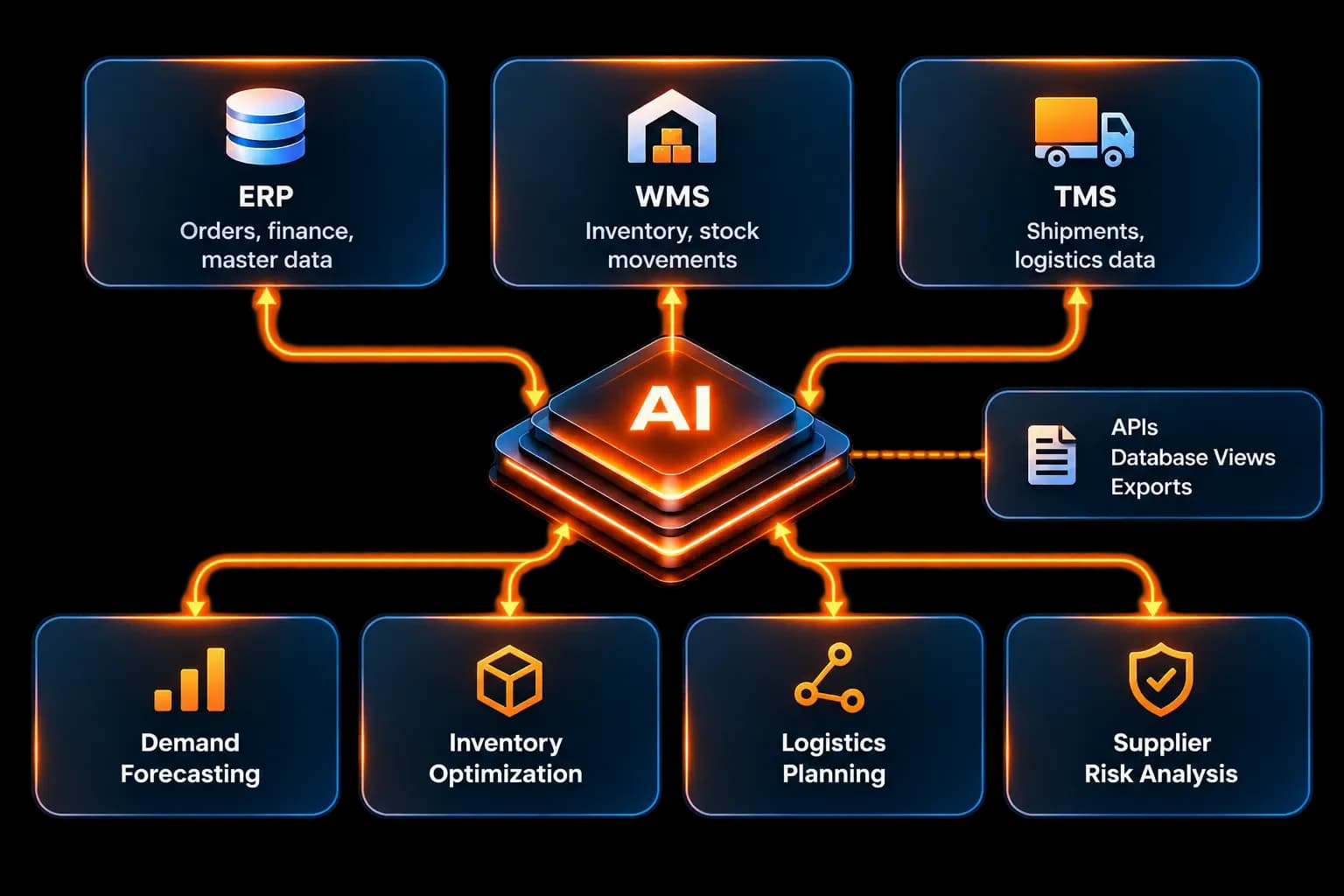
AI supply chain software applies machine learning to your operational data to forecast demand, set inventory levels, plan logistics and flag supplier and delivery risk. Rule-based planning relies on fixed thresholds and past averages. Machine learning models learn patterns from sales, orders, lead times and external signals, and recalculate as new data arrives.
Alpharive builds this software to order. It is custom development on top of your ERP, warehouse and transport systems, not an off-the-shelf product. Planners keep approval and override rights over every recommendation.
Why Invest in AI/ML Supply Chain Software
It pays off when decisions are frequent, data is available, and current methods leave a measurable gap: forecast error that causes stockouts or excess stock, manual replenishment across many items and locations, or supplier delays found too late.
It pays off less when volumes are small, history is short, or processes change faster than data builds up. Before any build, we measure the gap: your current method against a model, on the same held-out period.

Core Capabilities of Alpharive's AI Supply Chain Software

AI-Powered Demand Forecasting
Forecasts by item and location from sales history, seasonality, promotions and calendar events. Output: a forecast with a confidence range. Measured by weighted error and bias against your current method.

Intelligent Inventory Optimization
Safety stock and reorder points from the forecast, supplier lead times and your service targets. Measured by stockouts, service level and inventory days.

Route and Logistics Optimization
Route and load plans within your constraints: delivery windows, vehicle capacity, driver hours. Traffic or fuel data is used only where a provider is connected. Output: proposed plans for dispatcher approval. Measured by distance, cost per delivery and on-time rate against current plans.

Predictive Maintenance for Assets
Failure-risk scores for equipment such as conveyors, forklifts and refrigeration units. Needs sensor data and maintenance or failure records. Output: ranked maintenance alerts. Measured by detection rate and false-alarm rate.

Supplier Risk Intelligence
Lead-time prediction and late-delivery risk scores from purchase order history. External risk signals are added only from public or licensed data sources you approve. Measured by prediction error on held-out orders.

Supply Chain Control Tower
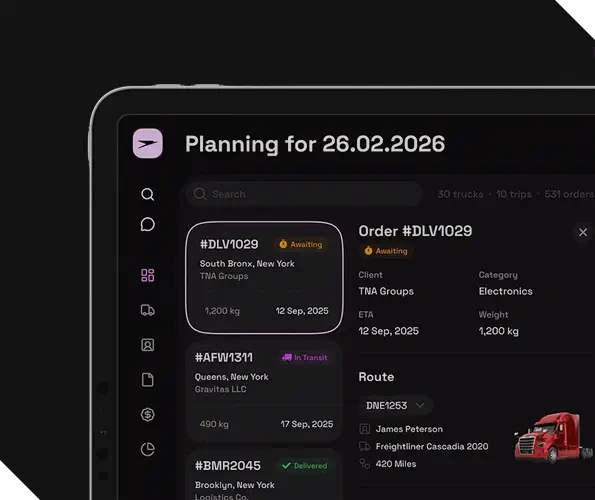
One view of orders, stock, shipments and alerts across procurement, inventory and logistics, with ranked exceptions and suggested actions. Planners approve each action.
AI/ML Technologies in Supply Chain Software
Typical techniques: time-series and gradient-boosted models for forecasting, optimization solvers for routing and replenishment, anomaly detection for exceptions, and document extraction or language models for supplier emails, invoices and shipping documents where scoped. We choose the simplest method that beats your baseline.
The software runs on cloud data pipelines and connects to ERP, WMS and TMS systems through APIs, database views or scheduled exports. It works inside your current workflows and does not replace those systems. Each model version is logged, and accuracy and data quality are monitored after launch.
Supply Chain AI Software Use Cases by Industry
These are typical applications. We confirm which fit your data during scoping.
Retail and E-Commerce
Forecasts across online and store channels, promotion uplift, replenishment, delivery time estimates.
Manufacturing
Material and spare-part forecasting, supplier lead-time risk, equipment failure alerts where sensor data exists.
Manufacturing
Pharmaceuticals & Healthcare
Stock and expiry-aware replenishment, shipment monitoring for temperature-sensitive goods where sensor data exists. We build the software. Your quality team owns regulatory validation.
Pharmaceuticals & Healthcare
FMCG
Demand forecasts around promotions and seasonality, shelf-life aware replenishment, distributor stock visibility.
FMCG
Logistics and 3PL
Route planning, capacity forecasts, arrival time estimates, exception alerts across client accounts.
Logistics and 3PL
Automotive
Parts demand forecasting, supplier lead-time risk, inbound logistics visibility.
Automotive
What Enterprises Can Gain from AI Supply Chain Software
Outcomes to test: lower forecast error, fewer stockouts and less excess stock, less working capital tied up in inventory, faster handling of exceptions, and planner time moved from spreadsheets to decisions.
These are outcomes to test, not promises. We measure each against your baseline in a pilot, and we say so if the data does not support a gain.
How Alpharive Builds AI Supply Chain Software
Our custom AI development services combine data engineering, machine learning and system integration.
Analyzing Requirements
Decisions to improve, systems, owners, success metric.
Designing Architecture
Data flow, integration with ERP, WMS and TMS, hosting.
Preparing Data
Audit, cleaning, history checks, and a data quality report.
Developing Models
A baseline first, then models, validated on a held-out period.
Integrating Systems
Read and write through APIs, a planner application or API, access controls.
Testing Performance
Accuracy against the baseline, load tests, user acceptance with planners.
Deploying Solutions
A pilot scope first, then staged rollout.
Optimizing Continuously
Monitoring, drift checks and retraining on an agreed schedule.
Data and Systems We Need
Sales or order history by item, location and date, usually at least two years so seasonality shows.
Inventory snapshots at this same grain.
Purchase orders with order, promised and received dates.
Item, location and supplier master data.
Read access to ERP, WMS or TMS through an API, database view or export.
What AI Can and Cannot Do
We set clear expectations from the start. AI and ML can create real value in supply chain planning, but they also have limits. Here is what you should know.
Models cannot fix poor data
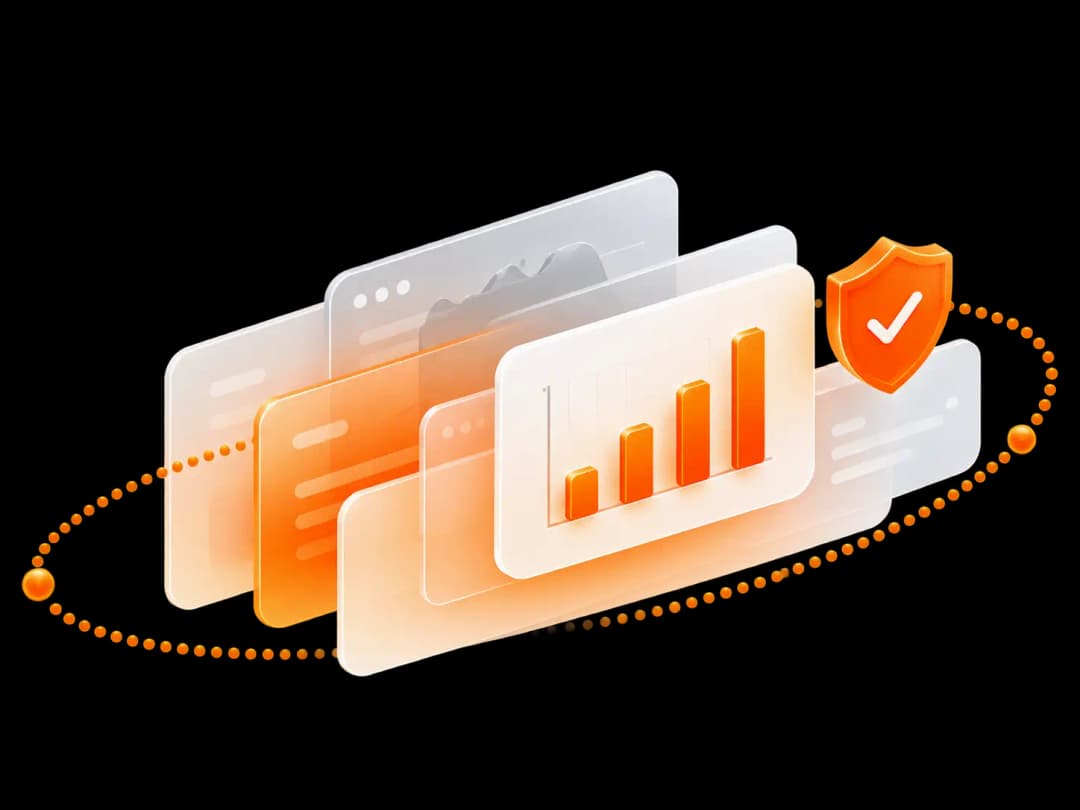
A data audit comes first. Reliable and consistent data is essential for accurate forecasts and recommendations.
Forecasts can degrade during shocks
Sudden supply disruptions, market changes or other unforeseen events can reduce forecast accuracy. Planners keep override rights over every recommendation.
We do not promise savings in advance
Results are measured against your existing baseline. We set realistic expectations and validate outcomes through a pilot.
Your data stays in your control
Your data remains in your environment or a hosting setup agreed in writing. We follow your security and compliance requirements.
Why Choose Alpharive for AI Supply Chain Software Development?
A good partner shows its method before it shows a demo. We start with a data audit, compare every model with your current approach, write acceptance criteria before the pilot, and tell you if packaged planning software fits you better. Buy packaged software if your processes are standard and the vendor already connects to your ERP. Build custom if your data, constraints or workflows do not fit a packaged tool, or if you want to own the models and pipeline. As a software development company, we hand over the code, documentation and monitoring setup.
We share a reference project or a walkthrough of a working demo on request. Demos are labeled as demos.

FAQ
FAQs Related To Supply Chain Development
Software that applies machine learning to supply chain data to forecast demand, set inventory levels, plan logistics, and flag supplier and delivery risk for planners.
Custom development on your data and systems.
Order or sales history by item, location and date, inventory snapshots and purchase order dates.
Against a baseline on a held-out period, using metrics agreed in writing before the pilot.
Usually, if we can read the data through an API, database view or export. We confirm against your system and version.
No. Planners approve, override and own the decision.
It depends on data readiness and scope. The proposal gives a dated plan.
Scope Your AI Supply Chain Project
Bring a sample of your order history, your ERP and warehouse systems, and the one decision you most want to improve. You leave with a scoped approach, the data you would provide and the metric we would test against.