Supply chains have become faster, but not smarter. As businesses scale, complexity increases across suppliers, inventory, and logistics, yet most operations still rely on processes that can’t adapt in real time. The result is a system that moves quickly but struggles to respond when conditions change.
This growing complexity exposes a deeper issue. Planning, procurement, and fulfillment may function individually, but they rarely operate as a coordinated system. Teams are forced to bridge gaps manually, decisions are delayed across functions, and small disruptions often escalate into larger operational challenges.
This is a crucial turning point for startups and growing businesses. Implementing intelligent, execution-driven systems early can prevent operational bottlenecks before they scale. Instead of rebuilding processes later, they can establish a foundation that supports speed, coordination, and long-term growth from the start.
Why Supply Chains Break at Scale
As supply chains grow, complexity increases faster than control. What works at a smaller scale, manual coordination, disconnected tools, and reactive planning, begins to fail as operations expand across suppliers, regions, and channels.
1. Lack of Real-Time Visibility
- Up to 60–80% of supply chain data remains unstructured
- Data is spread across systems, limiting real-time insights
- Decision-making is delayed due to incomplete information
2. Inefficiencies Impact Revenue
- Businesses lose 20–30% of potential revenue due to:
Stockouts
Overstocking
Poor coordination across functions
- Execution still relies heavily on manual intervention
3. Disconnected Systems Slow Execution
- Planning, procurement, and logistics operate in silos
- Teams manually coordinate between systems
- Delays increase as workflows move step-by-step.
4. Reactive Operations Under Pressure
- Supply chains react to:
Demand fluctuations
Supplier delays
Logistics disruptions
- Small issues escalate into:
Missed delivery timelines
Increased costs
Poor customer experience
What Agentic AI Changes in Supply Chain Execution?
Traditional approaches to AI in supply chain have focused on improving visibility and forecasting, helping organizations understand what is happening across operations. However, these systems often stop at insights, leaving execution dependent on manual coordination and delayed decision-making.
Agentic AI changes this by shifting from analysis to action. Instead of generating isolated recommendations, it enables systems that can interpret insights, coordinate workflows, and execute decisions across planning, inventory, and logistics in real time. This creates a more connected and responsive supply chain where actions are aligned across functions without constant human intervention.
The result is a move from reactive operations to continuous execution. Supply chains can adapt dynamically to disruptions, reduce delays caused by fragmented processes, and operate with greater speed and consistency. For startups and enterprises alike, this means building systems that don’t just inform decisions but actively drive outcomes at scale.
Where AI Agents Create Immediate Impact
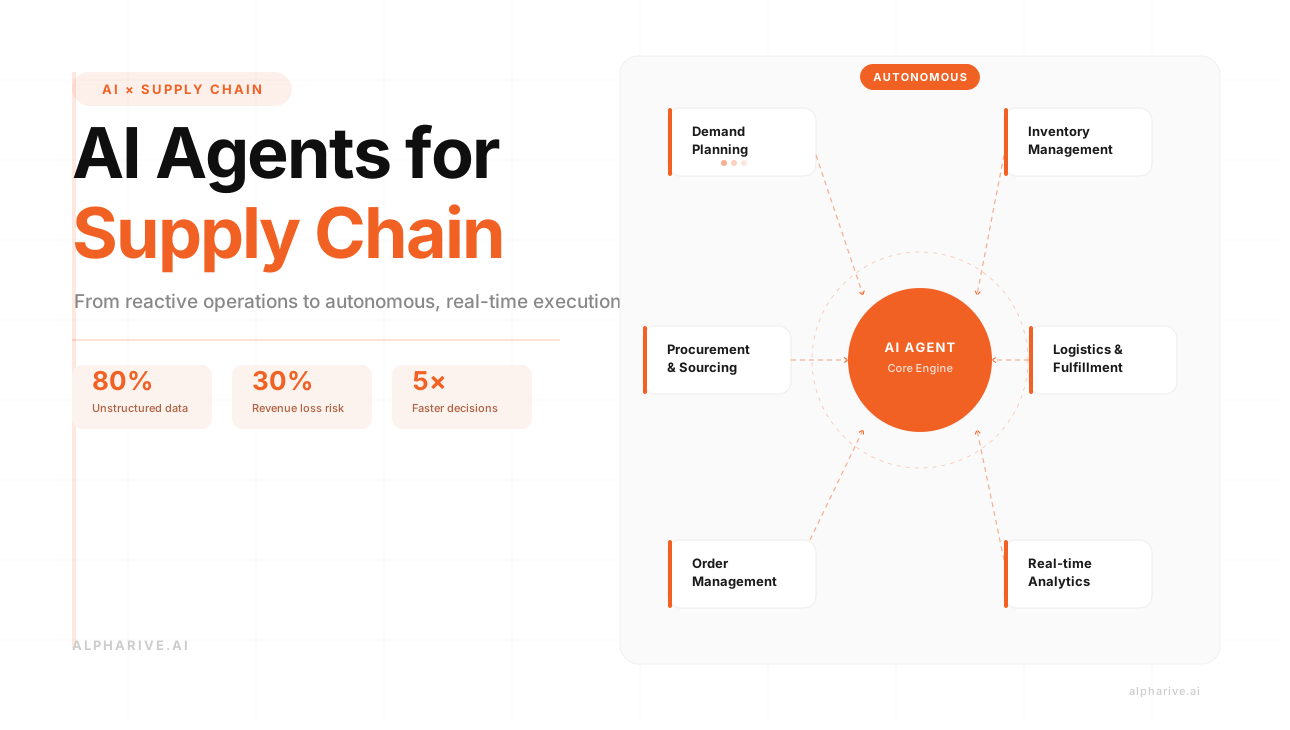
AI agents in supply chain deliver the most value in areas where coordination, speed, and decision-making directly affect performance. Instead of optimizing isolated functions, they enable connected execution across core operational workflows.
1. Demand Planning and Forecasting
- Align demand signals with real-time data
- Continuously adjust forecasts as conditions change
- Reduce overstocking and stockouts
2. Inventory Management
- Monitor inventory across multiple locations
- Trigger replenishment automatically
- Optimize stock distribution across warehouses
3. Procurement and Supplier Coordination
- Track supplier performance and delays
- Adjust sourcing decisions dynamically
- Improve coordination between suppliers and internal teams
4. Logistics and Fulfillment
- Optimize routing and delivery schedules
- Respond to disruptions in real time
- Improve delivery speed and reliability
5. Order Management and Execution
- Coordinate order processing across systems
- Reduce delays from manual workflows
- Ensure faster and more accurate fulfillment
AI agents create the highest impact when applied to areas where multiple systems, decisions, and workflows intersect, enabling supply chains to operate as a coordinated, end-to-end system.
From Manual Coordination to Autonomous Supply Chain Systems
Supply chains today rely on multiple systems working in parallel, with teams responsible for connecting decisions across planning, inventory, procurement, and logistics. As operations scale, this coordination becomes increasingly complex, leading to delays, inefficiencies, and limited visibility across workflows.
Agentic AI introduces a more integrated approach. Instead of managing workflows manually, systems can coordinate data, align decisions, and execute actions across functions in real time. This creates a continuous flow of operations where processes are connected, responsive, and less dependent on manual intervention.
For startups, this enables building scalable operations from the beginning. For enterprises, it provides a pathway to simplify complexity and improve performance across existing supply chain systems.
How Startups and Enterprises Can Implement Agentic AI
Implementing agentic AI in supply chain requires more than adding new tools—it involves rethinking how workflows are designed, connected, and executed across the organization. For both startups and enterprises, the focus should be on building systems that can operate continuously and adapt in real time
1. Identify High-Impact Workflows
Start by focusing on areas where delays, inefficiencies, and manual coordination are most visible, such as demand planning, inventory management, and order execution, since improving these workflows delivers the fastest and most measurable business impact.
2. Strengthen Data Integration
Ensure data flows seamlessly across suppliers, inventory, logistics, and demand systems, as real-time, structured, and connected data is critical for enabling systems to make accurate decisions and execute workflows effectively.
3. Start with Focused Implementation
Rather than attempting large-scale transformation, begin with a targeted pilot in a single function, allowing teams to validate outcomes, measure efficiency gains, and refine processes before scaling across the supply chain.
4. Build for Workflow Automation
Shift the focus from dashboards and insights to execution by enabling systems that can trigger actions, coordinate across functions, and manage workflows without constant human intervention.
5. Scale with Multi-Agent Systems
Expand from isolated use cases to connected, multi-agent systems that operate across planning, inventory, and logistics, ensuring that workflows remain adaptive, scalable, and aligned with real-time conditions.
6. Partner with an AI Agent Development Company
Collaborating with an experienced AI agent development company helps accelerate implementation by ensuring systems are designed to integrate with existing operations while supporting scalability, compliance, and long-term growth.
At Alpharive, we work with startups and enterprises to design and deploy agentic AI systems that integrate seamlessly into supply chain workflows, enabling faster execution and scalable growth.
From Pilot to Scale: Building an AI-Driven Supply Chain
Most organizations begin their journey with small, focused implementations, but the real value of agentic AI emerges when these systems are scaled across the supply chain. Moving from pilot to scale requires shifting from isolated use cases to connected workflows that operate across planning, inventory, procurement, and logistics.
The transition to scale depends on consistency and integration. As AI-driven workflows expand, systems need to operate on unified data, align decisions across functions, and maintain performance under increasing complexity. Without this foundation, scaling often leads to fragmented implementations that fail to deliver long-term value.
For startups, scaling early ensures that growth does not introduce operational bottlenecks. For enterprises, it enables the transformation of legacy systems into more adaptive, intelligent operations. In both cases, the goal is to build a supply chain that can continuously learn, adapt, and execute supporting higher volumes, faster decisions, and more resilient operations over time.
Business Impact: Cost, Speed, and Resilience
The impact of agentic AI in supply chain is not incremental; it fundamentally changes how organizations operate at scale. By enabling systems that can coordinate decisions and execute workflows in real time, businesses move beyond isolated improvements toward measurable performance gains across operations.
Cost Efficiency Through Intelligent Operations
One of the most immediate outcomes is cost efficiency. As manual coordination is reduced and workflows become more streamlined, organizations can minimize inefficiencies such as overstocking, stockouts, and redundant processes. This leads to more optimized resource utilization and a direct reduction in operational costs.
Speed as a Competitive Advantage
At the same time, speed becomes a defining factor in performance. Decisions that once required multiple steps and cross-team coordination can now be executed in near real time. This allows supply chains to respond faster to demand changes, supplier disruptions, and market conditions, improving both delivery timelines and customer satisfaction.
Resilience in Dynamic Environments
Supply chains operate in unpredictable environments, where the ability to adapt quickly is critical. Agentic AI enables systems that continuously monitor conditions, adjust workflows dynamically, and maintain operational continuity during disruptions. This reduces risk and ensures more stable performance over time.
Conclusion
Supply chains are no longer defined by how efficiently they move goods, but by how effectively they coordinate decisions and respond to change. As complexity increases across suppliers, inventory, and logistics, the ability to execute workflows in real time becomes a critical differentiator.
Agentic AI introduces a shift toward systems that can align decisions, manage workflows, and operate continuously across the supply chain. Organizations that adopt this approach early are better positioned to improve operational performance, reduce inefficiencies, and build resilience in increasingly dynamic environments.
Alpharive, offers AI agent development services that help startups and enterprises design supply chain systems built for execution, not just insight. Our approach focuses on integrating with existing workflows, enabling autonomous decision-making, and ensuring systems scale as operations grow. Rather than implementing isolated solutions, we design connected, multi-agent systems that align with real-world supply chain demands helping organizations move from fragmented processes to coordinated, intelligent operations.