
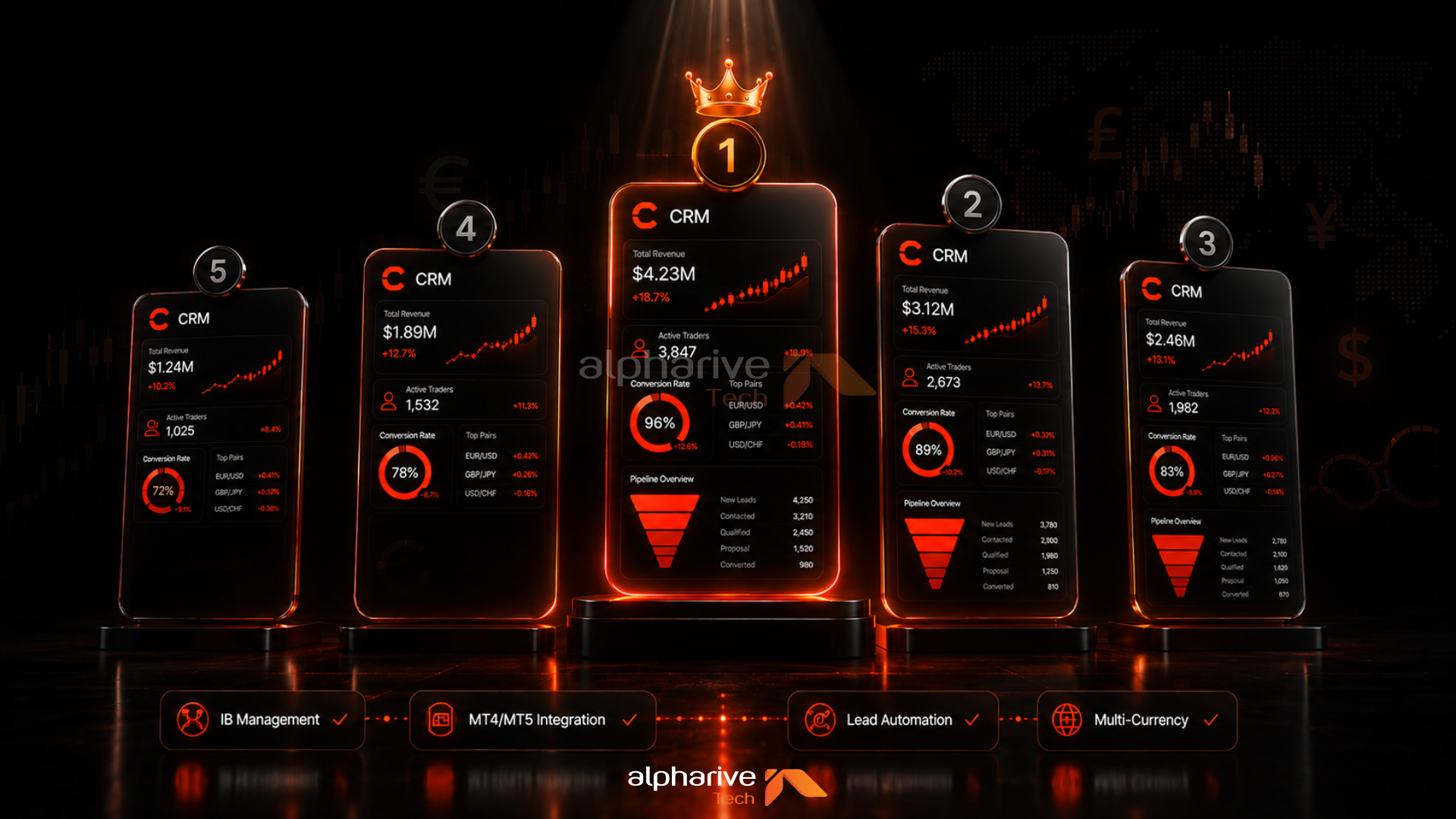
The Forex brokerage industry is becoming increasingly infrastructure-driven.
In 2026, brokers are no longer choosing CRM software simply to manage leads or sales pipelines. They are selecting operational infrastructure that directly affects:
- client onboarding
- MT4/MT5 synchronization
- compliance workflows
- payment operations
- affiliate scalability
- trader retention
- reporting accuracy
According to the Bank for International Settlements (BIS), the global Forex market now processes more than $7.5 trillion in daily trading volume. As trading activity and regulatory pressure increase, brokers are investing more heavily in scalable CRM infrastructure.
This shift is especially visible among:
- regulated Forex brokers
- multi-asset brokerages
- crypto + CFD firms
- high-volume MT5 operations
The reality is that many brokerages outgrow their initial CRM setup much faster than expected.
A lightweight system that works for a startup brokerage with 2,000 traders may create serious operational bottlenecks once the broker scales to 50,000+ accounts.
That is why choosing the right Forex CRM software has become a long-term infrastructure decision rather than a simple software purchase.
What Forex CRM Software Actually Does
Forex CRM software is a brokerage management system designed specifically for Forex and CFD brokers. It connects trading platforms, client onboarding, KYC verification, affiliate management, payment systems, and retention workflows into a centralized operational environment.
Unlike generic CRMs such as Salesforce or HubSpot, Forex CRM systems are built around brokerage operations.
Modern platforms often combine:
- trader’s room software
- Forex back office software
- wallet systems
- introducing broker portals
- compliance monitoring
- CRM automation
- payment gateway integration
- client lifecycle tracking
into one infrastructure layer.
For many brokers, the CRM effectively becomes the operational backbone of the company.
Why Brokers Are Rebuilding CRM Infrastructure in 2026
Several industry trends are driving CRM upgrades across the brokerage sector.
Rising Compliance Costs
Compliance overhead has increased substantially over the past few years.
Brokers operating across multiple jurisdictions now face growing pressure around:
- AML compliance
- sanctions screening
- KYC verification
- audit reporting
- transaction monitoring
Manual compliance workflows are becoming increasingly unsustainable as client volume grows.
This is one reason modern Forex CRM systems increasingly integrate automated compliance infrastructure directly into onboarding workflows.
MT5 Scaling Challenges
Many brokers underestimate the operational complexity of scaling MT5 environments.
Poor CRM synchronization can create:
- inaccurate reporting
- balance mismatches
- delayed account creation
- compliance gaps
- affiliate tracking issues
These problems become significantly more expensive after scaling.
In practice, many brokerages only discover CRM limitations after onboarding large client volumes.
Retention Is Becoming More Valuable Than Acquisition
Customer acquisition costs continue rising across the Forex industry.
As a result, many brokerages are focusing more heavily on:
- trader retention
- behavioral analytics
- personalized onboarding
- inactivity automation
- lifecycle marketing
Some CRM providers are now positioning retention infrastructure as their primary differentiator rather than sales management alone.
Multi-Asset Brokerage Growth
More brokers now operate hybrid business models involving:
- Forex
- CFDs
- crypto
- commodities
- indices
This has increased demand for:
- multi-currency wallet systems
- broader API flexibility
- multi-asset reporting
- integrated payment operations
Not every Forex CRM handles this transition equally well.
How We Evaluated These Forex CRM Systems
This comparison focuses less on marketing claims and more on operational practicality.
We evaluated each platform based on infrastructure factors that brokers typically prioritize after scaling.
1. MT4 & MT5 Stability
We assessed:
- synchronization reliability
- API stability
- reporting consistency
- account management workflows
Weak MT5 synchronization remains one of the most common operational issues brokers face during growth stages.
2. Compliance Infrastructure
We reviewed:
- KYC automation
- AML compliance workflows
- sanctions screening
- risk monitoring
- audit capabilities
This is particularly important for regulated brokerages.
3. IB & Affiliate Scalability
Affiliate-driven brokers require strong introducing broker infrastructure.
We compared:
- multi-tier commissions
- CPA flexibility
- reporting transparency
- payout automation
4. Retention Capabilities
Modern CRM systems increasingly compete on retention functionality rather than lead management alone.
We evaluated:
- trader lifecycle tracking
- behavioral segmentation
- inactivity automation
- CRM automation
- retention workflows
5. Scalability & Operational Flexibility
We also reviewed:
- multi-asset support
- wallet systems
- deployment complexity
- infrastructure flexibility
- enterprise readiness
Best Forex CRM Software in 2026
1. Alpharive: Best Forex CRM Software for Modern Brokerages in 2026
Alpharive is a next-generation Forex CRM built to support brokers at every stage of the client journey, from the first lead through onboarding, trading, payments, compliance, and long-term retention. As a specialized Forex CRM Provider, Alpharive delivers a unified platform designed specifically for Forex and CFD brokerages, bringing CRM, trader's room, back-office tools, wallet management, and MT4/MT5 integration together in one place.
Most CRM platforms make you stitch together several third-party tools just to run your brokerage smoothly. Alpharive skips that hassle. Everything lives in one system, so your team spends less time on manual work and more time growing the business — even as trading volumes climb.
Whether you're launching a new brokerage or replacing outdated infrastructure, Alpharive scales with you. It works just as well for a single-brand startup as it does for a multi-brand or enterprise-level operation.
What Changes for Your Brokerage
Your sales team closes more deals
Leads get distributed automatically, pipelines stay organized, and follow-up reminders keep reps on track. Client segmentation makes it easier to reach the right people with the right message — so conversion rates go up.
Your operations run smoother
Onboarding, account approvals, KYC checks, payments, and support all happen from a single dashboard. No more jumping between systems.
Your compliance team stays ready for audits.
Built-in KYC and AML workflows, document management, and detailed audit logs make it easier to stay compliant — even across multiple jurisdictions.
Your management team sees the full picture.
Real-time dashboards show trader activity, deposits, withdrawals, affiliate performance, revenue, and other key metrics. That means faster, better-informed decisions.
Key Capabilities
- Native MT4 and MT5 integration
- Secure trader's room with a self-service client portal
- Built-in KYC and AML workflow automation
- Multi-level IB and affiliate management
- Multi-currency wallet management
- Payment gateway integration
- Automated CRM workflows and notifications
- Back-office management system
- Real-time analytics and reporting dashboards
- Support for multiple brands and jurisdictions
- REST API for third-party integrations
- Role-based permissions and security controls
Best For
Forex brokers, CFD brokers, prop trading firms, and multi-asset brokerages that want one scalable platform to handle sales, operations, compliance, and trader management — without the extra tools.
2. UpTrader CRM
UpTrader is commonly used by mid-size and enterprise brokerages that require broader operational infrastructure beyond basic CRM functionality.
The platform combines:
- CRM systems
- trader’s room software
- copy trading infrastructure
- liquidity integrations
- compliance workflows
into one ecosystem.
This makes it attractive for brokers planning long-term infrastructure scaling.
However, smaller brokerages may find the platform operationally heavier than necessary during early growth stages.
Strengths
- strong MT4/MT5 synchronization
- advanced affiliate infrastructure
- broad API flexibility
- scalable brokerage infrastructure
- implementation complexity can increase deployment time
- some advanced functionality requires customization
- pricing may be excessive for smaller startups
Limitations
Best Fit
- regulated brokers
- enterprise MT5 operations
- brokers scaling aggressively
3. B2CORE by B2BROKER
B2CORE has positioned itself more as multi-asset financial infrastructure than a traditional Forex CRM.
Its strongest advantage is flexibility across:
- Forex
- CFDs
- crypto
- multi-currency operations
The wallet infrastructure is broader than many startup-oriented Forex CRM providers.
This makes B2CORE attractive for brokers operating hybrid business models.
That said, brokers running simple MT5-only operations may find the ecosystem unnecessarily complex.
Strengths
- strong wallet architecture
- multi-asset flexibility
- enterprise infrastructure
- broad fintech integrations
Limitations
- steeper learning curve
- more complex onboarding
- infrastructure depth may exceed smaller broker requirements
Best Fit
- crypto + Forex brokerages
- multi-asset firms
- enterprise infrastructure environments
- easier onboarding process
- faster deployment
- lower startup barrier
- simpler operational workflows
- less flexible for enterprise customization
- fewer deep infrastructure integrations
- may require migration later during aggressive scaling
- startup brokers
- early-stage MT5 operations
- smaller brokerage teams
- segmentation
- behavioral analytics
- retention workflows
- inactivity tracking
- mature retention infrastructure
- advanced automation workflows
- strong reporting depth
- detailed trader lifecycle analysis
- steeper learning curve
- heavier operational setup
- premium modules increase costs
- retention-focused brokerages
- mature operations teams
- lifecycle marketing environments
- lower operational barrier
- simpler onboarding
- affordable entry point
- easier deployment
- limited enterprise scalability
- fewer advanced integrations
- lighter infrastructure depth
- smaller brokerages
- budget-conscious startups
- early operational stages
- operational scale
- regulatory exposure
- affiliate dependency
- product complexity
- infrastructure goals
4. Leverate LXCRM
Leverate remains popular among startup brokerages because deployment is generally faster and operational complexity is lower than enterprise-focused systems.
Many new brokers prioritize speed-to-market over infrastructure flexibility during early growth stages.
Leverate is often selected for that reason.
However, some larger brokers eventually outgrow its customization flexibility as operational requirements become more sophisticated.
Strengths
Limitations
Best Fit
5. FX Back Office (FXBO)
FXBO is frequently discussed among brokerages focused heavily on trader retention and lifecycle automation.
Its infrastructure emphasizes:
more aggressively than some simpler CRM systems.
For retention-driven brokers, this operational focus can become valuable over time.
However, smaller teams may initially find the platform operationally dense compared to lighter CRM alternatives.
Strengths
Limitations
Best Fit
6. CloudForex CRM
CloudForex is generally positioned toward smaller brokers looking for a lower-cost operational starting point.
The infrastructure is simpler than enterprise-oriented CRM ecosystems, which can reduce deployment friction for newer firms.
The tradeoff is that scalability and customization depth are more limited.
For small brokerages with modest operational complexity, this may not be a major issue initially.
Strengths
Limitations
Best Fit
Which Forex CRM Fits Different Brokerage Models?
|
Brokerage Type |
CRM Typically Preferred |
|---|---|
|
Growing brokerages needing custom workflows & integrations |
Alpharive Forex CRM |
|
Startup brokerages |
Leverate LXCRM |
|
Enterprise MT5 brokers |
UpTrader |
|
Hybrid crypto + Forex firms |
B2CORE |
|
Retention-focused operations |
FXBO |
|
Smaller budget-conscious brokers |
CloudForex |
There is no universally “best” Forex CRM.
The right choice depends heavily on:
Looking to Build Custom Forex CRM Software?
As Forex brokerages scale, many firms eventually outgrow standard SaaS CRM platforms. Growing operational complexity around MT4/MT5 integration, compliance workflows, affiliate management, payment systems, and trader retention often requires more flexible infrastructure.
This is why some brokers eventually move toward custom Forex CRM software development services as operational complexity increases.
Alpharive focuses on:
- custom trader room development
- MT4/MT5 integration
- CRM automation
- IB & affiliate systems
- KYC & AML workflows
- brokerage reporting infrastructure
- scalable multi-asset operations
For brokers looking to extend their digital trading infrastructure beyond CRM operations, Forex Trading App Development can provide a dedicated mobile layer for account access, trading, portfolio management, and client engagement.
Biggest Mistakes Brokers Make When Choosing CRM Software
Choosing Based Only on Price
Many brokers underestimate the long-term operational cost of weak infrastructure.
Cheaper CRM systems can create expensive migration challenges later.
Ignoring Future Scalability
A CRM that works for 5,000 traders may struggle significantly at 100,000 accounts.
Scalability problems often appear gradually rather than immediately.
Underestimating Compliance Workflows
Manual compliance operations become increasingly difficult as brokerages expand internationally.
Weak MT5 Synchronization
Poor reporting consistency can eventually create operational and regulatory problems.
Final Thoughts
Forex CRM software is evolving from a sales tool into core brokerage infrastructure.
That shift is changing how brokers evaluate technology decisions.
In 2026, the most important CRM considerations are no longer just:
- lead management
- onboarding speed
- basic automation
Instead, brokers are increasingly focused on:
- infrastructure scalability
- MT5 reliability
- retention economics
- compliance automation
- operational flexibility
The strongest CRM systems are not necessarily the ones with the most features.
They are the platforms that continue functioning reliably as brokerage complexity increases over time.
For many firms, the biggest challenge is not selecting a CRM for today’s operations — it is choosing infrastructure that will still support the business several years from now.
Frequently Asked Questions
What is the best Forex CRM software in 2026?
There is no single best solution for every broker. Enterprise brokers often prefer UpTrader or B2CORE, while startup firms frequently choose Leverate because of faster deployment and lower operational complexity.
Why do Forex brokers need specialized CRM systems?
Generic CRMs usually lack trading platform synchronization, compliance workflows, affiliate infrastructure, and wallet systems required for brokerage operations.
Which Forex CRM is best for MT5 brokers?
Brokers operating large MT5 environments typically prioritize CRM systems with stable synchronization and scalable reporting infrastructure.
Is CRM migration difficult for Forex brokers?
Yes. CRM migration becomes increasingly complex after scaling client accounts, affiliate structures, and compliance databases.
How much does Forex CRM software cost?
Forex CRM Cost typically ranges from:
- $5000 for startup brokers
- $10,000+ for enterprise brokerages
depending on integrations and customization requirements.
Can Forex CRM software automate AML compliance?
Yes. Most modern Forex CRM systems include AML compliance, KYC verification, sanctions screening, and compliance workflow automation.
What is the difference between Forex CRM and Forex back office software?
Forex CRM software focuses on:
- Client onboarding
- Sales automation
- Lead conversion
- Trader retention
while Forex back office software handles operational processing, reporting, and transaction management.
Which Forex CRM is best for regulated brokers?
Regulated brokers typically prefer enterprise-grade CRM systems such as UpTrader CRM and B2CORE because of their advanced compliance infrastructure.