
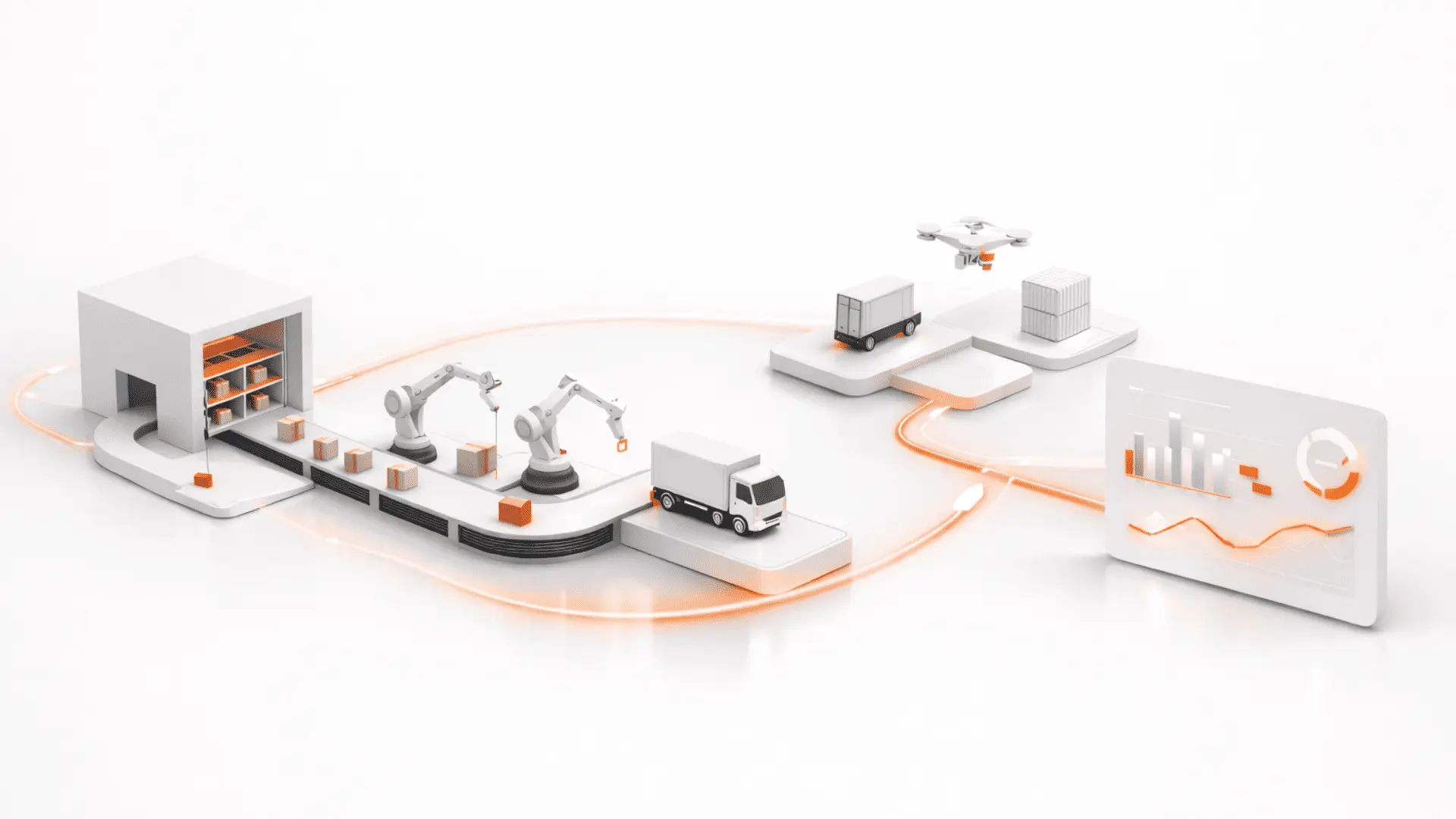
Supply chain automation is transforming how businesses manage operations by replacing manual processes with intelligent systems that improve speed, accuracy, and efficiency. From procurement and inventory to logistics and returns, automation enables real-time visibility and smarter decision-making. As global demand grows and customer expectations rise, companies are adopting automation to reduce costs, minimize errors, and scale operations without increasing complexity.
What Is Supply Chain Automation?
Supply chain automation refers to the use of technology to handle repetitive, manual, and time-consuming tasks across the supply chain with minimal human involvement. It covers everything from procurement and inventory management to warehousing, transportation, and returns, allowing businesses to operate with greater speed and accuracy.
Instead of relying on spreadsheets, manual approvals, and disconnected systems, automation brings all processes into a unified digital flow. This shift enables real-time tracking, faster decision-making, and better coordination across suppliers, warehouses, and delivery networks, making the entire AI supply chain more responsive and efficient.
How Does It Differ from Traditional Supply Chain Management?
Traditional supply chain management depends heavily on manual processes, human intervention, and siloed systems that often lead to delays and errors. Tasks like order processing, inventory updates, and shipment tracking require constant monitoring, which limits scalability and increases operational risks.
In contrast, supply chain automation replaces these manual efforts with intelligent systems that can process data, trigger actions, and optimize workflows automatically. This not only reduces dependency on human input but also allows businesses to handle higher volumes, improve consistency, and respond quickly to market changes without slowing down operations.
The State of Supply Chain Automation in 2025: Key Statistics
Supply chain automation is accelerating rapidly in 2025 as businesses invest in smarter systems to improve efficiency and reduce operational risks. The shift is no longer optional, with companies across industries adopting automation to stay competitive in a fast-moving global market.
- The global supply chain automation market is projected to reach $19.11 billion by 2033, growing at a CAGR of over 13%.
- The logistics automation market is expected to grow from $88.09 billion in 2025 to $260.75 billion by 2034.
- Around 85% of supply chain leaders plan to adopt AI technologies within the next five years.
- Companies using AI in supply chains report 15% lower logistics costs, 35% reduced inventory levels, and 65% better service efficiency.
- Nearly 53% of organizations have already implemented RPA, with another 19% planning adoption soon.
- By 2025, over 25 million robots will be deployed across 50,000+ warehouses, transforming how goods are handled globally.
These numbers clearly show that automation is becoming a core part of modern supply chains, shaping how businesses operate, scale, and compete worldwide.
Key Benefits of Supply Chain Automation
Supply chain automation delivers measurable improvements across operations by reducing manual effort, improving accuracy, and enabling faster decision-making. As businesses scale and complexity increases, automation becomes essential for maintaining efficiency and consistency across the entire supply chain.
Beyond operational efficiency, it also helps companies respond quickly to demand changes, reduce risks, and create a more resilient supply network. Here are the most impactful benefits businesses experience when they adopt automation.
1. Reduced Operational Costs
One of the biggest advantages of supply chain automation is cost reduction, as automated systems minimize the need for manual labor and reduce costly errors. Tasks like order processing, inventory updates, and shipment tracking are handled faster and more efficiently.
According to industry data, 65% of C-suite executives identified supply chain automation as their top cost-reduction priority. By optimizing resource usage and reducing waste, businesses can significantly lower operational expenses while maintaining high performance.
2. Improved Accuracy and Error Reduction
Manual processes often lead to errors in data entry, order processing, and inventory management, which can result in delays and customer dissatisfaction. Automation eliminates these risks by ensuring consistent and accurate execution of tasks.
Robotic Process Automation (RPA) bots can handle repetitive tasks with near-zero error rates, improving data reliability across systems. This level of accuracy not only reduces rework but also builds trust with customers and partners.
3. Real-Time Visibility Across the Supply Chain
Supply chain automation provides real-time visibility into every stage of operations, from inventory levels to shipment status. This allows businesses to track goods, monitor performance, and identify issues as they happen.
With technologies like IoT sensors and cloud-based dashboards, companies gain a complete view of their supply chain. This transparency helps in making faster decisions and improves coordination across suppliers, warehouses, and logistics partners.
4. Faster Order Fulfillment and Delivery
Automation speeds up order processing by streamlining picking, packing, and shipping operations. What once took hours can now be completed in minutes, improving overall delivery timelines.
Companies like Amazon use automated warehouses to process millions of orders efficiently. Faster fulfillment not only enhances customer satisfaction but also gives businesses a competitive edge in fast-paced markets.
5. Scalability Without Proportional Headcount Growth
As businesses grow, managing higher order volumes manually becomes difficult and expensive. Automation allows systems to handle increased workloads without requiring a proportional increase in staff.
This is especially valuable during peak seasons or rapid expansion phases. Businesses can scale operations smoothly while maintaining performance, avoiding the challenges of hiring and training large teams quickly.
6. Enhanced Risk Management and Resilience
Supply chain disruptions can occur due to demand fluctuations, supplier issues, or external factors. Automation helps businesses anticipate and respond to these risks more effectively.
AI-driven systems analyze patterns and predict potential disruptions, allowing companies to take proactive actions. This improves resilience and ensures continuity even in uncertain conditions, keeping operations stable and reliable.
Top Supply Chain Automation Use Cases
Supply chain automation use cases show how businesses apply technology to solve real operational challenges across different stages of the supply chain. From warehouses to transportation and supplier management, automation helps streamline workflows and improve overall performance.
These use cases highlight how companies move from manual, error-prone processes to intelligent systems that deliver speed, accuracy, and scalability across operations.
1. Warehouse Automation
Manual warehouse operations often slow down order processing and increase the risk of errors, especially at scale. Automation introduces robots, conveyor systems, and computer vision to handle picking, packing, and sorting efficiently.
Companies like Amazon use hundreds of thousands of robots to move goods across fulfillment centers, significantly improving speed and accuracy. This allows warehouses to process massive order volumes while maintaining consistent performance.
2. Inventory Management and Demand Forecasting
Managing inventory manually can lead to overstocking or stockouts, both of which impact profitability and customer satisfaction. Automation uses AI models to analyze historical data, seasonal trends, and market signals to predict demand accurately.
Retail giants like Walmart leverage AI-driven systems and in-store technologies to track inventory in real time. This ensures optimal stock levels and helps businesses respond quickly to changing customer demand.
3. Procurement and Purchase Order Automation
Manual procurement processes involve multiple steps, approvals, and data entry tasks that can delay operations. Automation simplifies this by generating purchase orders automatically based on inventory levels and predefined rules.
With AI-powered systems, businesses can approve low-risk purchases instantly and integrate them with ERP platforms. This reduces processing time and ensures consistent procurement workflows without manual intervention.
4. Transportation Management and Route Optimization
Planning delivery routes manually can lead to inefficiencies, higher fuel costs, and delayed shipments. Automation uses AI to analyze traffic conditions, weather data, and delivery schedules to determine the most efficient routes.
Companies like FedEx use advanced routing systems to optimize last-mile delivery. This not only improves delivery speed but also reduces operational costs and environmental impact.
5. Returns Management
Handling returns manually is time-consuming and costly, especially for eCommerce businesses with high return volumes. Automation streamlines this process through digital return portals, automated label generation, and structured workflows.
Businesses can quickly process returned items, restock inventory, and issue refunds with minimal manual effort. This improves customer experience while reducing the cost and complexity of reverse logistics.
6. Supplier Onboarding and Compliance Automation
Onboarding suppliers manually involves collecting documents, verifying compliance, and managing approvals, which can take weeks. Automation speeds up this process through digital portals and RPA-driven workflows.
Organizations use automated systems to validate documents, ensure regulatory compliance, and onboard suppliers faster. This reduces delays and ensures that supply chain operations continue smoothly without bottlenecks.
Key Technologies Powering Supply Chain Automation
Supply chain automation technologies form the backbone of modern, efficient operations by enabling systems to process data, make decisions, and execute tasks with minimal human involvement. These technologies work together to create a connected, intelligent supply chain that adapts quickly to changing demands.
By combining data, automation, and real-time insights, businesses can move beyond basic process improvements and build smarter, more responsive supply chain ecosystems that scale with growth.
Artificial Intelligence and Machine Learning
Artificial Intelligence (AI) and Machine Learning play a central role in supply chain automation by enabling systems to analyze large volumes of data and make predictive decisions. These technologies help businesses forecast demand, optimize routes, and identify potential disruptions before they occur.
Unlike traditional systems that follow fixed rules, AI continuously learns from new data and improves over time. This allows companies to make faster, data-driven decisions and adapt to market changes with greater accuracy and confidence.
Robotic Process Automation
Robotic Process Automation focuses on automating repetitive, rule-based tasks such as data entry, order processing, and invoice management. RPA bots can operate around the clock, handling high volumes of work without fatigue or errors.
This technology is especially useful for back-office operations where manual effort is high and processes are structured. By reducing human intervention, RPA improves efficiency while freeing up teams to focus on more strategic activities.
Internet of Things (IoT) and Real-Time Tracking
The Internet of Things (IoT) connects physical assets like goods, vehicles, and warehouse equipment through sensors that collect and transmit real-time data. This provides businesses with continuous visibility into the location and condition of products throughout the supply chain.
With IoT-enabled tracking, companies can monitor temperature, movement, and delays in real time. This level of transparency helps improve coordination, reduce losses, and ensure timely delivery of goods.
Digital Twins
Digital twins are virtual replicas of physical supply chain systems that allow businesses to simulate operations and test different scenarios without disrupting real-world processes. These models help organizations understand how changes will impact performance.
By using digital twins, companies can identify inefficiencies, predict risks, and optimize workflows before implementing changes. This reduces uncertainty and supports better planning across the supply chain.
Autonomous Robots and AGVs
Autonomous robots and Automated Guided Vehicles (AGVs) are widely used in warehouses and distribution centers to handle tasks such as picking, transporting, and sorting goods. These machines operate independently using sensors and navigation systems.
They help increase speed, reduce labor dependency, and improve consistency in operations. As adoption grows, robots are becoming a key component in scaling warehouse efficiency and meeting rising demand.
Supply Chain Automation Strategies: A Step-by-Step Implementation Roadmap
Supply chain automation strategies require a structured approach that aligns business goals with the right technologies and processes for successful implementation.
Map and Audit
Begin by documenting every step in your existing supply chain processes, identifying repetitive, error-prone, and data-heavy tasks that present strong opportunities for automation and measurable operational improvements.
Identify Opportunities
Evaluate workflows based on volume, complexity, and potential return, prioritizing high-impact areas such as inventory management, procurement, and order processing to achieve quick wins and early success.
Select Technologies
Choose technologies that match specific needs, such as RPA for repetitive tasks, AI for forecasting, and IoT for tracking, ensuring seamless integration with existing enterprise systems.
Run Pilots
Start with a controlled pilot project in a single department or workflow, measuring performance, identifying integration gaps, and building confidence before expanding automation across the entire supply chain gradually.
Integrate Systems
Connect automation tools with ERP, WMS, and CRM systems to ensure smooth data flow, while training teams to work alongside automated processes and adapt to new operational workflows.
Monitor and Optimize
Continuously track performance metrics such as order accuracy, processing time, and cost savings, using real-time data insights to refine processes and improve efficiency over time.
Common Challenges in Supply Chain Automation
Supply chain automation comes with challenges that businesses must address to ensure smooth adoption and long-term success. While the benefits are clear, implementing automation requires careful planning, the right technology choices, and strong organizational alignment.
One of the biggest challenges is the high upfront investment required for automation tools and infrastructure. To overcome this, businesses can start with cost-effective solutions like RPA or adopt automation in phases, beginning with high-impact areas to generate early returns and justify further investment.
Another common issue is integrating automation with legacy systems that were not designed for modern technologies. This can be addressed by using API-based integration platforms and working with experienced partners who understand how to connect existing systems without disrupting operations.
Change management and employee resistance also play a significant role, as teams may fear job displacement or struggle to adapt to new workflows. Involving employees early, providing training, and positioning automation as a tool that enhances productivity rather than replaces jobs can ease this transition.
Cybersecurity risks are another concern, especially as more systems become interconnected and data-driven. Businesses should implement strong security measures such as encryption, access controls, and regular audits to protect sensitive supply chain data and maintain operational integrity.
How Alpharive Helps Businesses Automate Their Supply Chain
Supply chain automation becomes more effective when implemented with the right strategy, tools, and integration expertise. Alpharive supports businesses through custom software development services, designing and building automation solutions that align with their unique operational needs and long-term goals.
From developing intelligent workflows to integrating AI-powered systems and RPA solutions, the focus is on creating scalable and efficient AI supply chain software ecosystems. Whether it’s automating procurement, optimizing inventory, or enabling real-time visibility, each solution is tailored to improve performance without disrupting existing processes.
By combining deep technical expertise with a practical understanding of supply chain challenges, Alpharive helps businesses move from fragmented operations to connected, automated systems. This approach ensures faster implementation, measurable results, and a smoother transition toward digital supply chain transformation.