Build Your Crypto Exchange with Alpharive - 2026 Actionable Guide
Launching a crypto exchange in 2026 isn't just a startup idea, it is a digital infrastructure business. Investors, traders, fintech founders, and Web3 entrepreneurs across the USA, UK, UAE, India, Singapore, and Europe are actively searching for a cryptocurrency exchange development company to build scalable, compliant, and profitable trading platforms. From regulated centralized exchanges to AI-powered trading platforms, the demand for crypto exchange developers and crypto trading platform development has been higher.
Crypto exchanges have upgraded into institutional grade trading infrastructures. The era of "quick MVP exchanges" is over, 2026 demands scalability, full-stack security, compliance-first architecture, and AI-driven user protection. The 2026 shifts towards regulated, scalable, AI-integrated exchanges, Modern exchanges now emphasize:
1. Full regulatory alignment (VASP, MiCA, SEC guidelines, MAS, FINTRAC)
2. AI modules for fraud detection, user scoring, and risk assessment
3. High throughput matching engines capable of millions of TPS
4. Multi-chain interoperability built natively
5. Reliable, aggregated liquidity from global venues
Why do exchanges remain one of the highest-ROI Web3 ventures?
A crypto exchange gains revenue from 8-14 different streams (fees, spreads, staking, listings, OTC, API monetization). Exchange owners typically see 20-40% EBITDA margins when properly launched. This 2026 guide covers architecture, cost, licensing, tech stack, security, timelines, revenue models, and FAQs everything needed before you build a crypto exchange.
What You Will Learn in this Guide?
This guide explains:
- Modern exchange architecture
- Realistic costs
- Development lifecycle
- Compliance requirements
- Security standards
- Complete feature list
- Revenue models
- Mistakes to avoid
- How to choose the right cryptocurrency exchange development company
For Whom Is This Guide?
The guide is completely analyzed and written for
- Investors looking to own crypto infrastructure
- Startup Founders planning Web3 products
- Blockchain Entrepreneurs scaling their exchange
- Crypto Traders who want to launch their own platform
- Fintech Companies entering digital assets
Cryptocurrency Exchange
A cryptocurrency exchange is a digital platform where users can seamlessly manage their crypto assets and participate in modern trading markets. On these platforms, users can:
- Buy and sell cryptocurrencies quickly and securely.
- Trade spot, margin, and futures to maximize trading strategies.
- Swap tokenized assets across multiple blockchains.
- Use AI-powered trading tools for smarter, automated decision-making.
- Deposit and withdraw fiat currencies with ease.
- Access staking, P2P trading, and OTC services for flexible investment options.
Today's exchanges are no longer just marketplaces, they are multichain, fully compliant, and AI-driven financial ecosystems designed for speed, security, and scalability.
What are Investors Looking for in an Exchange Development Company?
Investors and founders usually search for:
- "the best cryptocurrency exchange development company"
- "Who can build a crypto exchange fast?"
- "How much will it cost to build a crypto exchange?"
- "What licenses do I need to launch a crypto exchange?"
Because they face real challenges like:
- No clarity on cost
- Confusion about licensing
- Liquidity
- Secure architecture
- Lack of a reliable development partner
- Need for faster go-to-market
- Fear of hacks or code vulnerabilities
- Need enterprise-grade UX/UI
How Alpharive Solves Cryptopreneurs Every Pain Point?
Below we solve every pain point directly
Pain Point 1: Fear of Wasting Capital - We show the exact pricing, the ROI model, and how to avoid cheap templates & scam development teams.
Pain Point 2: Lack of Technical Clarity - We break down the entire architecture, tech stack, and security standards in simplified language.
Pain Point 3: Confusion About Regulation - We explain VASP licensing, KYC/AML compliance, data jurisdiction rules, and how exchanges achieve regulatory safety.
Pain Point 4: Need for Fast Launch - We come up with
15–30 day for white-label
3–6 month for custom build
6–12 month for enterprise solution
Pain Point 5: Scaling & Security Concerns - We break down microservices, matching engine scaling, wallet security, HSM, DevSecOps, and cloud orchestration.
Pain Point 6: Liquidity Limitations - We explain aggregated liquidity, market-making partnerships, and how exchanges avoid empty order books.
Types of Crypto Exchanges
The world of crypto exchanges has grown far beyond simple buy-and-sell platforms, and understanding the different types can make a huge difference in your trading journey.
1. Centralized exchanges (CEXs) are the big players you probably already know, they're regulated, highly liquid, and packed with features like staking, lending, and margin trading. They're perfect for markets covering the USA, UK, and UAE, where compliance matters, and they suit all from beginners to institutions who want a reliable, user-friendly experience, though you don't control private keys.
2. Decentralized exchanges (DEXs) put you fully out of control. Powered by smart contracts, DEXs allow peer-to-peer swaps without intermediaries, giving privacy-focused traders full custody of their assets. They're especially appealing to crypto natives, though liquidity and ease-of-use can sometimes lag behind CEXs.
3. Hybrid exchanges are emerging as a bridge between the two worlds, combining the speed, liquidity of CEX and DEX with the transparency and security of DEXs. They're complex to build but offer a balanced approach for traders seeking both performance and decentralization.
4. Derivatives and Futures exchanges provide access to futures, options, and leveraged trading, enabling traders to hedge, speculate, or capitalize on volatility. While highly profitable for experienced traders, these platforms carry significant risk and require careful strategy.
5. OTC and P2P exchanges offer direct trading between buyers and sellers, making them ideal for high-volume investors and institutions who want privacy and minimal market impact.
6. AI-powered exchanges are the rising stars of 2026, leveraging automated trading bots, predictive analytics, and AI-driven risk scoring to help traders make smarter, faster decisions.
Each type of exchange has its own strengths, trade-offs, and ideal audience, and choosing the right one depends on your trading style, risk tolerance, and regulatory comfort. Whether you prioritize speed, control, advanced features, or cutting-edge AI tools, understanding these options is the first step toward navigating the crypto markets confidently.
|
Exchange Type |
Ideal For | Revenue Streams |
| Centralized Exchange (CEX) | Fast growth, global user base | Trading fees, spreads, listings |
| Decentralized Exchange (DEX) | Crypto-native DeFi users | Swap fees, liquidity share |
| Hybrid Exchange | CEX speed + DEX security | Fees + premium liquidity |
| P2P Exchange | Regions with low banking access | Escrow fees, ad fees |
| OTC Desk | High-volume institutional trades | Spread profits |
| Derivatives / Futures Exchange | Professional traders | Funding, liquidation, leverage fees |
| AI/Copy Trading Exchange (2026 Trend) | Retail markets | Subscription fees, performance fees |
Core Architecture of a Modern Cryptocurrency Exchange
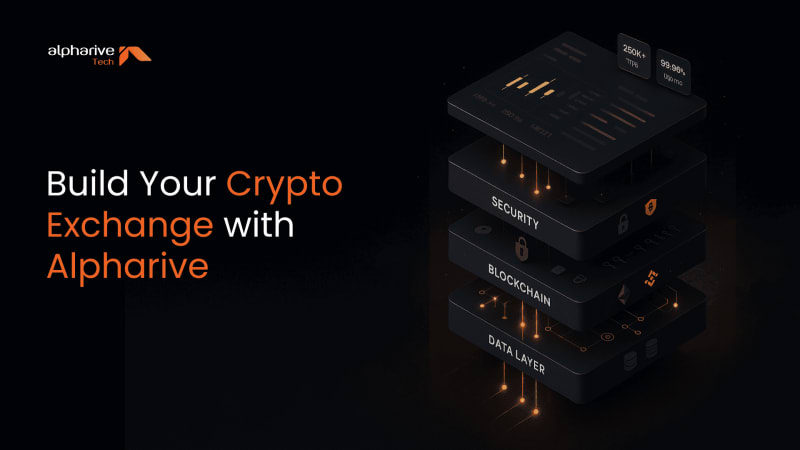
Building a cryptocurrency exchange today isn't just about connecting buyers and sellers. Modern exchanges are highly complex, ultra-fast, and secure platforms designed to handle millions of users, huge trading volumes, and global compliance standards. Let's break down each core module of a 2026-ready exchange to see how it all works behind the scenes.
1. Matching Engine - The Heart of the Exchange
The matching engine is literally which is behind every trade that happens behind. Its job is to match buy and sell orders instantly, ensuring trades execute smoothly at the best possible price. Modern engines are designed for sub-millisecond latency, meaning even high-frequency traders get lightning-fast execution.
They also support complex order types like limit, market, stop-loss, iceberg orders, and more. To achieve this speed and reliability, the most common programming language for matching engines is Rust, known for performance and concurrency handling. Without a robust matching engine, the entire trading experience can feel slow and unreliable.
2. Wallet Architecture - Secure Crypto Storage
Wallets are where users crypto assets live, and modern exchanges use a layered approach here:
- Hot Wallets: These are connected to the internet and handle real-time processing of deposits, withdrawals, and trades. Speed is crucial here.
- Cold Wallets: Offline wallets store the majority of funds securely, protecting them from hacks.
- Multi-Signature (Multi-sig) or MPC (Multi-Party Computation): These methods eliminate single points of failure, ensuring that no single private key compromise can result in fund loss.
A well-designed wallet architecture balances speed for users with top-tier security for safeguarding assets.
3. Liquidity - Keeping the Market Active
High liquidity is what keeps traders engaged and prevents extreme price swings. A liquidity engine ensures the order book is never empty and trading feels smooth. It works by:
- Connecting to external exchanges to fetch additional liquidity.
- Integrating with market makers to maintain constant buy/sell options.
- Synchronizing internal order books to prevent mismatched trades.
- Aggregating liquidity across multiple sources to avoid "empty book syndrome", where a lack of orders slows down trading.
4. KYC/AML Compliance Module
Regulation is crucial, especially in regions like the USA, UK, and UAE. The compliance module includes:
- Identity verification (KYC): Confirming user identities before they trade.
- AML checks: Screening transactions for suspicious activity.
- Risk scoring: Assigning risk levels to accounts or transactions.
- Transaction monitoring: Continuously analyzing patterns to detect anomalies.
- Rule-based + AI-driven systems: Combining automated rules with AI to detect complex fraud or laundering attempts.
5. Risk Management Layer - Protecting Users and the Platform
Risk management is critical to prevent losses and maintain market integrity. This layer includes:
- Anti-price manipulation tools: Detecting wash trading, spoofing, or sudden pump-and-dump patterns.
- Liquidation engines: For futures trading, automatically closing leveraged positions to limit losses.
- Leverage risk checks: Ensuring traders don't exceed safe margin limits.
- Withdrawal risk scores: Flagging high-risk withdrawals.
- Real-time abnormal activity detection: Monitoring unusual patterns to prevent hacks or insider abuse.
6. Admin Console - The Control Center
The admin console allows exchange operators to manage and monitor the platform efficiently:
- User management and verification.
- Controlling trade fees and commissions.
- Generating financial and operational reports.
- Handling disputes and complaints.
7. Security Stack - Protecting the Platform
Security is non-negotiable, modern exchanges deploy multiple layers of protection:
- Web Application Firewall (WAF) and firewall rulesets to block malicious traffic.
- DDoS mitigation to handle sudden attacks.
- HSM-backed key storage for secure private key management.
- Anti-phishing modules to prevent credential theft.
8. Scalability Framework - Built for Growth
Exchanges need to handle millions of users simultaneously, so scalability is a must
- Microservices architecture: Each module runs independently for faster updates and resilience.
- Docker containers + Kubernetes orchestration: Smooth deployment and automatic scaling.
- Database sharding: Splits data into smaller chunks for better performance.
- Multi-region clusters: Ensures low latency globally and disaster recovery readiness.
9. Frontend & Mobile - User Interaction Layer
Finally, all these complex systems are useless if the user interface is poor. Modern exchanges provide
- Spot and futures trading UIs: Easy, intuitive trading for all types of users.
- Copy trading: Letting beginners follow experienced traders.
- Advanced charting and analytics tools: Technical indicators, candlestick patterns, and more.
- Price alerts and notifications: Keeping users updated in real time.
- Mobile apps for iOS and Android: Trading on-the-go with full functionality.
A 2026-ready cryptocurrency exchange is a highly integrated system where speed, security, compliance, liquidity, and user experience all come together. From the sub-millisecond matching engine to AI-driven risk management and mobile-first interfaces, every module is designed to handle high volumes, complex trades, and global regulatory requirements. Understanding this architecture is key whether you're building, investing in, or simply trading on a modern exchange.
Tech Stack We Use
A reliable crypto exchange developer must master these.
Backend
- Go - High Performance - Ideal for matching engines and concurrency-heavy modules. Extremely fast, stable, and great for real-time execution.
- Rust - Low Latency - Used for wallet services, cryptography, and risk engines. Memory-safe coding ensures zero runtime vulnerabilities.
- Node.js - Real-Time APIs - Perfect for WebSockets, admin dashboards, and microservices. Lightweight and fast to develop.
- Python - AI Automation - Best suited for compliance automation, risk scoring, analytics, and AI-driven trading models.
Frontend
- React - Modern UI - Powers fast, interactive trading dashboards with reusable components.
- Next.js - SSR Support - Enables SEO-friendly pages and ultra-fast loading with server-side rendering.
- TailwindCSS - Responsive Styling - Helps build clean, professional, mobile-ready trading interfaces quickly.
Databases
- PostgreSQL - Trade Records - Stores balances, orders, and core financial data with strong ACID guarantees.
- Redis - High-Speed Caching - Used for order books, sessions, and price feeds requiring millisecond access.
- MongoDB - Logs & Analytics - Flexible storage for logs, events, monitoring data, and non-financial records.
Blockchain Support
- Ethereum - Supports the widest range of tokens and DeFi integrations.
- Tron - Popular for low-fee USDT deposits and high-speed transactions.
- Binance Smart Chain - Huge retail adoption and low-cost on-chain activity.
- Layer-2s (Base/Arbitrum/Optimism) - High-speed, low-fee networks ideal for future exchange scalability.
- Bitcoin - SegWit + Taproot - Faster transaction processing and improved smart contract features.
DevOps
- Docker - Ensures consistent environments for all microservices.
- Kubernetes - Handles cluster orchestration, load balancing, and multi-region uptime.
- CI/CD - GitHub/GitLab - Automates deployments, testing, and version control.
- AWS/GCP/Bare Metal - Combines cloud flexibility with bare-metal performance for low-latency trading.
Security Standards & Compliance Requirements
Mandatory Security Layers
MPC Wallets - A 2026 must-have. Keys are never stored in one place, eliminating single-point failures. Protects against both external hacks and insider risks.
Multi-Factor Authentication - Adds an essential extra wall. Even if credentials leak, bad actors can't access user accounts without secondary verification.
DDoS Protection - Prevents your exchange from going offline due to traffic floods. Keeps trading smooth even during peak volatility.
Penetration Testing - Regular ethical hacking simulations to find vulnerabilities before real attackers do. Mandatory for investor confidence.
Transaction Risk Scoring - Analyzes user behavior and flags suspicious transfers instantly. Reduces fraud and protects liquidity.
Address Whitelisting - Allows withdrawals only to verified addresses. A simple but powerful layer to stop unauthorized asset movements.
Cold Wallet Isolation - Most funds stay offline, away from attackers. Cold storage remains the gold standard for large reserves.
Rate Limiting - Prevents API abuse and brute-force attacks by controlling request frequency which keeps the platform stable and secure.
The rule is simple: more security = more investor trust.
Compliance Standards
SOC 2 - Builds trust by proving your exchange follows strict security, availability, and privacy controls.
ISO 27001 - Global standard for information security management. Shows you operate with mature, structured processes.
GDPR - Essential for handling European users' data. Defines how you store, process, and protect personal information.
Travel Rule Support - Mandatory for global crypto compliance. Ensures exchanges share sender/receiver info for high-value transfers.
VASP Licensing Guidance - Required for operating legally in many jurisdictions. Helps exchanges stay compliant with local regulations.
Cost Breakdown
Crypto exchange development isn't a one-size-fit for all investment. Costs vary based on your vision whether you want a quick launch, a fully customized product, or a regulated, global-grade platform. Below is a realistic breakdown based on 2026 industry averages.
White-Label Exchange Software($30,000 – $90,000)
A ready-made framework you can customize with branding and key features.Perfect for startups that want to launch fast with minimal development overhead. Launch time: 2–4 weeks.
Custom Crypto Exchange Development ($120,000 – $450,000)
Our Custom Crypto Exchange Development service delivers exchanges built from scratch around your unique business model, technology requirements, and compliance needs. Ideal for businesses seeking long-term scalability, advanced functionality, and a differentiated user experience. Launch time: 3–6 months.
Enterprise-Grade Exchange (USA/UK/UAE License Ready - $500,000 – $2,000,000+)
Includes advanced security, full compliance integration (KYC/AML/Travel Rule), scalability architecture, and enterprise-grade infrastructure.Designed for regulated regions and institutional usage. Launch time: 6–12 months.
Cost based on Features, Compliance, and Region
Additional Pricing Based on Tiers
1. Basic Exchange: $25,000 - $50,000
Good for MVPs with essential spot trading, basic KYC, and simple wallet flows. Suitable for small markets or testing product-market fit.
2. Advanced Exchange: $60,000 - $120,000
Includes futures, margin, P2P trading, staking modules, and better security. Fits mid-size startups aiming for serious users and higher trading volume.
3. Enterprise Exchange: $200,000 - $450,000+
Covers microservices architecture, MPC wallets, liquidity aggregation, API trading, and custom admin dashboards. Perfect for exchanges targeting global operations and high traffic.
4. White-Label SaaS: $1,500 - $5,000/month
A subscription model where infrastructure, updates, and security are handled for you. Great for founders who want predictable monthly costs.
5. Ongoing Maintenance: $3,000 - $10,000/month
Includes server monitoring, upgrades, dev support, token listings, and regular security patches. Absolutely essential to keep your exchange running safely.
6. Liquidity Providers: $3,000 - $15,000/month
Market makers or liquidity partners who ensure your order books never feel empty. Critical for user trust and smooth trading experience.
7. Licensing (Region-Based): $20,000 - $100,000+
Costs depend on the regulatory environment whether you are from India, Lithuania, Hong Kong, UAE, or USA. Stricter regions require higher compliance documentation and audits.
Crypto Exchange Revenue Model
A well-built crypto exchange isn't just a product, it's a cash-machine with multiple revenue streams. Here's how crypto exchange revenue models generate consistent profits in 2026:
Trading Fees - Your primary revenue engine.Every buy/sell order generates maker–taker fees, which scale with user volume.
Withdrawal Fees - Users pay a fixed or dynamic fee when withdrawing crypto or fiat. This covers network costs and adds a predictable margin.
Listing Fees - Projects pay to get their token listed on your exchange. A major revenue stream for exchanges with strong user bases.
Market Maker Profits - Exchanges or partnered MMs earn profit by providing liquidity and capturing spreads. This improves order book depth while generating extra income.
Leverage Funding Fees - In futures and margin trading, borrowers pay interest or funding rates. This is one of the highest-grossing revenue channels for CEXs in 2026.
Staking Rewards - Users stake assets and the platform takes a commission from the rewards.Boosts user retention and adds passive revenue.
Launchpad Revenue - Projects pay launchpad fees to raise funds and distribute tokens.Perfect for early-stage tokens seeking liquidity.
Spread Income - Exchanges earn the difference between buy/sell prices on certain market pairs.Especially valuable in low-liquidity or internal OTC flows.
Subscription Plans - Premium features like lower fees, analytics dashboards, or advanced trading tools.Great recurring revenue with predictable margins.
Licensing Requirements (USA, UK, UAE)
If you're planning to operate a crypto exchange in regulated markets, licensing becomes a core part of your roadmap. Here's what the big three regions expect from crypto businesses in 2026:
1. United States
The U.S. has one of the most complex regulatory frameworks globally, and crypto exchanges must comply at both federal and state levels.
FinCEN MSB License - Every exchange must register as a Money Services Business (MSB) with FinCEN. This ensures federal-level compliance for money transmission.
State-Level Regulations - Some states require additional licenses (like New York's BitLicense). Depending on where you operate, you may need multiple approvals.
Mandatory KYC/AML - Strict identity verification, AML monitoring, and suspicious activity reporting are required. The U.S. enforces some of the tightest compliance rules in the world.
2. United Kingdom
The UK has a transparent, compliance-driven environment for crypto businesses.
FCA Registration - Exchanges must register with the Financial Conduct Authority (FCA) to operate legally. This ensures operational transparency and consumer protection.
AML/CFT Compliance - Strong anti-money laundering and counter-terrorist financing controls are mandatory. Regular audits and reporting keep exchanges in check.
3. United Arab Emirates
The UAE is emerging as a global crypto hub with two major regulatory bodies.
VARA (Dubai) - Dubai's Virtual Assets Regulatory Authority (VARA) oversees crypto exchanges. Known for being business-friendly while maintaining solid compliance standards.
ADGM (Abu Dhabi) - The Abu Dhabi Global Market offers a highly structured regulatory framework for virtual asset firms. Ideal for institutional-grade exchanges and global operations.
Timeline to Launch
Building a crypto exchange follows a predictable timeline once you know which model you're choosing. Here's what a realistic launch schedule looks like in today's market:
White-Label Launch (15–30 Days): If speed is your priority, a white-label exchange is the fastest route. Most of the core features like trading engine , wallets, admin panel are already built, so you only customize branding, UI, and essential workflows. Ideal for MVPs, niche markets, or rapid go-to-market strategies.
Custom Exchange (3-6 Months): A custom platform takes more time because every module from UI, matching engine, wallet system, liquidity, and admin console is built around your business model. This timeline includes design, development, testing, blockchain integrations, and security hardening. Best for teams who want differentiation, scalability, and long-term ownership.
Enterprise-Grade Platform (6–12 Months): Enterprise exchanges undergo a full cycle of R&D, compliance alignment, scalability planning, security audits, and regulatory documentation. This includes MPC wallets, multi-region deployment, load balancing, penetration testing, and license-ready crypto exchange. Perfect for institutional, regulated, or global-scale operations.
Why Most Exchanges Fail and How to Avoid It?
Launching a crypto exchange is easy. Keeping it alive? That's where 90% of founders struggle. Most failed exchanges don't collapse because of "market conditions" they fail because the foundations were weak from day one.
1. No Liquidity - An exchange without liquidity is like a shop with empty shelves. Users join, see dead order books, and leave instantly killing your platform's credibility.
2. Weak Backend Architecture - Slow matching engines, downtime, and latency issues destroy user trust.If the tech can't handle spikes, you'll lose traders to competitors overnight.
3. Poor Security Practices - Cheap security = guaranteed disaster. Hacks, exploits, and wallet breaches can shut down an exchange permanently.
4. Relying on Cheap Templates - Low-quality or cloned scripts seem attractive at first… until they break, crash, or get exploited.Most "template-based exchanges" don't survive past the first real attack.
5. No Market Maker Support - Without market makers, spreads widen, slippage increases, and the platform feels unusable.Traders leave because execution becomes unreliable.
6. No Regulatory Compliance - Regulators shut down non-compliant platforms instantly.Ignoring KYC/AML or licensing is a direct path to legal trouble.
7. Lack of Differentiation - If your exchange looks like every other exchange, users have zero reason to switch. Copy-paste platforms die fast because they bring no unique value.
How to Avoid Failure - Founder Playbook
Avoiding failure starts with choosing the right development partner, not cutting corners with freelancers or recycled scripts that lack production experience. An exchange must be built on battle-tested architecture designed for real-world scale, using microservices, secure wallet infrastructures, and low-latency matching engines that can handle growth without breaking under pressure. Security must be treated as a launch priority rather than a future upgrade, with MPC wallets, cold storage mechanisms, independent security audits, rate limiting, and web application firewalls integrated from day one because reactive fixes after incidents are always too late.
Success also depends on securing liquidity before the first user arrives by connecting with professional market makers or established liquidity networks so the platform feels active from day one. Equally important is defining a unique value proposition that moves beyond being just another clone of established exchanges. Niche market focus, region-specific features, AI-powered tools, enhanced UX workflows, or specialized trading options create real differentiation and give users concrete reasons to choose your platform over countless alternatives.
How to Choose the Right Cryptocurrency Exchange Development Company?
Choosing the right exchange development partner starts with reviewing real production work, not demo templates. The company should have proven experience building live exchanges and a clear understanding of trading architecture such as matching engines, scalable microservices, and secure wallet systems. These fundamentals determine whether your platform can handle real trading volume without downtime or performance failures.
Security and delivery standards come next. Look for teams familiar with recognized security practices and standards, including MPC or multi-signature wallet implementations, vulnerability testing, and compliance-minded development workflows. Timelines should be realistic rather than rushed, balancing speed with proper system testing and stability checks to avoid post-launch issues that damage user trust.
Finally, evaluate operational readiness. The partner should support liquidity integrations before launch, provide advanced admin controls for KYC, compliance, fees, and audits, and include both Android and iOS mobile apps as part of the core exchange package. A compliance-ready codebase designed for regulated markets will save months of redevelopment and ensure smoother future expansion. A reliable partner reduces your risk by 80 - 90%.
Conclusion
Owning a crypto exchange in 2026 is a strong long-term business move as digital asset adoption continues to grow worldwide. With the right cryptocurrency exchange development company, you can launch faster, operate on secure infrastructure, meet global compliance standards, integrate institutional liquidity, and build a platform designed for sustained revenue growth. If you're ready to move forward, a project consultation can help define the architecture, pricing, and next steps clearly.