
Centralized Exchange Development Company
Launch a secure, scalable, and high-performance centralized crypto exchange designed for real-time trading, advanced liquidity management, and regulatory-ready infrastructure.
Centralized crypto exchanges remain the backbone of the digital asset trading ecosystem, handling the majority of global crypto transactions every day. These platforms allow users to buy, sell, and trade cryptocurrencies through a managed system where the exchange operator controls order matching, liquidity management, and asset custody. Compared to decentralized platforms, centralized exchanges offer faster execution speeds, deeper liquidity pools, and a more familiar trading experience for both retail and institutional users.
For founders and fintech businesses entering the digital asset market, building a centralized exchange requires far more than a trading interface. It involves a powerful matching engine, secure wallet infrastructure, regulatory-ready compliance modules, and seamless integrations with payment gateways and liquidity providers. At Alpharive, centralized crypto exchange development focuses on creating high-performance trading platforms that combine enterprise-grade security, flexible architecture, and scalable infrastructure designed to support growing global trading volumes.
What Is Centralized Crypto Exchange Development?
Centralized crypto exchange development refers to the process of building a digital trading platform where users can buy, sell, and trade cryptocurrencies through a managed system operated by an exchange provider. In this model, the platform handles order matching, transaction processing, asset custody, and liquidity management within a centralized infrastructure.
A centralized exchange typically uses a high-speed matching engine to process trading orders instantly while integrated wallet systems manage deposits, withdrawals, and asset storage. Because the platform controls the trading environment, it can offer faster execution, deeper liquidity, advanced trading tools, and regulatory compliance features. For this reason, centralized exchanges continue to dominate the cryptocurrency market and remain the preferred model for startups, fintech platforms, and institutional trading ecosystems.
Why the Centralized Exchange Model Still Dominates the Market
The centralized exchange model continues to dominate the cryptocurrency trading ecosystem because it supports the majority of global digital asset activity. Today, centralized exchanges process roughly 60–70% of total crypto trading volume worldwide, with daily trading volumes frequently exceeding $50 billion across major platforms. This level of liquidity allows traders to execute large orders quickly without causing significant price slippage, which is critical for both retail users and institutional investors.
At the same time, institutional participation in crypto markets has grown rapidly as regulatory frameworks around digital assets continue to mature. Financial institutions, fintech platforms, and investment firms often prefer centralized exchanges because they provide structured compliance systems, risk monitoring tools, and transparent trading environments. With advanced trading infrastructure, stronger liquidity aggregation, and regulatory-ready architecture, centralized exchanges remain the primary gateway for large-scale digital asset trading across global markets.
Our Centralized Crypto Exchange Development Services
Centralized crypto exchange development services cover the full lifecycle of building, launching, and operating a high-performance digital asset trading platform. From infrastructure design to long-term platform management, each service plays a critical role in creating a secure and scalable exchange environment.
Custom CEX Development
Custom CEX Development focuses on building a fully tailored crypto trading platform designed around specific business models, trading features, and liquidity strategies. This approach allows founders and fintech companies to launch exchanges with a custom matching engine, scalable architecture, advanced trading tools, and complete control over platform functionality and branding.
White Label CEX Solution
White Label CEX Software offers a faster route to market by providing a ready-to-deploy exchange framework that can be customized with branding, supported assets, and platform features. With a stable trading engine, integrated wallet systems, and built-in admin controls, businesses can launch a fully operational exchange without building the entire infrastructure from scratch.
Consultation
CEX Consulting helps founders and digital asset startups define the right exchange model before development begins. This includes platform architecture planning, liquidity strategy design, feature roadmap development, and compliance planning to ensure the exchange aligns with current market expectations and operational requirements.
CEX Security
CEX Security Solutions are designed to protect trading infrastructure, user assets, and transaction data across the platform. Security layers typically include multi-signature wallet systems, cold storage infrastructure, two-factor authentication, DDoS protection, encryption protocols, and continuous monitoring to reduce the risk of cyber threats.
CEX Integration
CEX Integration Services connect the exchange with essential third-party systems that enable smooth operations. These integrations can include payment gateways, liquidity providers, blockchain nodes, KYC and AML verification systems, market data feeds, and trading APIs that expand the platform's functionality.
Maintenance & Support
CEX Maintenance & Support ensures the exchange continues to operate reliably after launch. Ongoing services typically include performance monitoring, feature upgrades, bug fixes, security updates, infrastructure scaling, and technical assistance to keep the trading environment stable as user activity grows.
How CEX Differs from DEX - And When to Choose Each
Centralized exchanges (CEX) and decentralized exchanges (DEX) both enable cryptocurrency trading, but they operate on fundamentally different infrastructures and serve different types of users. A centralized exchange runs on a managed platform where the exchange operator controls order matching, user accounts, asset custody, and liquidity management. This structure allows CEX platforms to offer faster transaction speeds, deeper liquidity, advanced trading tools, and customer support. Because of these advantages, centralized exchanges are typically preferred by new traders, institutional investors, and businesses that require high trading volumes and reliable execution.
In contrast, a decentralized exchange operates through smart contracts on blockchain networks, allowing users to trade directly from their wallets without relying on a central authority. While this approach provides greater control over assets and improved transparency, it often comes with limitations such as lower liquidity, slower transaction speeds, and fewer advanced trading features compared to centralized platforms.
For startups and fintech companies planning to launch a trading platform, the choice depends on business goals. A centralized exchange is usually the better option when the focus is on scalability, liquidity access, regulatory compliance, and a professional trading experience for a global user base.
Core Features of Our Centralized Exchange Platform
Trading Engine & Order Matching
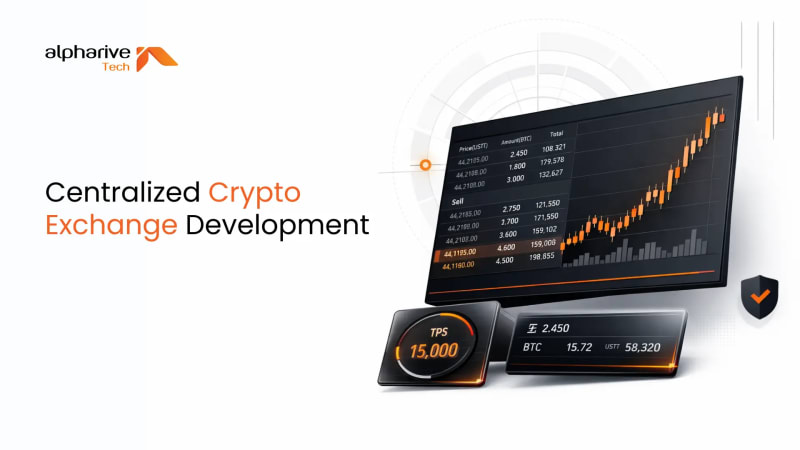
The trading engine is the core component of a centralized exchange, responsible for processing buy and sell orders with speed and accuracy. Our platform architecture is designed to support up to 15,000 transactions per second (TPS), enabling high-frequency trading and large order volumes without delays. The system supports multiple order types including market, limit, and stop orders while maintaining real-time order book updates. With optimized latency handling and scalable infrastructure, the matching engine ensures smooth execution even during periods of heavy market activity.
Admin & User Features
A centralized exchange must deliver an intuitive experience for both traders and platform administrators. The user interface includes advanced trading charts, portfolio management tools, multi-currency support, and multi-chain wallet compatibility for managing various digital assets. On the administrative side, the platform provides a comprehensive dashboard for monitoring trading activity, managing liquidity, overseeing user accounts, and handling listings. Additional features such as two-factor authentication (2FA), biometric login support, and customizable fee structures provide flexibility while improving platform usability and control.
Security Architecture
Security architecture is critical for protecting user funds and maintaining trust within the trading ecosystem. Our centralized exchange platforms implement layered protection strategies including cold wallet custody for long-term asset storage and secure hot wallets for active trading liquidity. Advanced safeguards such as DDoS protection, encrypted communication protocols, and real-time threat monitoring help prevent cyber attacks. In addition, access controls, transaction monitoring, and secure key management systems work together to protect sensitive data and maintain the integrity of the trading environment.
AI-Powered Capabilities in Our Centralized Exchange
AI-powered capabilities are transforming how modern centralized exchanges manage security, trading efficiency, and compliance operations. By integrating intelligent systems into the trading infrastructure, exchanges can monitor platform activity in real time and respond to risks or anomalies faster than traditional rule-based systems.
AI-driven fraud detection analyzes transaction behavior, login patterns, and wallet activity to identify suspicious movements and potential security threats before they escalate. Smart order routing algorithms help optimize trade execution by automatically directing orders through the most efficient liquidity paths. In addition, predictive market intelligence tools analyze trading patterns and market signals to support better liquidity planning and platform performance. AI can also streamline compliance processes through automated identity verification and risk scoring within KYC workflows, helping exchanges maintain operational efficiency while meeting evolving regulatory expectations.
Global Compliance & Regulatory-Ready Architecture
Global compliance and regulatory-ready architecture is a critical component of centralized crypto exchange development, especially for platforms operating in regulated digital asset markets. Modern exchanges must integrate structured compliance frameworks that support identity verification, transaction monitoring, and transparent record keeping. A well-designed compliance layer ensures the platform can adapt to evolving regulatory expectations while maintaining secure and reliable trading operations.
Our exchange architecture includes built-in KYC and AML verification pipelines, automated risk scoring systems, and configurable compliance modules that help businesses align with financial regulations across different jurisdictions. The platform also supports audit trail infrastructure, enabling detailed tracking of transactions, account activities, and administrative actions for reporting and regulatory reviews. With VASP-ready infrastructure, adaptable policy engines, and flexible compliance workflows, exchanges can operate with greater confidence in regulated environments while maintaining seamless trading performance.
White Label Centralized Crypto Exchange Software
White label centralized crypto exchange software provides a faster and more efficient way to launch a fully functional trading platform without building the entire infrastructure from scratch. Instead of developing every component independently, businesses can deploy a ready-to-use exchange framework that already includes the core trading engine, wallet systems, and administrative controls.
This approach significantly reduces development time while still allowing complete branding control, interface customization, and feature configuration. Founders can tailor the platform to support specific trading pairs, fee structures, liquidity strategies, and user experiences that align with their business model. At the same time, the underlying exchange engine remains stable, scalable, and optimized for high trading activity. With flexible architecture and deep customization capabilities, white label solutions make it possible to enter the crypto trading market quickly while maintaining the ability to expand and evolve the platform over time.
Revenue Streams From a Centralized Exchange
Revenue streams from a centralized exchange come from multiple transaction-based and platform-based services that generate consistent income as trading activity grows. The most common source is trading fees, where exchanges charge a small percentage for every buy or sell order executed on the platform. With high daily trading volumes, even a fraction of a percent per trade can produce substantial revenue over time.
Beyond trading fees, exchanges can generate income through withdrawal fees when users transfer assets out of the platform and token listing fees charged to projects that want their cryptocurrencies available for trading. Additional revenue opportunities include margin trading interest, where users borrow funds to trade with leverage, and staking services that allow users to earn rewards while the platform receives a share of staking returns. Some exchanges also offer premium account tiers, advanced trading tools, and paid API access for institutional traders and algorithmic trading firms, creating diversified revenue channels that scale with platform adoption.
Centralized Crypto Exchange Development Process
The centralized crypto exchange development process follows a structured approach that ensures the platform is secure, scalable, and capable of handling high trading volumes efficiently.
Requirement Analysis
During this stage, we evaluate business goals, trading models, target markets, compliance needs, and technical requirements to define the overall centralized crypto exchange development roadmap.
Architecture Design
System architects design the exchange infrastructure, defining the trading engine structure, wallet management system, database architecture, security layers, and scalability framework needed for high-volume trading operations.
UI/UX Development
Designing an intuitive trading interface focuses on creating responsive dashboards, advanced charting tools, smooth navigation, and seamless user experiences that support both beginner and professional traders.
Matching Engine Build
Developers build the high-speed matching engine responsible for processing buy and sell orders instantly while maintaining accurate order books and handling thousands of transactions efficiently.
Wallet & API Integration
At this stage, multi-chain wallet systems, blockchain nodes, liquidity provider connections, and trading APIs are integrated to enable deposits, withdrawals, real-time market data, and external platform connectivity.
Security Audit
Comprehensive security reviews are conducted to identify vulnerabilities in the exchange infrastructure, including penetration testing, smart contract validation, encryption checks, and authentication system verification.
Load Testing
Performance testing simulates heavy trading conditions to ensure the platform can handle large transaction volumes, maintain low latency, and operate smoothly during periods of peak market activity.
Deployment
Once testing is complete, the exchange platform is deployed to production servers with monitoring tools, documentation, and technical guidance provided for smooth launch and operational management.
Centralized Crypto Exchange Development Cost & Timeline
Centralized crypto exchange development cost depends on the level of customization, platform complexity, and infrastructure requirements. A white label centralized exchange typically starts from around $15,000, offering a ready-to-deploy platform with essential trading features and branding customization. A custom-built centralized exchange generally begins at $40,000, where the trading engine, user interface, integrations, and feature set are designed around the business model. For large-scale platforms with advanced trading tools, institutional-grade security, and enterprise infrastructure, development costs can reach $80,000 or more depending on technical scope and integrations.
The development timeline also varies based on the exchange type and level of customization required. A white label exchange platform can usually be deployed within 4 to 6 weeks, making it suitable for businesses looking to enter the market quickly. A custom centralized exchange typically requires 10 to 14 weeks to design, build, integrate, and test the full platform. Enterprise-level exchanges with complex infrastructure, regulatory integrations, and advanced trading features are usually planned through a detailed project scope before establishing the final delivery timeline.
Why Choose Alpharive as Your CEX Development Partner
Choosing the right centralized crypto exchange development company is critical when building a trading platform that must handle high transaction volumes, strict security requirements, and evolving compliance expectations. At Alpharive, exchange platforms are engineered with a high-performance matching engine capable of processing up to 15,000 transactions per second, enabling smooth trading even during heavy market activity. Security is built into every layer of the system through SOC-2 inspired security practices, multi-layer encryption, and rigorous infrastructure protection designed to safeguard user assets and transaction data.
Beyond the technology stack, the development approach focuses on milestone-based delivery with complete project visibility, allowing founders and fintech teams to track progress at every stage of the build. The platform architecture is also designed with compliance-ready modules and adaptable regulatory frameworks, making it easier for exchanges to operate in regulated digital asset markets. After launch, dedicated post-deployment support and SLA-driven maintenance services help ensure the platform continues to scale, remain secure, and perform reliably as trading activity grows. Connect with experts.