Blockchain Supply Chain Transparency: Solving Visibility Gaps in Global Trade
A recent survey found that 93% of supply chain leaders say lack of visibility is their biggest operational challenge, especially as global trade networks become more complex and interconnected.
In many supply chains today, critical information is scattered across different systems used by manufacturers, suppliers, logistics providers, and retailers. Each partner maintains its own records, which often leads to data silos, delayed updates, and inconsistent information across the network. When something goes wrong such as a shipment delay or quality dispute teams spend hours reconciling records instead of solving the issue.
This lack of shared visibility creates serious consequences. Fraud becomes harder to detect, counterfeit products slip through the supply chain, and inventory decisions rely on outdated information. Even basic processes like audits or compliance checks can take days because companies must gather records from multiple sources.
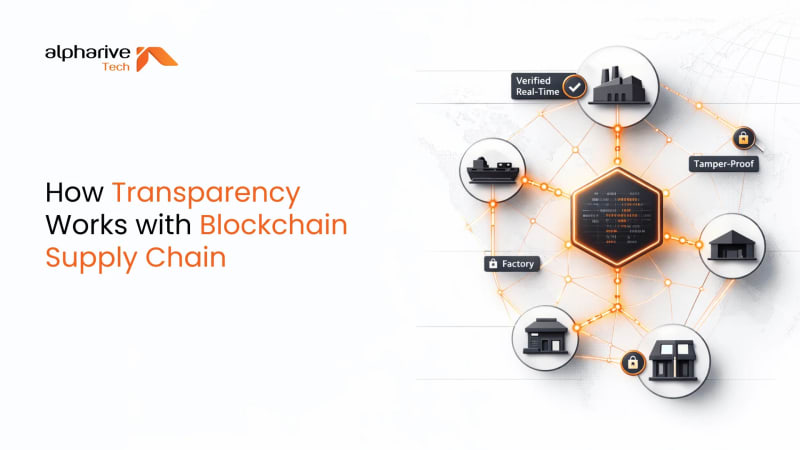
Blockchain supply chain transparency offers a different approach. By creating a shared, tamper-resistant ledger where all partners access the same verified data, blockchain removes visibility gaps and builds trust across the entire supply chain. Here, we will explore how blockchain enables real-time transparency, why traditional systems struggle to deliver it, and how businesses are using this technology to create more reliable global supply chains.
What Is Supply Chain Transparency?
Supply chain transparency refers to the ability of all stakeholders in a supply network to access accurate, real-time information about the movement, status, and origin of goods. In a transparent supply chain, manufacturers, suppliers, logistics partners, distributors, and retailers share the same operational data instead of maintaining isolated records. This shared visibility helps businesses track shipments, verify sourcing claims, and quickly identify disruptions across global trade networks.
However, achieving this level of transparency is far more difficult than it sounds. Most supply chains still rely on fragmented systems such as ERP platforms, EDI messaging, spreadsheets, and manual updates that rarely synchronize in real time. As a result, data remains locked inside organizational silos, and partners often operate using outdated or inconsistent information.
The lack of unified visibility introduces hidden costs across the supply chain. Companies spend significant time reconciling records when disputes occur, while delayed updates can lead to excess inventory or missed delivery commitments. In more serious cases, limited transparency makes it easier for counterfeit goods, fraud, or sourcing violations to slip through unnoticed, putting both operational efficiency and brand reputation at risk.
How Blockchain Creates a Single Source of Truth?
A blockchain shared ledger supply chain creates a single, trusted record where every participant sees the same verified information in real time. Instead of each organization maintaining separate databases, blockchain allows manufacturers, suppliers, logistics providers, and retailers to access a shared system where transactions are recorded and validated across the network. Once data is added, it becomes extremely difficult to alter, ensuring the information remains consistent and trustworthy for all parties involved.
This decentralized structure also removes the need for a single controlling authority. Every update from shipment status to product certification is recorded on the distributed ledger and instantly visible to authorized partners. Because each participant works from the same dataset, disputes over delivery timelines, product origin, or documentation become far easier to resolve. In this model, decentralized supply chain data replaces fragmented records with a reliable source of truth that improves collaboration across global trade ecosystems.
How data gets onto the blockchain
Supply chain data enters the blockchain through several integration points that connect operational systems with the shared ledger. IoT sensors can automatically record temperature, location, and shipment conditions during transit, while ERP platforms synchronize purchase orders, shipping updates, and inventory records with blockchain networks. In other situations, suppliers or logistics providers manually submit verified information through digital portals, ensuring every transaction from manufacturing to final delivery creates a permanent, timestamped record.
Permissioned Access - Transparency without Exposing Trade Secrets
Blockchain transparency does not mean every participant sees every detail of the supply chain. Most enterprise implementations use permissioned networks that allow organizations to control what information different stakeholders can access. For example, a retailer may view shipment status and origin verification while sensitive pricing agreements remain private between specific partners. This approach balances openness and confidentiality, enabling supply chain visibility blockchain systems to deliver shared trust without exposing proprietary business information.
Transparency vs Traceability - What's the Difference?
In supply chain management, transparency and traceability are closely related but serve different purposes. Supply chain transparency focuses on providing real-time visibility into operations across all partners, ensuring everyone can see current shipment status, inventory movements, and compliance data. Traceability, on the other hand, concentrates on tracking the history of a specific product or component as it moves through the supply chain.
Transparency answers the question, "What is happening across the supply chain right now?" while traceability focuses on "Where did this product come from and where has it been?" Together, they create a more accountable and reliable supply chain ecosystem where businesses can both monitor operations in real time and verify the origin of goods when needed.
|
Feature |
Transparency |
Traceability |
|
Primary Focus |
Real-time operational visibility |
Historical product tracking |
|
Scope |
Entire supply chain network |
Individual product journey |
|
Data Type |
Live logistics and operational data |
Product origin and movement history |
|
Typical Use Case |
Shipment monitoring and coordination |
Product authentication and recalls |
|
Technology Role |
Shared visibility across partners |
Tracking items across supply stages |
While transparency improves collaboration and decision-making across supply networks, traceability ensures companies can verify sourcing claims, meet regulatory requirements, and respond quickly to product recalls. If you want to explore how blockchain enables end-to-end product tracking, read our detailed guide on blockchain supply chain traceability.
Key Benefits of Blockchain Transparency in Supply Chain
Blockchain supply chain transparency provides businesses with a more reliable way to monitor operations across complex global networks. By storing verified data on a shared ledger, every participant from manufacturers and logistics providers to retailers can access consistent information about shipments, transactions, and product origins. This shared visibility eliminates the uncertainty that often arises when supply chain partners rely on separate systems and delayed updates.
Beyond improving operational clarity, blockchain also strengthens trust between organizations that may not directly control each stage of production or distribution. With real-time supply chain visibility blockchain platforms, companies can track shipments, validate supplier claims, and quickly identify disruptions without waiting for manual data reconciliation. This capability reduces operational friction and allows businesses to respond faster when problems arise.
One of the most valuable advantages is real-time shipment visibility across all partners. When logistics updates, customs documentation, and warehouse activities are recorded on the blockchain, stakeholders can see the exact status of goods as they move through the supply chain. This level of visibility helps businesses coordinate deliveries more effectively and minimize unexpected delays.
Another major benefit is instant dispute resolution. Because every transaction is recorded on the same shared ledger, disagreements about shipment times, product conditions, or documentation can be resolved quickly by reviewing the verified record. Instead of relying on conflicting internal reports, partners work from the same trusted dataset.
Blockchain transparency also plays an important role in fraud and counterfeit prevention. Each step in the supply chain can be logged with verifiable timestamps, certifications, and ownership records. This makes it significantly harder for unauthorized products to enter the market or for suppliers to falsify sourcing information.
Audits and compliance checks also become far more efficient. Since blockchain maintains a permanent record of transactions, businesses can provide regulators or auditors with verified documentation without gathering files from multiple systems. These audit-ready records reduce the time and cost associated with traditional compliance processes.
Finally, blockchain transparency strengthens consumer trust. Modern buyers increasingly want proof that products are ethically sourced and sustainably produced. With verifiable supply chain data stored on blockchain networks, companies can confidently support their sustainability claims with transparent, tamper-resistant records.
Real-World Examples of Blockchain Transparency in Action
Blockchain supply chain transparency is no longer just a theoretical concept. Several global organizations have already implemented blockchain-based systems to improve visibility, strengthen trust among partners, and reduce inefficiencies in their supply networks. These implementations show how a blockchain shared ledger supply chain can transform fragmented data into a reliable system where every participant works with the same verified information.
One of the most well-known initiatives is IBM Food Trust, a platform developed to improve transparency in food supply chains. Major retailers such as Walmart use the platform to track food products from farms to store shelves. By recording supplier data, shipment details, and safety certifications on a shared blockchain network, stakeholders gain real-time insight into product origins and movement across the supply chain. This level of visibility is particularly valuable during food safety investigations, where identifying the source of contamination quickly can prevent widespread recalls.
Another prominent example comes from the shipping industry through TradeLens, a platform created by Maersk and IBM to digitize global trade documentation. International shipping involves multiple parties, including carriers, ports, customs authorities, and logistics providers, each maintaining separate systems. TradeLens uses blockchain to provide a shared digital record of shipping events, enabling participants to track cargo movements and documentation updates in real time. By replacing fragmented communication channels with a transparent digital ledger, the platform improves coordination and reduces delays in international trade.
Transparency is also transforming the diamond industry through De Beers' Tracr platform. Diamonds often pass through multiple stages, including mining, cutting, polishing, and distribution. Tracr uses blockchain technology to create a digital record for each diamond, documenting its origin and journey through the supply chain. This system helps verify that diamonds are ethically sourced and prevents conflict diamonds from entering legitimate markets.
What measurable results did these companies achieve?
The impact of blockchain transparency becomes clearer when looking at measurable outcomes from these initiatives. Walmart reported that tracing the origin of certain food products through traditional systems previously took nearly seven days, while the blockchain-powered platform reduced that process to just seconds. This improvement significantly strengthens food safety response capabilities.
TradeLens also demonstrated efficiency gains by reducing paperwork and improving the speed of information sharing between shipping partners. With shipment events recorded on a shared ledger, companies can access real-time updates instead of waiting for manual document exchanges, which often slow down international logistics operations.
Similarly, De Beers' Tracr platform has helped verify the provenance of millions of diamonds while improving confidence among buyers and retailers. By using supply chain visibility blockchain systems to validate sourcing information, the company created a transparent process that protects both industry reputation and consumer trust.
US Market - Why American Businesses Are Adopting Blockchain Transparency
In the United States, blockchain supply chain transparency is gaining momentum as companies face increasing pressure to provide accurate information about sourcing, logistics, and sustainability practices. Modern supply chains often involve dozens of suppliers across multiple countries, making it difficult for businesses to verify product origins or track goods as they move through different stages of production. Blockchain-based platforms are emerging as a practical solution, allowing organizations to maintain a shared, tamper-resistant record of supply chain events that improves visibility across the entire network.
Consumer expectations are one of the biggest drivers behind this shift. American buyers increasingly want to know where their products come from, how they were produced, and whether companies follow ethical sourcing practices. Retailers and brands are responding by adopting supply chain visibility blockchain systems that can verify supplier information and product movement in real time. At the same time, growing environmental, social, and governance (ESG) reporting requirements are pushing companies to maintain more transparent records that can support sustainability claims.
Large retailers are also accelerating blockchain adoption across their supplier ecosystems. Companies like Walmart and Target require suppliers to share more detailed data about production, shipping, and product origins to improve traceability and accountability. For many suppliers, implementing supply chain visibility software USA solutions built on blockchain technology has become a practical way to meet these requirements while improving operational coordination with logistics partners and distributors.
European Market - Regulatory Drivers for Supply Chain Transparency
Across Europe, supply chain transparency regulation Europe has become a major force pushing businesses to adopt more advanced visibility systems. Governments and regulatory bodies are introducing stricter laws that require companies to prove where their products come from, how materials are sourced, and whether suppliers follow ethical and environmental standards. Traditional reporting systems often struggle to provide reliable, verifiable data across complex international supply networks, which is why many organizations are exploring blockchain-based platforms to manage compliance more effectively.
One of the most significant developments is the EU Corporate Sustainability Due Diligence Directive (CSDDD), which requires large companies operating in the European market to identify and address environmental and human rights risks across their supply chains. In addition, the EU Deforestation Regulation (EUDR) mandates that businesses demonstrate products such as coffee, cocoa, and timber are sourced from deforestation-free areas. To meet these requirements, companies must maintain accurate records that track supplier activities and product origins throughout the supply chain.
Several European countries have already implemented national regulations that reinforce these transparency expectations. Germany's Supply Chain Due Diligence Act (LkSG) obligates large organizations to monitor human rights risks across their supplier networks, while France's Duty of Vigilance Law requires companies to identify and prevent social and environmental violations linked to their operations. These policies are pushing businesses to adopt technologies capable of maintaining decentralized supply chain data that regulators and partners can verify.
As regulatory oversight continues to expand, companies operating in Europe are looking for systems that can provide reliable documentation without slowing down operations. Blockchain-based transparency platforms offer a practical solution by creating a secure, shared record of sourcing, production, and logistics data that can support compliance with evolving European supply chain regulations.
Blockchain Transparency vs Traditional Supply Chain Systems
Blockchain supply chain transparency introduces a fundamentally different approach to managing supply chain data compared to traditional systems. In conventional supply chains, each organization maintains its own database for shipments, purchase orders, and supplier records. These isolated systems rarely synchronize in real time, which often leads to inconsistent information, delayed updates, and lengthy reconciliation processes when partners need to verify transactions.
Blockchain networks replace this fragmented structure with a shared ledger where supply chain participants access the same verified dataset. Instead of exchanging multiple documents across emails, ERP systems, and EDI messages, partners record transactions directly on the blockchain. Every update is timestamped, validated, and visible to authorized stakeholders, creating supply chain visibility blockchain systems that improve trust and coordination across complex logistics networks.
|
Feature |
Blockchain-Based Supply Chains |
Traditional Supply Chain Systems |
|
Data Ownership |
Shared ledger accessible by authorized partners |
Data stored separately within each organization |
|
Data Accuracy |
Verified and tamper-resistant records |
Prone to inconsistencies across systems |
|
Update Speed |
Real-time updates across the network |
Delayed updates through manual or batch processes |
|
Audit Readiness |
Records are automatically stored and easy to verify |
Audits require manual data collection from multiple sources |
|
Fraud Risk |
Low due to immutable transaction history |
Higher risk due to fragmented records |
|
Dispute Resolution |
Faster because all parties view the same data |
Slower due to conflicting documentation |
|
Operational Cost |
Reduced reconciliation and documentation costs |
Higher administrative and coordination costs |
How to Build a Transparent Supply Chain with Blockchain
Building blockchain supply chain transparency requires more than simply implementing a new technology platform. Companies must first understand how information flows across their existing supply chain and identify where visibility breaks down between suppliers, manufacturers, logistics providers, and retailers. A well-designed blockchain strategy focuses on connecting data sources, defining participation rules, and ensuring that all stakeholders can contribute verified information to a shared ledger.
Organizations that successfully implement real-time supply chain visibility blockchain systems typically begin with a structured rollout that addresses both technical integration and operational collaboration. From mapping supplier networks to defining governance frameworks, each step helps transform fragmented data into a trusted, transparent system where partners share the same verified records.
Start with a supply chain mapping audit
A supply chain mapping audit is the first step in understanding how goods, information, and documentation move across the entire network. This process identifies all participants involved in production, transportation, storage, and distribution. By documenting supplier relationships, logistics routes, and data sources, businesses gain a clearer picture of where visibility gaps exist and which processes would benefit most from blockchain-based transparency.
Identify your highest-risk visibility gaps
Once the supply chain structure is mapped, organizations can evaluate areas where limited transparency creates operational risk. These gaps often appear in supplier verification, shipment tracking, compliance documentation, or inventory updates between partners. Prioritizing these high-risk areas ensures that blockchain implementation targets the most critical transparency challenges first, delivering measurable improvements in supply chain coordination.
Choose between public, private, or consortium blockchain
Selecting the right blockchain architecture is an important design decision. Public blockchains offer open networks with high transparency, while private blockchains provide controlled access for enterprise environments. Consortium blockchains, which are managed by a group of trusted organizations, are often preferred for supply chain networks because they allow multiple stakeholders to participate while maintaining governance over how data is shared.
Integrate data sources (IoT, ERP, supplier portals)
For blockchain transparency to work effectively, supply chain data must flow into the shared ledger from multiple operational systems. IoT sensors can automatically record shipment conditions and locations, ERP platforms can synchronize purchase orders and inventory updates, and supplier portals allow partners to submit certifications or compliance documents. These integrations create decentralized supply chain data that reflects real-world events as they occur.
Define governance rules - who can write, read, verify data
A transparent blockchain network requires clearly defined governance rules that determine how participants interact with the system. These rules specify who can submit new records, who can access certain types of information, and how transactions are validated before being added to the ledger. Establishing these governance frameworks ensures that the blockchain shared ledger supply chain remains secure, trusted, and useful for all participants involved.
Alpharive - Your Partner for Next-Gen Supply Chain Solutions
Building a transparent and resilient supply chain requires more than adopting new technology, it demands custom software development services that create a well-designed digital ecosystem where data flows securely across every participant in the network. We help organizations implement blockchain supply chain transparency solutions that unify fragmented systems, create shared data visibility, and strengthen trust across global trade partners.
Our team works closely with businesses to design blockchain architectures, integrate supply chain platforms, and connect enterprise systems such as ERP, IoT, and logistics platforms into a secure shared ledger. By combining deep blockchain expertise with practical supply chain integration strategies, Alpharive enables companies to achieve real-time visibility, reduce operational disputes, and meet evolving regulatory requirements with confidence. Connect with experts to build a transparent and future-ready blockchain powered supply chain solution with Alpharive.