
Crypto Exchange Business Model: How Modern Platforms Generate Revenue
Crypto exchanges have grown into one of the strongest business models in the digital economy. They attract traders, drive high transaction activity, and create multiple ways for the platform owner to earn. With more people moving toward digital assets, understanding how these exchanges make money has become an important part of planning a new platform. In this blog, we explore the main revenue streams and explain how an enterprise-grade exchange can grow into a profitable business.
Understanding Crypto Exchange Revenue Models
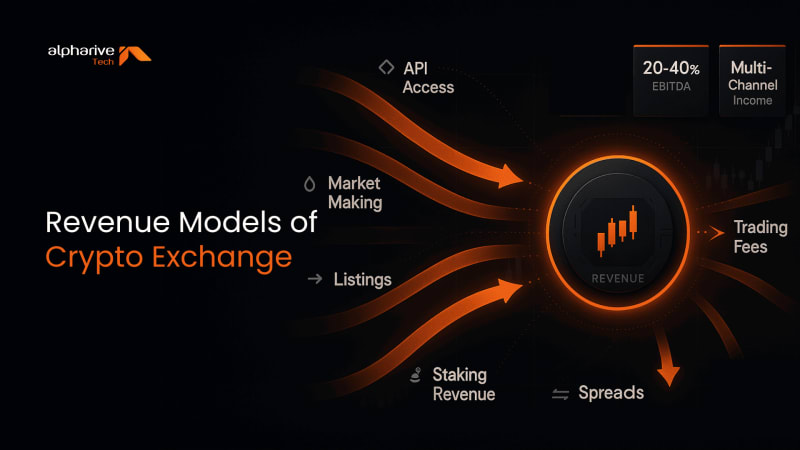
Crypto exchange revenue models describe the different ways a trading platform earns income from users, transactions, and value-added services. Most exchanges today follow a mixed model because it helps them generate steady income even when the market slows down. At the same time, this approach allows new operators to scale their business gradually without depending on a single income source.
These models are flexible and can be adapted based on the platform's features, security level, and target audience. Some exchanges focus more on trading fees, while others lean into advanced tools like staking or liquidity programs. This balance allows an enterprise platform to stay strong, even as market trends change.
Trading Fees
Trading fees are the most familiar part of the crypto exchange business model, and they remain the biggest source of income for almost every platform. Users pay a small fee each time they buy or sell crypto, and these small amounts add up quickly when the platform handles large volumes.
In addition, trading fees are steady because they flow in with every market movement. Even on quieter days, traders often make small transactions, creating a consistent revenue stream for the platform owner. It is one of the simplest and most reliable ways an exchange earns.
Withdrawal Fees
Withdrawal fees contribute another stable earning channel by covering network costs and generating extra profit. Whenever users move crypto or fiat out of the exchange, a small fee is applied. This is common across the industry, and most users are already familiar with it.
Because withdrawals happen daily, the platform receives ongoing income, even during periods of low trading activity. It is a predictable and easy-to-manage revenue stream that supports the business without adding extra workload.
Listing Fees
New blockchain projects often look for exchanges to list their tokens. This creates a valuable opportunity for platform owners. In many cases, exchanges charge a listing fee to onboard these tokens, giving the project more visibility and access to users.
For a growing exchange, this becomes a strong revenue path because token teams are willing to pay for exposure. As the platform's audience expands, the value of a listing increases, eventually becoming a significant earning channel.
Market Making and Liquidity Options
Market making plays a key role in building a smooth trading experience. Many exchanges either provide liquidity themselves or partner with liquidity providers. These arrangements can create revenue when the exchange earns a share from spreads or trading volume generated by liquidity partners.
This approach does more than increase income. It improves the user experience by offering tighter spreads and faster trades, helping the exchange attract more traders over time.
Spreads and Instant Buy/Sell
Some platforms earn from spreads the difference between the buy and sell price of a token. This model is often used in instant buy/sell features where users want quick execution rather than complex trading tools.
Spreads offer flexibility because they can be adjusted based on market conditions. This gives the platform owner an additional way to generate income without direct fees on every action.
Staking, Lending, and Yield Programs
Many enterprise-grade exchanges expand their business by offering staking, lending, or savings programs. These services allow users to earn rewards while the platform takes a share for managing the process. It creates a win-win situation where users enjoy passive income, and the exchange builds a steady revenue line.
As interest in passive earning grows, these programs become more valuable for attracting and retaining users. They help increase platform activity while building long-term engagement.
Margin Trading and Interest Earnings
Some advanced exchanges offer margin or leverage trading, where users borrow funds to take larger positions. In this model, the exchange earns through interest on borrowed amounts. This can become one of the strongest revenue channels when managed with proper risk controls.
Margin trading attracts experienced traders who often create higher trading volumes. For a platform owner, this means more activity and more earnings without increasing platform complexity too much.
Premium API Access
Professional traders and institutions often require higher API limits, faster data feeds, or advanced analytics. Exchanges meet this need by offering premium API subscriptions or enterprise-grade tools for a fee.
These services open the door to a specialized audience willing to pay more for performance and reliability. Over time, this becomes a valuable income stream, especially for exchanges that focus on high-volume trading environments.
Advertising and Promotional Opportunities
Once an exchange builds a strong user base, additional revenue can come from advertising or sponsored placements. Token teams may pay to promote their projects through banners, featured pairs, or priority listings.
These promotions not only generate income but also help exchanges maintain community engagement. It becomes an easy-to-manage revenue model that grows as the platform's visibility improves.
Building a Sustainable Business Model for Your Exchange
A strong crypto exchange business model blends multiple revenue methods into one smooth strategy. By combining trading fees, withdrawals, listings, spreads, and value-added services, the platform becomes resilient in every market condition. This approach gives the owner flexibility while ensuring that income remains steady throughout the year.
Enterprise-grade exchanges often choose tailored revenue structures based on their goals, audience, and long-term plan. With the right mix, the platform becomes more than just a trading space it becomes a complete ecosystem with reliable earning potential.
Why Launch Your Exchange with Alpharive?
Choosing the right crypto exchange development company plays a major role in shaping the success of your platform, especially when you want secure technology, smooth performance, and a clear path to long-term revenue growth. Launching a crypto exchange demands a strong technical base, reliable security, and a clear revenue strategy, and this is where Alpharive supports you with experience across Web3 and exchange development. The team focuses on building platforms that scale smoothly, work securely, and deliver revenue opportunities from day one, helping founders enter the market with confidence and clarity.