Top Applications of Mobile Apps for the Internet of Things (IoT)
The rise of the Internet of Things has reshaped how we interact with the world around us. Walk into any modern home, office, or city street, and you'll notice a subtle shift: everyday objects are starting to think for themselves. Lights adjust before you touch a switch. Watches track your health without prompting. Machines report issues before a technician arrives. This transformation is powered by IoT, but the real value emerges when a mobile app brings all these connected elements together.
As IoT becomes embedded across industries such as healthcare, agriculture, manufacturing, and urban management, mobile apps have taken on a central role. They serve as the access point for real-time data, remote control, and system visibility, allowing complex networks of devices to function in a coordinated manner. Recognizing how mobile apps enable and extend IoT solutions is essential for understanding both current implementations and the direction this technology is heading.
IoT Scope in Mobile Apps
As IoT systems grow more advanced, the role of the mobile app has shifted from supportive to central. It's the layer that turns connected hardware into something people can interact with in a meaningful way.
Behind every smart device is an app responsible for configuration, control, and interpretation. It manages how data is captured, how devices communicate, and how the entire system stays aligned. Without this layer, IoT networks would be isolated components rather than a coordinated environment. This expanded scope has made mobile apps the operational core of modern IoT solutions, influencing performance, usability, and long-term scalability across every industry adopting connected technology.
How Mobile Apps Power IoT?
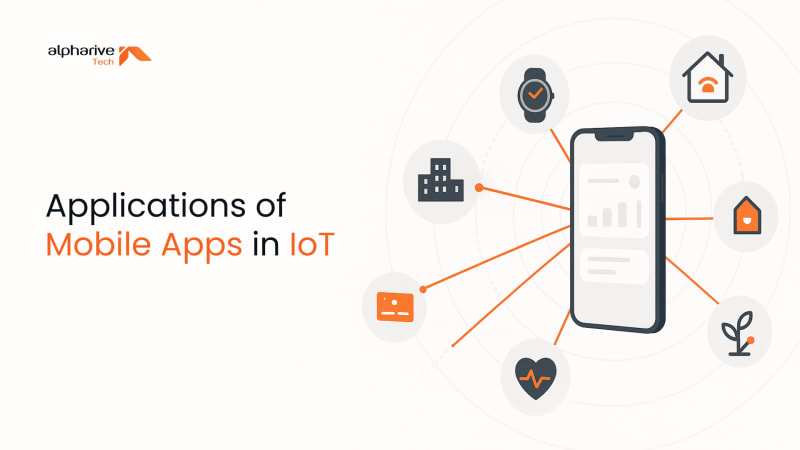
IoT devices can capture data, automate actions, and operate independently, but none of this comes together without the mobile app. A mobile app is the operational layer that organizes the entire system and makes it usable for people. It connects devices, provides the controls, and ensures each component works in sync. To make this possible, every IoT setup depends on three ‘c'-core functions managed through the mobile app.
Connect: Networking Smart Devices
The first task is getting devices into the same network. Mobile apps help sensors, appliances, and machines register themselves and stay connected, whether through Bluetooth, Wi-Fi, or cellular networks. This connection step is what turns a standalone device into part of a larger ecosystem that users can access from anywhere.
Communicate: User Device Interaction & Commands
Once everything is connected, the app acts as the voice of the user. It sends commands, receives updates, and ensures devices respond instantly. Locking a door, adjusting temperature, or triggering an alert all depend on this communication layer. It's what makes IoT feel responsive and human-centered.
Collect & Cloud: Data Gathering and Remote Storage
IoT systems generate massive amounts of information. Mobile apps collect this data, push it to cloud platforms, and present it in a way users can quickly understand. Whether it's energy usage, health metrics, or equipment performance, the app turns raw data into insights and real decisions.
Where IoT Mobile Apps Are Already Making a Difference?
The impact of IoT becomes clearest when you look at how mobile apps are transforming real-world environments. In sector after sector, these apps act as the operational layer that brings connected systems to life. They give users the ability to monitor devices, automate tasks, and respond to changes instantly, whether they're managing a single appliance or an entire facility.
This influence is now visible across homes, cities, industries, and everyday consumer experiences. Mobile apps take the complexity out of IoT deployments and translate them into simple, actionable tools. That's why so many key domains have already adopted IoT-driven mobile solutions.
Building and Home Automation
Smart homes are one of the earliest and strongest examples of IoT in action, and mobile apps play a key role in making these systems practical. Through a single app, users can control lighting, adjust room temperature, check security feeds, lock doors, or manage appliances.
In larger building environments, mobile apps support a wider range of operations. Facility teams can track energy usage, monitor HVAC systems, oversee access control, and receive alerts when equipment needs attention. This level of visibility helps reduce manual effort, improve safety, and ensure that resources are used more efficiently across the property.
Wearables & Personal Devices
Wearable technology has become a mainstream part of daily life, and mobile apps are the bridge that connects these devices to users. Whether it's a fitness tracker, smartwatch or health monitoring band, the app collects data from the wearable and presents it in a form that's easy to understand. With quick access to metrics like activity, heart rate, and sleep, users get clear insights without any complexity.
Agriculture & Smart Farming
As the world's population continues to rise, the agriculture sector faces increasing pressure to produce more food while managing limited land, water, and labor resources. This challenge has pushed farms to adopt methods that rely on accurate, real-time information rather than seasonal guesswork.
Mobile apps paired with IoT sensors make this transition possible. They give farmers immediate insight into soil conditions, crop requirements, equipment status, and environmental changes. Tasks like irrigation control, field monitoring, and livestock tracking can now be managed remotely, helping farms improve yield, reduce wastage, and run operations with greater accuracy.
Healthcare & Remote Monitoring
Patients often need continuous tracking, and manual reporting can't deliver the speed clinical teams rely on. IoT mobile apps help close this gap. Devices like heart-rate monitors, glucose sensors, and smart wearables send health data straight to the app, letting patients and doctors see updates in real time. This makes it easier to spot issues early, adjust treatment when needed, and support patients from anywhere.
Retail & Smart Commerce
Retail environments move quickly, and staying updated on stock and store operations is hard to manage manually. IoT changes this by connecting shelves, scanners, and POS systems to a single mobile app.
Store teams can track stock levels, monitor customer flow, adjust digital displays, and receive alerts when items need restocking. For shoppers, IoT-powered apps support features like indoor navigation, personalized offers, and quicker checkout. Together, these tools help retailers reduce delays, improve accuracy, and create a smoother shopping experience.
Smart Cities & Urban Infrastructure
Users can check available parking spaces, track buses or trains, receive safety alerts, or get updates during emergencies. On the city's side, teams can adjust street lighting automatically, detect water or electricity faults early, manage waste collection routes, and respond faster when issues occur. This level of visibility and automation helps cities stay organized, reduce delays, and offer smoother everyday experiences for the people who live there.
Why Alpharive Matters in the Future of IoT Mobile Apps?
The growth of IoT has created a clear need for mobile apps that can work smoothly with connected devices and large data flows. As businesses move toward smarter systems, the expectations for reliability, responsiveness, and ease of use continue to rise. This is where Alpharive aligns naturally with the direction IoT is heading.
With a focus on custom software development services that integrate well with sensors, cloud platforms, and real-time communication layers, Alpharive supports companies looking to turn connected ideas into practical solutions. The team's experience across different domains helps translate complex IoT requirements into apps that are stable, scalable, and ready for long-term use.
Closing Thoughts
As connected systems continue to shape the way people live and work, the scope of IoT development will only grow wider. Mobile apps will remain the primary link between users and smart environments, enabling clear communication, reliable control, and meaningful insights across different sectors. From homes to cities and everything in between, the combination of IoT devices and well-designed mobile apps is setting the direction for the next wave of digital transformation. Our custom app development services help businesses build connected mobile experiences around their specific IoT requirements. The progress made so far is only the beginning, and the opportunities ahead show how central IoT development will be in building smarter, more efficient experiences.