
Services
Alpharive, a leading healthcare app development company that unleashes advanced tech into the healthcare industry with advanced solutions to upgrade your existing system.











Our success stories
0+
Projects completed
0+
Awards Received
0+
Years of experience
0+
Team members
Healthcare App Development has become the key area of today’s evolving digital era in the healthcare system, solving multiple problems and helping patients. The growing tech space is changing the view of the existing globe, making every possible situation possible to bring new-age technologies into every industry sector. Healthcare apps are based on various processes of the industry, from monitoring to delivering drugs, each has brought a mobile app for easy processing.
Healthcare Mobile App Development solves various problems in the healthcare industry, from connecting patients and doctors even helping doctors monitor the patients' health with mobile apps. With the growing interest in AI, building a next-gen health application will level up the experience and improve the quality of the healthcare solution you provide. We are working at our best to enhance the application with AI solutions that improve the connection between Doctors and Patients.

Alpharive provides a wide range of healthcare mobile app development services to enhance the healthcare services provided to patients, and here are the top services we offer

Looking for a custom healthcare app solution to build your idea? We have got you, our team with a wide range of expertise in new-age tools and technologies, will bring you a hassle-free application developed from scratch.

Want a new design for your healthcare app? Our creative designers and young talents are ready to bring you an impressive design that suits your idea and makes the user flow of the application easy for everyone.

The healthcare apps handle many sensitive data points and must be more secure, so we bring you the most secure decentralized solution by building your health app with blockchain solutions, which marks your step forward to the future.

Launched your app! But that's not the end, as you know. You need a backup team to monitor, support, and maintain it at regular intervals so that the app works perfectly without any interruption or bugs.

Need to upgrade your existing healthcare app? We list out the top tech stack and new-age technologies, and you decide the best that suits your project vision. Our team will bring you the update in a matter of time.

Have no idea about healthcare applications? No worries, Alpharive is there any time to help you take your next step forward. Connect with our experts anytime, and we will guide you through every aspect of healthcare application.
Alpharive, as a healthcare mobile app development company, sets up a dedicated team to build new-age healthcare solutions, bringing in AI, blockchain, and more. To present the most advanced mobile health application to the world, which is safe and secure to handle all the health data. In 2025, nearly 85 million users are actively using healthcare and fitness apps, and particularly in the US, about 43% rely on healthcare apps.
As the above data suggests, the percentage of healthcare apps is a huge number, and in the coming years, the number will increase. This is the time to plan your healthcare app and enhance your presence in the healthcare sector, and we have backed you with our unique healthcare app solutions that really help you grow. We at Alpharive get your app through a series of development processes and move on to the next phase once each step is approved by the client, which makes us one of the best healthcare mobile app developers.
Alpharive provides several Healthcare mobile app solutions to our clients around the globe, and we have a few listed below

The fitness app lets to monitor their daily routine of the users from exercise to their diet plan, helping them to improve their health. The app will provide a detailed diet plan, personalized fitness plan, and more based on the health data they provide.

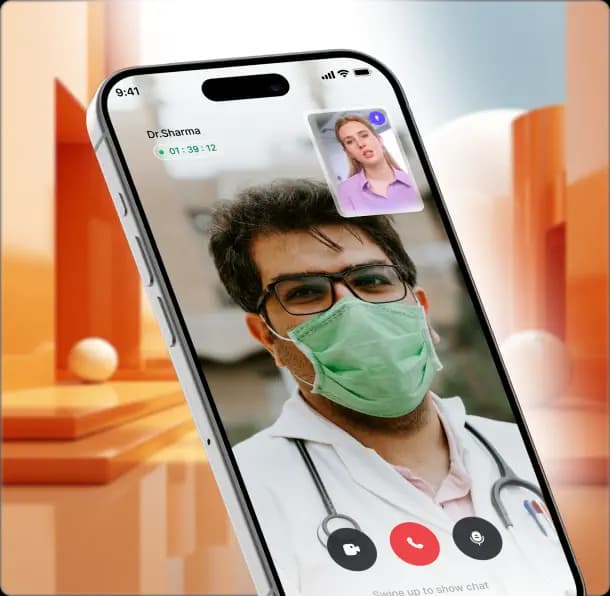
Custom telemedicine software lets users connect with the right doctors anywhere at any time, allowing them to describe their current health condition, get prescriptions from a doctor, and complete consultations from home.

Everything is simple in this tech world. If a patient can consult a doctor from home, then why can't the drugs prescribed reach their home? That's where we have got you, build the next Pharmacy app that helps patients order and track their drugs from home.

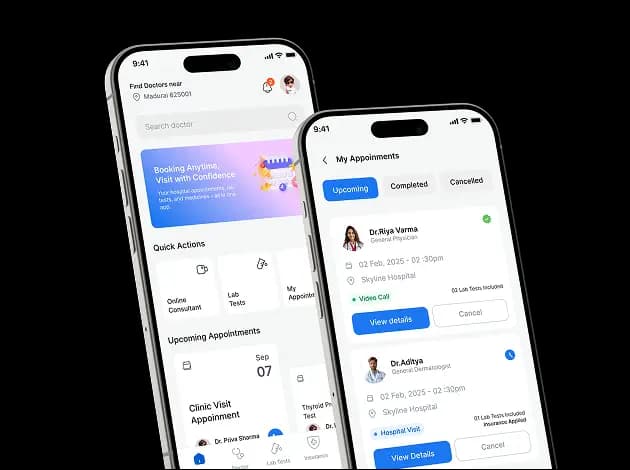
Upgrade your existing hospital system with doctor consultation app development, helping patients book appointments, consult doctors from home, and manage their consultation schedules through the app.
Want to build your healthcare app, but couldn’t find the right development team? We are here to build you a digital solution, get connected with our experts, and set up the whole idea from ground to core functionality development and finally deployment. The house is equipped with experienced developers, who will bring your idea to life by implementing new-age tools and tech stack.
From designing to backend development, with a single developer or a whole team, hire our team to build your next digital solution in the healthcare application. You can also hire our developers on an hourly basis or on a project basis. Based on the project and task, we will get you the best person who suits the task and finishes it on time without any bugs. Or, looking for a team to manage and maintain your application, we also provide the best person to look after your product for maintenance anytime.

Each healthcare app development model comprises its features and benefits, but on a whole, only a few features stand out, and here we have listed out a few best ones.

Patients, Doctors, and Admin will have separate dashboards to know about their medical records, whereas Admin will be able to see only the user's data and not the medical data.

Everything is virtual in this modern era, just as the doctor consultation got an upgrade, allowing patients to consult the doctor virtually from anywhere in the world at ease.

Want to consult a doctor regarding your health? Find the right doctor, figure out the right time that suits you and the availability of the doctor, and fix an appointment in a second.

Patients will be able to view their health records anytime from the app, even years later, and can download them and save them for the future, making it easy for their future consultations.

The prescription can be updated by the doctor in the app under the patient's profile, which is visible only to the doctor and the specific patient, ensuring privacy and safety.

Our advanced healthcare app allows doctors to monitor patients remotely, with each health data updated in the app by the patient, which brings a new dimension to the healthcare system.
Our professionals use a diverse tech stack to build an astonishing solution, and here are a few tech we use for a healthcare app.


Alpharive, a world-class Health app development company with 10+ years of experience in app development, has successfully developed and deployed more than 250+ digital solutions to clients around the globe. Revolutionize the healthcare industry with your idea, where our developers give your idea life and bring it to the digital space. We don’t just code software, we create Alpharive software solutions that improve patient outcomes and simplify healthcare operations. Share your idea with us today and let our experts turn it into a powerful digital healthcare solution.

We build secure, HIPAA-compliant apps. Your patient data is always protected by our robust development standards.

Our team deeply understands clinical workflows, ensuring your app is perfectly tailored for the healthcare industry.

We design engaging, easy-to-use apps for patients and providers to drive adoption and improve care.

We use agile methods adapted for healthcare, ensuring fast, efficient, and compliant application development.

We ensure your new app integrates smoothly with existing EHR, EMR, and other vital healthcare systems.

We build reliable, future-proof apps that scale with your organization, from startups to large enterprises.