A custom CRM is a system built specifically around a business's unique processes, data structure, and growth goals. Unlike off-the-shelf CRM software, it is not designed for the average use case, it is designed for how a specific business actually operates.
Businesses start exploring custom CRM solutions when standard tools feel restrictive, reporting lacks accuracy, or workflows require constant workarounds. Understanding what a custom CRM is built and how it differs from ready-made software helps decision-makers choose the right long-term path.
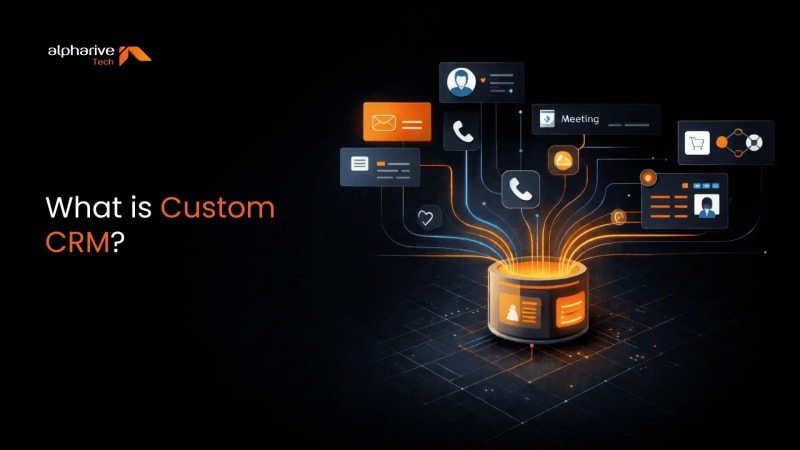
What Is a Custom CRM?
A custom CRM is a tailored customer relationship management system developed from scratch or extensively customized to match a company's specific workflows, data needs, and operational structure. It is designed to support how teams sell, manage customers, and deliver service without forcing them to adapt to predefined software limitations.
Unlike configurable CRMs that allow surface-level changes, a custom CRM enables deeper customization such as unique workflows, custom modules, role-based access, and specialized integrations. This flexibility allows businesses to align their CRM directly with internal processes and future growth plans. Many organizations are exploring customizable CRM to understand how flexibility impacts long-term value.
How a Custom CRM Works
A custom CRM works by centralizing all customer-related data into a single system that is accessible, structured, and secure. Sales, marketing, and support teams interact with the same source of truth rather than fragmented spreadsheets or disconnected tools.
Workflow automation plays a key role. Routine actions such as lead assignment, follow-ups, status updates, and notifications are handled automatically, reducing manual effort and errors. Reporting and dashboards are designed around business-specific metrics, providing real-time visibility into performance.
Custom CRMs also integrate seamlessly with existing systems such as ERP platforms, accounting tools, marketing software, and internal applications. This creates a unified data ecosystem where information flows smoothly across departments without duplication.
Custom CRM vs Standard CRM Software
The difference between custom CRM and standard CRM software becomes more apparent as businesses grow.
Standard CRM software offers predefined workflows and features that work well for general use cases. However, flexibility is limited, and businesses often need to adjust their processes to fit the software. Custom reporting and data ownership are also constrained.
A custom CRM offers full flexibility and scalability. Businesses own their data, control system evolution, and build reporting around real operational needs. Over time, this leads to better alignment, fewer workarounds, and stronger ROI compared to rigid, off-the-shelf tools. This contrast becomes clearer when evaluating a custom CRM vs off-the-shelf CRM over multiple years.
Examples of Custom CRM Use Cases
Custom CRM systems are used across industries and business models where standard tools fall short. A sales-focused CRM can be designed around complex pipelines, multi-step approvals, and territory-based access. This helps sales teams manage opportunities more effectively without unnecessary features cluttering their workflow.
A service and support CRM focuses on post-sales engagement, ticket management, and customer history. It ensures support teams have full context and can respond efficiently across channels.
Industry-specific CRMs address unique requirements such as compliance, data sensitivity, or specialized workflows. Healthcare providers, real estate firms, and education organizations often benefit from CRM systems tailored to their operational realities.Each industry specific CRM like Healthcare CRM, Real Estate CRM and Education CRM has its own set of rules and are built specifically for their business operations.
When Does a Business Need a Custom CRM?
Businesses typically need a custom CRM when they outgrow the limitations of SaaS tools or spreadsheet-based systems. Signs include manual workarounds, disconnected data, unreliable reporting, and rising subscription costs without proportional value.
Complex workflows are another trigger. When approval flows, role permissions, or customer journeys no longer fit standard CRM models, customization becomes essential. Industry regulations and data governance requirements also push businesses toward custom solutions.
Scaling teams further amplify these challenges. As user count and data volume increase, businesses need CRM systems designed for performance and flexibility rather than patchwork fixes. Many organizations begin this evaluation with a guide to building a CRM to understand what's involved.
Is a Custom CRM the Right Choice for Every Business?
A custom CRM is not the right choice for every business at every stage. Small teams with simple sales processes may find standard CRM tools sufficient in the short term. However, as businesses grow, customization becomes less about preference and more about necessity. The transition usually happens when inefficiencies begin affecting revenue, customer experience, or internal productivity.
Choosing a custom CRM should be a strategic decision based on long-term goals, not just immediate needs. Avoiding hard selling and evaluating readiness honestly leads to better outcomes.
Turning CRM Requirements Into a Scalable System
Turning CRM requirements into a scalable system requires more than listing features. It involves understanding workflows, planning for growth, and designing architecture that supports change without disruption.
Expert planning ensures CRM systems remain flexible as business needs evolve. Future-proof design reduces technical debt and prevents costly rebuilds later. This is where experienced execution matters, as CRM platforms often become core operational systems.
For businesses ready to move from concept to execution, custom CRM development;provides a structured path to building systems that scale with confidence.
Alpharive - Your Custom CRM Development Partner
Choosing a custom CRM is not just about building software; it's about working with a partner who understands how CRM systems impact day-to-day operations and long-term growth. The right development approach ensures flexibility without unnecessary complexity and scalability without constant rework.
Alpharive works closely with businesses to translate CRM requirements into practical, scalable systems. From workflow design and data architecture to integrations and future-ready planning, CRM platforms are built to support real business processes, not generic assumptions. With a focus on clarity, security, and long-term value, custom CRM solutions are designed to evolve as your business grows. If you're ready to move beyond limitations and build a CRM that truly fits your operations, connect with experts and build your solution with us.