
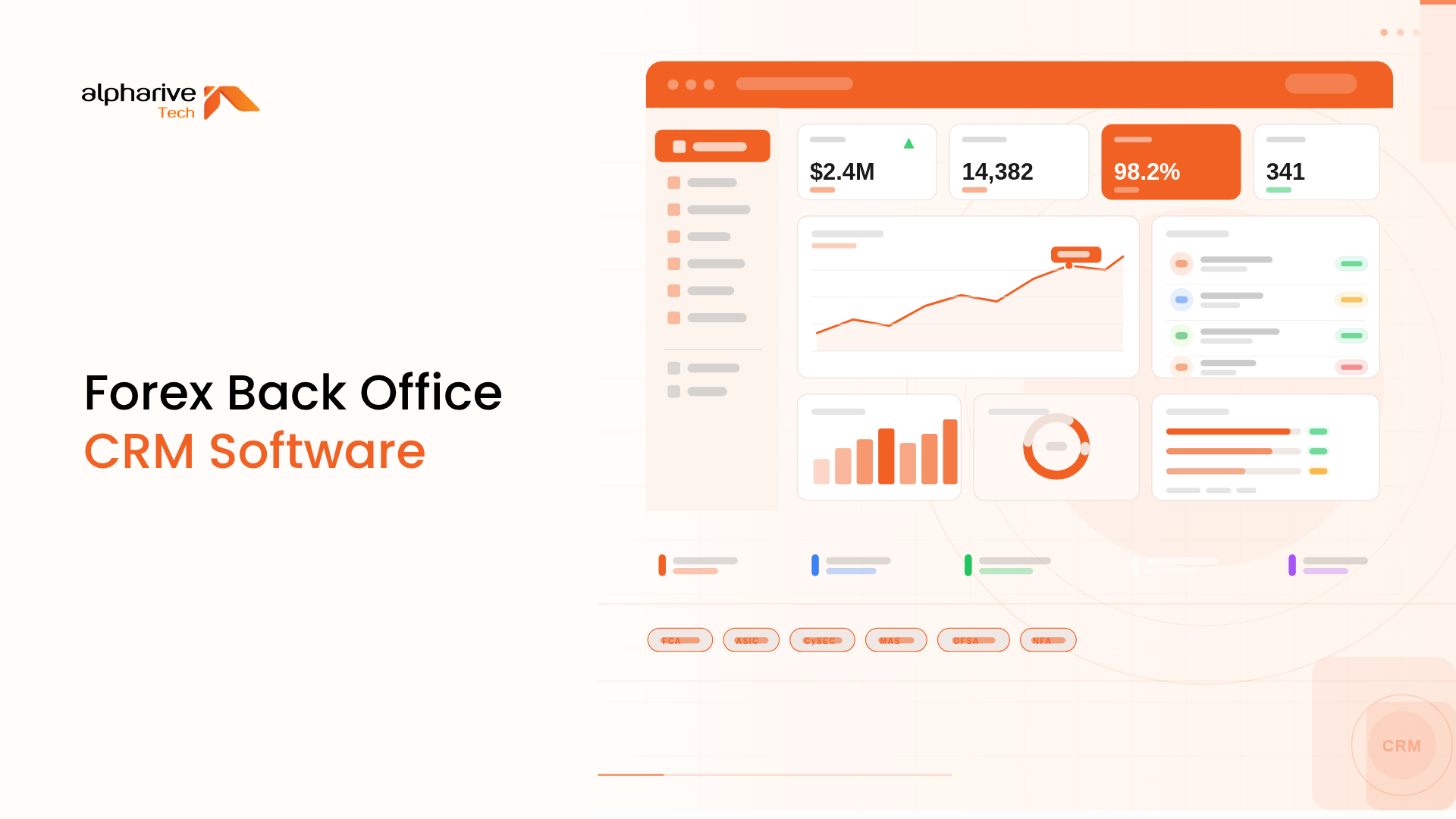
Forex back office CRM software sits at the core of modern brokerage operations, handling everything from client onboarding and compliance to trading data and partner management in one connected system. While many brokers treat Forex CRM and back office as the same, they serve different roles that together define how efficiently a brokerage runs behind the scenes.
Understanding how these systems work and more importantly, how they work together can directly impact scalability, compliance, and client experience. This guide breaks down the fundamentals, key features, and decision factors so you can confidently choose the right solution for your brokerage.
What Is Forex Back Office CRM Software?
Forex back office CRM software is a centralized system that manages the operational, administrative, and client relationship processes of a brokerage in one integrated environment. It combines back office functionality like compliance, reporting, and transaction handling with CRM capabilities such as client tracking, communication, and lifecycle management.
In simple terms, it acts as the control center of a brokerage, ensuring that every activity from onboarding a new trader to processing withdrawals runs smoothly and stays compliant with regulatory requirements. This system becomes especially critical as brokerages scale and manual processes start creating inefficiencies and risks.
Back Office vs. CRM: Understanding the Difference
Back office and CRM are often used interchangeably, but they serve distinct purposes within a brokerage ecosystem. The back office focuses on operational processes like KYC verification, transaction monitoring, compliance reporting, and financial management. It ensures everything happening behind the scenes is accurate, secure, and aligned with regulations.
On the other hand, CRM is designed to manage relationships with clients and partners. It tracks user activity, manages leads, supports communication, and helps brokers understand trader behavior. When combined effectively, both systems create a seamless workflow where operational efficiency and customer experience go hand in hand.
How Back Office and CRM Work Together in a Brokerage
A well-integrated forex system connects the back office and CRM so data flows seamlessly between both. For example, when a new user signs up through the CRM, their information is instantly processed in the back office for KYC checks and account setup. This eliminates duplication and reduces manual errors.
At the same time, trading activity, deposits, and withdrawals handled in the back office are reflected in the CRM, giving brokers a complete view of each client. This unified approach allows brokerages to make faster decisions, improve service quality, and maintain full control over operations as they grow.
Why Every Forex Broker Needs a Dedicated Back Office CRM System
Forex back office CRM software plays a critical role in helping brokers manage growing operational complexity while maintaining accuracy and control. As trading volumes increase and client expectations rise, relying on disconnected tools or manual processes quickly leads to inefficiencies, delays, and compliance risks.
A dedicated system brings structure to every workflow, from onboarding and fund management to reporting and partner tracking. It allows brokerages to operate with clarity and consistency, ensuring that no critical process is overlooked as the business scales.
The Hidden Cost of Running Brokerage Operations Without One
Operating a brokerage without a unified back office CRM system often leads to hidden costs that are not immediately visible. Manual data handling increases the chances of errors, delays in processing client requests, and inconsistencies in reporting, all of which can impact trust and retention.
Over time, these inefficiencies translate into higher operational expenses, missed revenue opportunities, and increased pressure on internal teams. What may seem like a cost-saving approach initially can quickly become a barrier to growth and scalability.
Regulatory Pressure Is Making Automation Non-Negotiable
Regulatory requirements across regions such as FCA, ASIC, MAS, DFSA, and CySEC are becoming stricter, making automation an essential part of brokerage operations. Brokers are expected to maintain accurate records, perform real-time monitoring, and ensure full transparency in every transaction.
Without a robust back office CRM system, meeting these expectations becomes both challenging and risky. Automation not only simplifies compliance but also reduces the likelihood of penalties, allowing brokers to operate with greater confidence in regulated markets.
Core Features of Forex Back Office CRM Software
Forex back office CRM software includes a set of essential features that allow brokerages to manage operations, client relationships, and compliance from a single unified system. These features are designed to reduce manual effort, improve accuracy, and give brokers complete visibility into their business activities.
As brokerages grow, the importance of having these capabilities in one place becomes even more evident. A well-equipped system not only supports day-to-day operations but also enables better decision-making through real-time data and automation.
Client Onboarding and KYC/AML Automation
Efficient onboarding processes verify client identities through automated KYC and AML checks, reducing manual intervention while ensuring compliance with global regulatory standards and minimizing onboarding delays.
Trading Platform Integration: MT4, MT5, and cTrader
Seamless integration of our MT5 CRM with trading platforms like MT4, MT5, and cTrader enables real-time synchronization of trading data, account activity, and performance metrics across systems without operational friction.
Multi-Tier IB and Affiliate Commission Management
Advanced commission management systems support multi-tier IB structures, allowing brokerages to track referrals, calculate commissions accurately, and manage affiliate relationships with transparency and efficiency.
Payment Gateway and Multi-Currency Wallet Management
Robust payment integrations enable secure deposits and withdrawals while supporting multi-currency wallets, giving traders flexibility and ensuring smooth financial transactions across different regions and payment methods.
Risk Management and Real-Time Reporting Dashboards
Built-in risk management tools monitor trading activities and exposure levels in real time, while dynamic dashboards provide actionable insights that help brokers make informed operational and strategic decisions.
Trader's Room and Client Self-Service Portal
Interactive trader portals empower clients to manage accounts, access reports, and perform transactions independently, improving user experience while reducing the operational workload on brokerage support teams.
SaaS vs. White-Label vs. Custom-Built: Which Is Right for Your Brokerage?
Forex back office CRM software can be deployed in different ways depending on your brokerage’s size, budget, and long-term goals, making the choice between SaaS, white-label, and custom-built solutions a critical decision. Each option comes with its own trade-offs in terms of cost, flexibility, control, and time to market.
Understanding these differences helps brokers avoid costly mistakes and choose a system that aligns with their growth strategy. While some prioritize speed and affordability, others focus on scalability and full ownership, especially as operations become more complex.
When evaluating these options, working with an experienced Forex CRM Provider like Alpharive can help brokers select a solution that matches their operational requirements and long-term growth plans.
SaaS Back Office CRM: Fast Setup, Lower Upfront Cost
SaaS solutions offer cloud-based access with minimal setup time, making them ideal for new brokers seeking quick deployment, lower upfront costs, and simplified maintenance without requiring in-house technical expertise.
H3: White-Label Solutions: Brand Control Without the Build
White-label platforms provide pre-built infrastructure with branding flexibility, allowing brokerages to customize user interfaces and workflows while avoiding the complexity and cost associated with building systems entirely from scratch.
Custom-Built Systems: Full Ownership for Established Brokers
Custom-built solutions deliver complete control over features, integrations, and data, making them suitable for established brokers who require scalability, unique functionality, and long-term flexibility tailored to specific business needs.
Global Compliance Requirements: What Your Back Office CRM Must Handle by Region
Forex back office CRM software must support region-specific compliance requirements to ensure brokerages operate legally across different jurisdictions. Each regulatory body imposes its own standards for reporting, client verification, and transaction monitoring, making it essential for systems to be flexible and regulation-aware.
As brokers expand globally, compliance becomes more complex, requiring automated workflows that adapt to multiple regulatory frameworks simultaneously. A well-designed system not only reduces compliance risk but also builds credibility with regulators and clients in competitive markets.
FCA and MiFID II
Under FCA and MiFID II regulations, brokerages must maintain detailed transaction records, ensure transparency in trade execution, and submit periodic reports while implementing strict client protection and data handling standards.
ASIC and APAC Compliance
ASIC regulations require robust client verification, risk disclosures, and transparent financial reporting, while broader APAC standards emphasize investor protection, making compliance automation essential for brokers operating in these regions.
MAS, DFSA, and CySEC
Regulators like MAS, DFSA, and CySEC enforce strict AML policies, capital requirements, and operational transparency, requiring CRM systems to support audit trails, reporting accuracy, and real-time compliance monitoring capabilities.
CFTC and NFA
CFTC and NFA regulations demand comprehensive record-keeping, real-time trade monitoring, and strict adherence to anti-fraud policies, making advanced reporting and surveillance features critical for brokers targeting US clients.
Forex Back Office CRM Pricing: What to Budget in 2026
Forex back office CRM software pricing varies widely depending on the deployment model, feature depth, and level of customization required by a brokerage. From subscription-based SaaS tools to fully custom-built platforms, the cost structure can significantly impact both short-term budgeting and long-term returns.
For brokers, understanding these pricing layers is essential to avoid unexpected expenses and align investment with business goals. Beyond the initial cost, factors like maintenance, upgrades, and scalability should also be considered when planning the overall budget. Pricing typically ranges from monthly SaaS subscriptions starting around a few hundred dollars to white-label solutions requiring moderate upfront investment, while custom-built systems demand higher budgets but offer complete control and scalability.
Alpharive Builds Forex Back Office CRM Software for Brokerages
Forex back office CRM software development requires a clear understanding of brokerage workflows, compliance needs, and trading platform integrations. The approach focuses on building systems that connect client management, payments, compliance, and trading operations into one smooth experience.
Alpharive have vast experience in forex trading software development and forex crm software where each solution is shaped around business goals, target markets, and regulatory requirements from the start. At the same time, flexibility is maintained to support integrations, multi-currency operations, and evolving needs as the brokerage grows.