AI for Customer Service - Chatbots, Voice Agents & Deployment
Customer support teams today are under constant pressure. Customers expect instant responses, round-the-clock availability, and personalized assistance across multiple channels. This growing demand is why many businesses are now turning to AI for customer service to improve efficiency while maintaining high service quality.
Technologies such as AI chatbots for customer service, intelligent AI agents, and conversational AI voice agents are transforming how companies handle customer interactions. Instead of long wait times or overloaded support teams, AI can instantly answer questions, resolve common issues, and even complete actions across integrated systems.
But understanding the differences between these technologies is important. While chatbots handle basic queries, AI agents for customer service can reason through complex problems and take actions automatically. Voice AI, meanwhile, is reshaping traditional phone support by replacing rigid IVR menus with natural conversations.
In this guide, we'll break down how AI-powered customer service solutions work, when to use chatbots, agents, or voice systems, and how businesses can successfully deploy them across global markets. If you're exploring AI for your support operations, this article will help you understand the technologies, opportunities, and the smartest way to get started.
What Is AI for Customer Service?
AI for customer service refers to the use of artificial intelligence technologies to automate, assist, and improve how businesses handle customer interactions. Instead of relying entirely on human agents, companies now use AI tools such as chatbots, intelligent AI agents, and voice assistants to respond to questions, resolve issues, and guide customers through different processes. These systems operate across websites, messaging apps, emails, and phone support channels, helping businesses deliver faster and more consistent service.
The growing adoption of AI in customer support is largely driven by rising customer expectations. Modern consumers expect immediate responses and seamless assistance at any time of day. AI helps companies meet these expectations by providing 24/7 support, reducing response times, and managing large volumes of requests without overwhelming human teams. As support demands continue to increase, AI is becoming a critical part of modern customer service strategies.
How AI Is Reshaping Customer Support in Modern World
Customer service is changing rapidly as AI technologies become more advanced and widely adopted. Modern AI systems can understand natural language, identify customer intent, and deliver relevant answers in real time. This allows businesses to automate repetitive tasks such as order tracking, password resets, booking confirmations, and basic troubleshooting, freeing human agents to focus on more complex customer needs.
In addition to handling routine inquiries, AI now plays a major role in improving the overall support experience. AI tools can analyze customer sentiment, recommend responses to support agents, and learn from past interactions to continuously improve accuracy. As a result, businesses can provide faster resolutions, reduce operational costs, and maintain consistent support quality across global markets.
The Business Case: Key Statistics You Need to Know
The global adoption of AI in customer service is accelerating as companies recognize the efficiency and cost benefits it brings. Studies show that AI-powered support systems can significantly reduce response times and improve customer satisfaction. Businesses using AI solutions often report measurable improvements in productivity, service quality, and operational efficiency.
Industry forecasts also highlight strong market growth. Analysts estimate that the global AI customer service market could exceed $47 billion by 2030, driven by increasing demand for automated support, conversational AI, and intelligent service platforms. For organizations managing large customer bases, AI is quickly becoming a practical investment rather than an experimental technology.
Core Benefits of AI for Customer Service Teams
AI brings several practical advantages that help customer service teams work more efficiently while improving the overall customer experience.
- 24/7 customer support: AI systems can respond to customer inquiries at any time, eliminating long wait times and improving accessibility.
- Scalability during high demand: Businesses can handle thousands of simultaneous conversations without increasing staff.
- Faster response and resolution times: AI quickly retrieves information and provides answers within seconds.
- Multilingual support: AI can communicate with customers in multiple languages, enabling global service coverage.
- Reduced operational costs: Automation decreases the workload on support teams, lowering staffing and training expenses.
- Improved agent productivity: Human agents can focus on complex issues while AI manages routine interactions.
Together, these benefits explain why organizations across industries from eCommerce and SaaS to banking and healthcare are increasingly integrating AI into their customer support operations.
AI Chatbot for Customer Service: How It Works
AI chatbot for customer service refers to a conversational software system designed to interact with customers through text-based messaging platforms such as websites, mobile apps, and messaging services. These chatbots use artificial intelligence and natural language processing to understand customer questions and deliver relevant responses instantly. Businesses often deploy them on support pages, eCommerce sites, and help centers to handle common customer inquiries.
Unlike traditional support channels that rely entirely on human agents, AI chatbots can manage multiple conversations at the same time. They help businesses answer frequently asked questions, guide customers through processes, and provide quick solutions without long wait times. This makes chatbots a practical starting point for organizations looking to introduce AI into their customer support operations.
What Is an AI Customer Service Chatbot?
An AI customer service chatbot is a virtual assistant that communicates with users through text-based conversations. It is designed to interpret customer messages, identify the intent behind the request, and deliver relevant answers or actions automatically. These systems are commonly integrated into websites, support portals, and messaging platforms to provide immediate assistance.
Unlike older automated response systems, modern AI chatbots rely on natural language understanding to interpret questions written in everyday language. This allows customers to interact with the system naturally instead of selecting from rigid menu options. As the chatbot processes more conversations, it can also improve its responses by learning from previous interactions.
Rule-Based Chatbots vs. AI-Powered Chatbots: Key Differences
Customer service chatbots generally fall into two categories: rule-based chatbots and AI-powered chatbots. While both automate conversations, their capabilities and flexibility differ significantly.
| Feature | Rule-Based Chatbots | AI-Powered Chatbots |
| Conversation style | Predefined scripts | Natural language understanding |
| Flexibility | Limited to specific paths | Can interpret varied questions |
| Learning ability | No learning capability | Improves through training data |
| Use cases | Simple FAQs and navigation | Complex support conversations |
| Scalability | Limited responses | Adapts to wider scenarios |
Rule-based chatbots are useful for answering straightforward questions or guiding users through structured processes. AI-powered chatbots, on the other hand, can understand more complex queries and provide more dynamic responses, making them better suited for modern customer service environments.
Top Use Cases for AI Chatbots in Customer Support
Many organizations use AI chatbots to automate repetitive tasks and streamline customer support operations. By handling common questions instantly, chatbots help reduce workload for human support teams while improving response speed. Some common use cases include:
- Order status updates: Customers can check shipping progress or delivery timelines instantly.
- Account assistance: Chatbots help users reset passwords or update account information.
- Product information: Customers receive quick answers about product features, pricing, or availability.
- Booking and scheduling: Businesses automate appointment bookings and service reservations.
- FAQ handling: Chatbots respond to frequently asked questions about policies, returns, and services.
- Lead qualification: AI chatbots can collect information from potential customers and route them to sales teams.
These applications allow businesses to automate a large portion of routine interactions, freeing human agents to focus on more complex customer needs.
The Honest Limitations of AI Chatbots
Despite their advantages, AI chatbots still have limitations that businesses should understand before implementing them. Most chatbots perform best when dealing with structured or repetitive queries. When conversations become highly complex or emotionally sensitive, human agents are often better equipped to handle the situation.
Another challenge is that chatbots rely heavily on training data and integration with company systems. Without proper setup, they may provide incomplete or incorrect responses. This is why many organizations combine chatbots with more advanced AI agents that can reason through problems and perform actions across systems. In the next section, we will explore how AI agents represent the next stage of customer service automation.
AI Agent for Customer Service: The Next Evolution
AI agent for customer service represents a more advanced form of customer support automation compared to traditional chatbots. While chatbots typically respond with predefined answers, AI agents are designed to reason through problems, make decisions, and take actions across connected systems. They combine large language models, automation tools, and integrations with business platforms to resolve customer issues from start to finish.
As customer expectations grow and support environments become more complex, businesses are adopting AI agents to handle tasks that go beyond answering simple questions. These systems can access knowledge bases, update customer records, process requests, and coordinate with other software systems in real time. Instead of simply providing information, AI agents actively work to solve problems.
What Is an AI Agent?
An AI agent is an intelligent system capable of understanding customer intent, reasoning through a problem, and completing tasks to resolve it. Unlike chatbots that follow scripted flows, AI agents rely on advanced language models and decision-making frameworks to determine the best response or action in a conversation.
The key difference lies in their capabilities. Chatbots typically answer questions based on predefined rules or knowledge bases. AI agents, however, can interact with external systems such as CRM platforms, payment systems, booking tools, or support databases. This allows them to take meaningful actions like updating account information, processing requests, or escalating issues automatically.
How AI Agents Reason, Decide, and Take Action
AI agents operate through a structured decision loop that enables them to analyze requests and determine the best course of action. When a customer message arrives, the system first interprets the request using natural language understanding. It then evaluates possible solutions based on available data and predefined workflows.
After identifying the correct response, the AI agent can perform tasks through integrated systems. For example, it may retrieve order details from a database, create a support ticket, process a refund request, or update a customer record in a CRM system. This ability to combine reasoning with action makes AI agents far more capable than traditional automated support tools.
Real-World Examples: AI Agents Deployed Across Industries
AI agents are already being used across many industries to improve support efficiency and customer satisfaction. Companies are deploying these systems to automate repetitive processes while maintaining a consistent customer experience.
In the eCommerce industry, AI agents handle order tracking requests, manage returns, and guide customers through purchasing decisions. SaaS companies use them to troubleshoot account issues, answer technical questions, and help users navigate complex platforms. In banking and financial services, AI agents assist customers with account inquiries, transaction monitoring, and fraud alerts. Healthcare organizations also use AI agents to manage appointment scheduling, patient inquiries, and insurance verification.
These real-world deployments show how AI agents can operate across diverse industries while handling high volumes of customer interactions.
AI Agent vs AI Chatbot: Side-by-Side Comparison
Understanding the difference between AI agents and chatbots is essential when deciding which technology best fits your customer service strategy.
| Capability | AI Chatbot | AI Agent |
| Conversation flexibility | Limited to predefined responses | Understands complex conversations |
| Decision making | Follows scripted rules | Uses reasoning to determine actions |
| System integrations | Limited or optional | Deep integration with business systems |
| Task execution | Provides information | Can complete tasks and workflows |
| Problem resolution | Handles simple requests | Resolves multi-step issues |
For businesses handling complex support scenarios, AI agents provide a more powerful solution. They extend automation beyond basic conversations and enable systems to actively solve customer problems.
How to Implement an AI Agent for Customer Service
Deploying an AI agent requires a structured approach to ensure the system integrates properly with existing support operations. Businesses typically begin by identifying the most common customer service tasks that can be automated. This might include order tracking, appointment scheduling, account assistance, or technical troubleshooting.
Once the use cases are defined, the AI agent is connected to relevant business systems such as CRM platforms, knowledge bases, and helpdesk tools. After integration, the system is trained using historical customer conversations and company documentation so it can respond accurately. Testing and monitoring are essential during early deployment to refine responses, improve accuracy, and ensure smooth handoffs to human agents when necessary.
With the right setup, AI agents can handle a large portion of routine support requests while allowing human teams to focus on complex interactions that require deeper expertise.
AI Voice Agent for Customer Service: The Future of Phone Support
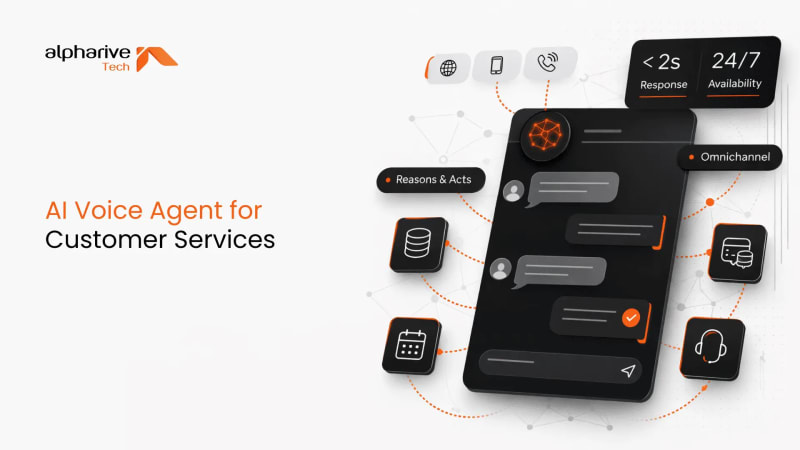
AI voice agent for customer service is transforming how businesses manage phone-based support by replacing traditional call center systems with intelligent conversational AI. Instead of navigating rigid menu options or waiting on hold, customers can speak naturally with an AI system that understands their request and responds in real time. These voice agents use advanced speech recognition and natural language processing to conduct human-like conversations over the phone.
As customer expectations shift toward faster and more convenient service, many organizations are integrating AI voice agents into their support infrastructure. These systems can answer common questions, process requests, and route calls efficiently without human intervention. By automating routine phone interactions, businesses can reduce call center workloads while providing consistent support at any time of day.
What Is an AI Voice Agent?
An AI voice agent is a conversational system that interacts with customers through spoken language over phone calls or voice-enabled platforms. It listens to the caller's request, interprets the intent behind the message, and delivers a spoken response that feels natural and conversational.
Unlike traditional automated phone systems that rely on numbered menu options, AI voice agents allow customers to speak freely. The system understands natural speech and can guide the conversation dynamically. This creates a more intuitive and efficient support experience compared to older IVR-based systems.
How AI Voice Agents Work: NLP, STT, and TTS Explained Simply
AI voice agents operate through several technologies working together to understand and respond to human speech. The first component is speech-to-text (STT), which converts the caller's spoken words into written text that the system can process.
Once the speech is converted, natural language processing (NLP) analyzes the text to determine the caller's intent. The AI then decides how to respond based on the request and available data. Finally, text-to-speech (TTS) technology converts the AI's response into natural-sounding speech, allowing the system to speak back to the customer in real time.
Benefits of AI Voice Agents Over Traditional IVR Systems
Many businesses are moving away from traditional IVR systems because they often create frustrating customer experiences. AI voice agents provide a more flexible and intelligent alternative. Key advantages include:
- Natural conversations: Customers can explain their issue instead of navigating multiple menu options.
- Reduced wait times: AI voice agents can handle many calls simultaneously.
- 24/7 phone support: Businesses can provide continuous service without expanding call center staffing.
- Improved call routing: AI systems can direct customers to the correct department more accurately.
- Higher customer satisfaction: Faster problem resolution leads to better support experiences.
These benefits make voice AI particularly valuable for industries that receive high volumes of phone inquiries, such as banking, healthcare, travel, and telecommunications.
Compliance & Privacy for AI Voice Agents
As AI voice agents become more widely used, businesses must ensure their deployments comply with regional privacy and data protection regulations. When customers interact with AI systems, sensitive information such as personal details or account data may be processed during conversations.
Organizations operating in global markets must account for regulations like GDPR in Europe, CCPA in the United States, the Australian Privacy Act, and APPI in Japan. Compliance typically involves obtaining consent for data processing, securely storing conversation data, and clearly informing customers when they are interacting with an AI system.
By designing voice AI deployments with privacy and transparency in mind, businesses can safely integrate automation into their customer service operations while maintaining regulatory compliance and customer trust.
Why Businesses Partner With an AI Customer Service Specialist
AI customer service agencies and specialist providers play an important role in helping businesses successfully deploy AI-powered support systems. While the potential of AI in customer service is widely recognized, implementing these systems internally can be more complex than many organizations expect. From integrating multiple platforms to managing training data and ensuring compliance, building an effective AI support system requires both technical expertise and strategic planning.
Many companies initially explore AI deployment internally but later discover the challenges involved in building and maintaining a reliable solution. A specialist AI customer service partner brings experience, technical knowledge, and deployment frameworks that reduce risk and accelerate implementation. Instead of navigating the complexities alone, businesses gain access to experts who understand how to design, deploy, and optimize AI support systems at scale.
The Hidden Costs of DIY AI Deployment
At first glance, building AI customer service capabilities in-house may appear cost-effective. However, studies suggest that internal AI projects often exceed initial budgets once infrastructure, integration, and ongoing maintenance are considered. Organizations must manage multiple technical components while ensuring the system performs reliably under real customer interactions.
Several hidden costs frequently emerge during DIY deployments. Businesses must account for large language model or API usage costs as customer interaction volumes grow. Engineering resources are needed to integrate AI with CRM systems, helpdesk platforms, and internal databases. Teams must also manage training data, prompt optimization, security audits, and regulatory compliance requirements. In addition, ongoing monitoring and human oversight are required to ensure accurate responses.
For most organizations, these challenges increase both development timelines and operational costs. Partnering with a specialist provider often allows businesses to avoid these complexities and deploy AI solutions faster with lower implementation risk.
What a Specialist AI Customer Service Partner Does for You
A specialist AI customer service partner provides far more than basic chatbot setup. These providers design and implement complete AI-driven support systems tailored to a business's specific operational needs. Their role begins with identifying the areas where AI can deliver the greatest impact within existing support processes. Typical services offered by specialist providers include:
- Discovery and use case mapping: Identifying high-impact support scenarios suitable for AI automation.
- Platform selection and configuration: Choosing the right AI tools based on business requirements.
- CRM and helpdesk integration: Connecting AI systems with platforms such as Salesforce, Zendesk, HubSpot, or other support tools.
- Training and prompt engineering: Building knowledge bases and optimizing responses to reflect the company's brand voice.
- Compliance setup: Ensuring deployments align with regulations such as GDPR, CCPA, or regional privacy laws.
- Ongoing monitoring and optimization: Continuously improving performance through data analysis and system updates.
Through these services, businesses gain a structured deployment process that minimizes risk while improving support efficiency.
What to Look for in an AI Customer Service Agency
Choosing the right AI customer service agency is an important decision for organizations planning to automate support operations. Not all providers offer the same level of technical expertise or platform flexibility, so businesses should carefully evaluate potential partners before starting a project.
Several key factors help distinguish experienced AI service providers from less specialized vendors. A strong provider typically maintains platform neutrality, recommending solutions that fit the business rather than promoting a single product. Integration expertise is also critical, as AI systems must connect seamlessly with CRM platforms, helpdesk software, and internal databases.
Compliance knowledge is another important factor, particularly for companies operating internationally. A capable provider understands regional regulations such as GDPR, CCPA, and other privacy frameworks. Additionally, businesses should look for agencies that offer ongoing optimization services after deployment, ensuring the AI system continues to improve over time rather than remaining static.
Our Approach: How We Deploy AI Agents for Customer Service
Alpharive specializes in designing and deploying enterprise AI solutions for customer service across global markets. With expertise in conversational AI, system integration, and automation strategy, the company helps organizations transform their support operations through intelligent AI agents, chatbots, and voice systems. The deployment process typically follows a structured methodology:
- Discovery and Support Audit: Analyze the current customer support workflow to identify high-impact automation opportunities.
- Solution Architecture: Design a tailored AI strategy combining chatbots, AI agents, and voice systems where appropriate.
- Integration and Development: Connect AI tools with CRM systems, helpdesks, and knowledge bases to enable real-time data access.
- Testing and Training: Train the system using historical support data while ensuring accuracy and compliance.
- Launch and Continuous Optimization: Monitor system performance and refine responses to improve resolution rates and customer satisfaction.
This structured approach allows businesses to implement AI customer service solutions efficiently while maintaining reliability, compliance, and long-term scalability.
Choosing the Right AI Customer Service Solution
AI customer service solutions vary widely in capability, complexity, and deployment requirements. Businesses exploring AI for their support operations often encounter several options, including chatbots, AI agents, and voice-based systems. Each technology serves a different purpose, so selecting the right approach depends on the type of customer interactions a company handles and the level of automation it wants to achieve.
For many organizations, the best solution is not a single tool but a combination of technologies working together. AI chatbots can manage routine questions, AI agents can resolve more complex issues, and voice AI can handle phone-based inquiries. Understanding how these solutions differ helps businesses design a support strategy that improves efficiency while maintaining a positive customer experience.
Chatbot, AI Agent, or Voice Agent - Which Do You Need?
Choosing between chatbots, AI agents, and voice agents depends largely on the complexity of customer requests and the communication channels customers prefer. Some businesses only need basic automation for simple inquiries, while others require advanced systems capable of completing tasks and integrating with multiple platforms.
| Solution Type | Best For | Capabilities |
| AI Chatbot | Handling FAQs and simple support requests | Responds to common questions and provides quick information |
| AI Agent | Managing complex service workflows | Understands intent, makes decisions, and completes tasks across systems |
| AI Voice Agent | Automating phone-based support | Conducts natural voice conversations and resolves issues over calls |
Businesses with high volumes of repetitive inquiries often begin with chatbots. As automation needs grow, AI agents and voice systems can be introduced to handle more complex scenarios and additional support channels.
Key Features to Look for in an AI Customer Service Platform
Selecting the right AI platform requires evaluating several important capabilities. A strong customer service AI system should not only automate conversations but also integrate seamlessly with existing business tools and workflows. Some key features to consider include:
- Natural language understanding: The ability to accurately interpret customer intent from conversational language.
- Omnichannel support: Compatibility with websites, mobile apps, messaging platforms, and phone systems.
- CRM and helpdesk integration: Seamless connections with platforms such as Salesforce, Zendesk, HubSpot, or other support tools.
- Knowledge base integration: Access to internal documentation and support articles for accurate responses.
- Analytics and reporting: Tools to track performance, conversation trends, and resolution rates.
- Scalability: The ability to handle increasing conversation volumes as a business grows.
By evaluating these features carefully, businesses can select an AI customer service solution that aligns with their operational needs and long-term support strategy.
Global AI Customer Service: Regional Considerations
AI agent for customer service is expanding rapidly across global markets, but successful deployments must account for regional regulations, cultural expectations, and data privacy frameworks. Businesses operating internationally need AI systems that comply with local laws while still delivering consistent support experiences across different regions.
Companies that deploy AI customer service solutions across multiple countries often adapt their systems to meet regional compliance standards and language preferences. Understanding these regional considerations helps organizations design AI support systems that operate effectively while maintaining legal compliance and customer trust.
USA: AI Customer Service Adoption & Compliance (CCPA)
The United States has one of the most mature markets for AI-driven customer service solutions. Businesses across industries such as eCommerce, SaaS, finance, and telecommunications increasingly rely on AI chatbots and AI agents to manage high volumes of customer interactions.
From a regulatory perspective, companies must comply with data privacy laws such as the California Consumer Privacy Act (CCPA). This regulation requires businesses to clearly disclose how customer data is collected and used. AI customer service systems deployed in the U.S. should therefore include transparent privacy policies and secure data handling practices.
Europe: GDPR, the EU AI Act & Deployment Best Practices
In Europe, AI customer service deployments must comply with strict privacy regulations, most notably the General Data Protection Regulation (GDPR). GDPR requires organizations to obtain user consent for data processing, ensure secure storage of personal information, and provide customers with transparency about how their data is used.
The upcoming EU AI Act also introduces additional requirements for AI systems, including risk classification and accountability measures. Businesses implementing AI-powered support in European markets must ensure that their systems are designed with strong privacy protections and clear governance frameworks.
Get Started: Deploy Your AI Customer Service Agent Today
Deploying an AI customer service agent can significantly improve how businesses manage customer interactions while reducing operational pressure on support teams. Whether an organization is exploring AI chatbots for basic support automation or planning to implement advanced AI agents across multiple channels, the right strategy makes the transition smoother and more effective.
A successful deployment typically begins with identifying high-impact customer service use cases. Businesses often start by automating repetitive inquiries such as order tracking, account assistance, appointment scheduling, and frequently asked questions. From there, AI systems can be integrated with CRM platforms, knowledge bases, and support tools to provide accurate responses and perform real actions during customer interactions.
Working with experienced AI specialists also helps accelerate implementation while minimizing technical complexity. Instead of managing integrations, model training, and compliance requirements internally, organizations can rely on experts who have already developed proven deployment frameworks.
If you're considering Custom AI Agent Development for your support operations, now is the ideal time to explore what intelligent automation can achieve. Talk to Alpharive experts and start building your AI-powered customer service solution today.