

Services
Alpharive delivers cutting-edge blockchain solutions that enable enterprises to achieve enhanced security, transparency, and efficiency, helping them to grow their business.











Our success stories
0+
Projects completed
0+
Awards Received
0+
Years of experience
0+
Team members
Blockchain is the talk of the decade in the digital space, and every industry is working hard to integrate blockchain into its existing systems. Blockchain makes the whole system transparent and traceable with its decentralized nature, eliminating the central authority or the middleman. Integrating blockchain into your system takes your business years forward, allows you to set a new standard in your business line, and makes your business stand alone among your competitors.
Alpharive works in custom blockchain development, helping its clients upgrade their existing systems with blockchain solutions. We work on multiple blockchain networks like Ethereum, Binance Smart Chain, Polygon, Solana, and more. Our certified blockchain developers analyze your business and your requirements before getting into development and work on establishing a private or public blockchain that best suits your best.

We offer a range of blockchain development services to clients tailored to their specific requirements to leverage advanced blockchain solutions into their business. Explore some of our key offerings below

Running a private organization and looking to take your data and your business operations to a secure, decentralized network. We build your new-age solution over a blockchain network as you prefer, that transforms your complete ecosystem.

Ready to build the next big thing in Web3? We specialize in creating open, borderless, and tamper-proof applications on public blockchains, empowering you to launch Dapps, DAOs, and DeFi platforms for a global audience.

Looking to automate your business processes securely? We design secure, self-executing smart contracts that automate your workflows, remove the middleman, and make the blockchain environment more safe and trusted.

Need a scalable blockchain solution that integrates secure automation with an existing system? We specialize in developing robust, enterprise grade applications that streamline complex operations, ensure data security, and are built for performance at scale.

Looking to enhance your current business setup? We provide seamless blockchain integration services that connect your existing software, ERPs, or any databases to a decentralized network, creating a single, secured source of operation.

Scale your operations without sacrificing security with our advanced Layer-2 solutions that dramatically increase your operations speed, delivering a seamless, high- speed experience to meet your users demands.
The long wait for blockchain implementation is over, and industries are actively adapting blockchain solutions that work for them, shifting from experimentation to strategic implementation. Enterprises are no longer asking whether they should or should not adapt blockchain instead, they are working on how quickly they can. The data shows a clear trend that integrating blockchain is essential for the future because of its decentralized, secure nature.
Market Expansion
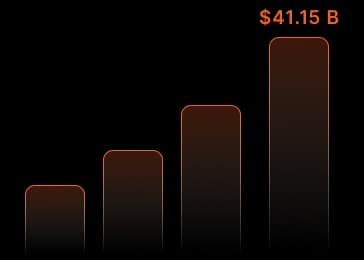
The global blockchain market is projected to surge from $41.15 billion in 2025 to $1.87 trillion by 2034, a staggering 52.9% CAGR driven by its transparency and efficiency.
Trillion-Dollar Business

By 2030, blockchain is expected to add $3.1 trillion in new business value to the global economy. Early adopters will benefit more with a major market share.
Enterprise Adoption

Large enterprises already account for over 68% of the blockchain market revenue, proving their using it to secure and streamline their critical operations.
From token to exchange, Alpharive provides a range of blockchain development solutions tailored to your specific business objectives. Whether you are building a next-generation crypto exchange or a secure digital wallet, our expertise turns your vision into a reality. Explore our core solutions below

Ready to launch a secure and hassle-free crypto exchange platform? We provide custom crypto exchange development with top-grade security, a lightning-fast trading engine, and deep liquidity to ensure users can trade without disruption.

Want to launch a wallet that your users love to use? Our crypto wallet development services help businesses build intuitive and feature-rich crypto wallets that support multiple blockchains, facilitate easy swaps, and provide an effortless user experience for sending and receiving assets.

Ready to launch your own cryptocurrency or utility token? We develop secure, compliant tokens (like ERC-20 and BEP-20) with robust tokenomics, while supporting RWA tokenization platform development for businesses bringing real-world assets on-chain.

We specialize in building secure, scalable, and highly user-friendly NFT marketplaces with advanced features like lazy minting, auctions, and an intuitive Browse experience to attract and engage a vibrant community of buyers and sellers.

We build DAOs that empower your community with true ownership and control. Our solutions include secure on-chain voting systems, treasury management, and frameworks for transparent, collective decision-making.

We offer end-to-end dApp development, from on-chain smart contracts to front-end interface. Our approach ensures that decentralized logic and user experience are perfectly designed and developed for a market-ready application.
Blockchain solutions are more than just a technology in the present world, as it’s transforming industries. Blockchain enhances security, transparency, and efficiency in each sector around the globe. We build solutions that adapt the core strengths of blockchain to develop bespoke solutions that solve the real-world challenges of the specific industry.

Blockchain in healthcare is revolutionizing the industry by improving data security, creating the safest way to store patient records, and giving patients control over their health information. At Alpharive, we integrate HIPAA-compliant blockchain solutions that integrate patient data, secure medical records, and build a more efficient ecosystem.

Blockchain is rebuilding the finance industry by enhancing secure, transparent, and rapid global transactions while reducing intermediary fees and middlemen. At Alpharive, we accelerate this transformation with robust solutions for cross-border payments, decentralized finance, and digital asset management that enhance security and cut operational costs for financial institutions.

Blockchain is increasing efficiency and trust in the insurance industry by automating claims processing with smart contracts and preventing fraud with the help of an immutable ledger.Our team develops custom insurance solutions that streamline policy management, accelerate claim verification, and significantly reduce fraudulent activities for insurers worldwide.

Blockchain is transforming supply chain management by creating a single, immutable record to track goods from source to consumer in real- time.Alpharive develops and integrates robust blockchain platforms that enhance product traceability, transparency, and provide all the information of the product, making it a trusted logistics network.

Blockchain in education is creating secure, digital records for academic credentials, making diplomas and certificates instantly verifiable worldwide.Our team develops a decentralized credentialing platform that empowers students to own their life long learning records, allowing institutions and employers to monitor academic fraud.

Blockchain in the real estate industry is leveraging smart contracts and immutable ledgers to ease, streamline transactions and prevent scams.It also enables fractional ownership by tokenizing property into tradable digital assets.Alpharive builds the end- to - end platforms that power this entire ecosystem, from title management to asset trading.

Blockchain is enhancing trust in e-commerce by providing verifiable proof of product authenticity and a transparent view of the supply chain from factory to doorstep.Our team at Alpharive develops and integrates solutions that track products on an immutable ledger and give customers absolute confidence in every purchase.

Blockchain is transforming the gaming industry by giving players true ownership of their in-game assets, such as characters and items, as NFTs.This creates player- driven economies where assets can be freely traded and sold.Alpharive develops the foundational technology for this new era, building NFT marketplaces and integrating decentralized economies for game studios.
Our experts work on leading blockchain networks, allowing us to determine the best blockchain platform for your project's unique needs. We specialize in building robust, high-performance solutions on the most powerful and popular ecosystems, which include blockchain networks like
 Ethereum
 Binance
 Polygon
 Solana
 Avalanche
 Tron
Tron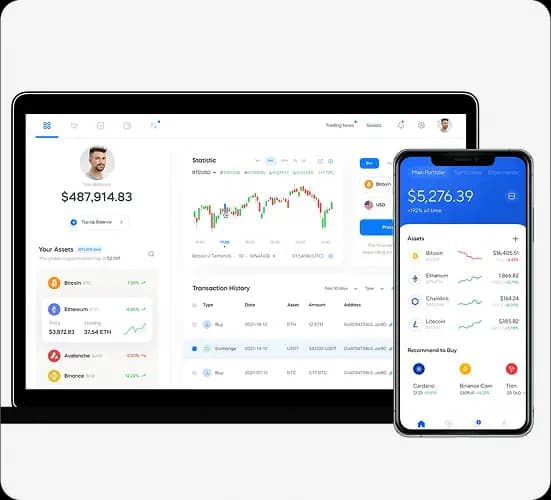
[Blockchain]
Building a high-performance and robust trading platform for the instant and secure exchange of digital currencies. The platform provides traders with a powerful trading engine, advanced analytics tools, and liquidity for a seamless trading experience.
[Blockchain]
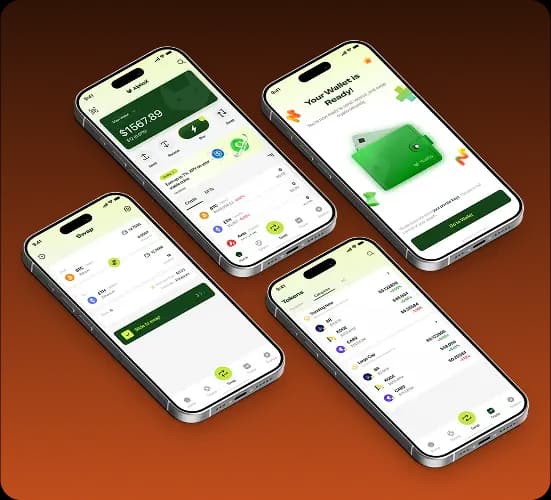
Developing a secure and user-friendly mobile wallet for seamless management of digital assets. The application empowers users to securely store, send, and receive a wide range of cryptocurrencies across multiple blockchains.


Alpharive, a trusted global leader in blockchain development, has successfully developed and launched 200+ projects powered with Web3 solutions. Our professionals have worked on various innovative projects from startups to Fortune 500 enterprises. Along with blockchain expertise, our custom software development services help businesses build scalable and secure digital solutions tailored to their specific needs. We bring you the best solution that suits your idea and projects your vision. We are keen to provide the best solution that helps you reach your business goal in any situation. Alpharive is your one-stop solution to solve complex challenges and build a secure digital solution. Connect with our blockchain experts today and bring your decentralized vision to life.

We define your strategy, functions, and roadmap, ensuring your Web3 platform is built on a solid foundation for long-term success.

We build complex, end-to-end platforms like crypto exchanges and NFT marketplaces, delivering custom decentralized solutions that are perfectly tailored to your business goals.

We build targeted blockchain solutions for Finance, Healthcare, Supply Chain, and more, applying deep industry expertise to solve your most complex, sector-specific challenges.

We seamlessly integrate blockchain solutions with your existing business. With our expertise in Layer-2 protocols and APIs, we build a high-performance and scalable solution.

We provide rigorous smart contract auditing to eliminate vulnerabilities before launch and offer dedicated post-launch support to ensure your platform remains secure and robust.

We engineer secure and efficient smart contracts, rigorously audited to automate processes and form the transparent, trustworthy core of your entire Web3 application.