A brokerage in Chicago once switched trader's room vendors twice in eighteen months. Each time, the sales pitch promised "full customization" and "enterprise-grade" everything. Each time, the actual delivery was a rebranded template with a KYC module that couldn't handle tiered verification and a reporting tab that broke every time the finance team tried to export a monthly statement. By the third vendor search, the founder had learned an expensive lesson: a trader's room is not a login page with a balance widget. It's the operational core of the entire brokerage.
Brokers across the United States, the United Kingdom, Canada, Australia, and fast-growing markets like Saudi Arabia are all facing the same problem. Vendors sell trader's room software as a commodity, but the feature gaps only show up after the contract is signed and clients start onboarding. This post breaks down the specific trader's room features brokers should demand before they commit to any development partner, so you're not the next brokerage relearning this lesson the hard way.
What a Trader's Room Actually Needs to Do
A trader's room is the client-facing hub that sits between your Forex CRM software, your trading platform, and your payment infrastructure. It's where a client uploads identity documents, funds an account, checks trade history, requests a withdrawal, and tracks referral commissions if they're an introducing broker. When it works well, clients barely notice it. When it doesn't, your support inbox fills up with tickets about missing balances, stuck verifications, and confusing statements.
Because the trader's room touches compliance, finance, and client experience at once, weak architecture in any one of those areas creates friction everywhere else. A slow KYC workflow delays first deposits. A wallet that can't reconcile currencies correctly creates accounting headaches. A reporting module that can't export clean statements turns into a compliance risk during an audit. This is why evaluating a vendor on trader's room capability deserves the same scrutiny brokers apply to liquidity provider contracts or MT4/MT5 licensing.
The checklist below covers the features that separate a trader's room built for scale from one that will need a costly rebuild within a year. Treat it as a working document during vendor calls, not just a reading list.

1. KYC and AML Workflows That Don't Stall Onboarding
Client onboarding is where most brokerages lose trust before it's even earned. If a trader submits documents and waits three days for a status update, they'll open an account somewhere else. Your vendor's trader's room needs automated document capture, ID verification, and liveness checks built in from day one, not bolted on as an afterthought.
Ask specifically about:
- Tiered verification levels tied to deposit and withdrawal limits, so low-risk clients can start trading fast while high-value accounts get deeper scrutiny.
- Integration flexibility with third-party identity verification providers, since requirements differ across the US, UK, EU, and Gulf jurisdictions.
- Automated AML screening against sanctions and PEP lists, updated on a rolling basis rather than a static one-time check.
- A complete audit trail showing who approved what, when, and based on which document, because regulators will ask for exactly this during a review.
If you've already looked at how Know Your Customer standards apply to crypto exchanges, the same logic carries over to forex trader's rooms. Vendor comparison matters here too. Some providers only support one or two verification partners, which limits your options if pricing or reliability changes down the line. A trader's room that supports pluggable KYC providers gives you leverage instead of lock-in.

2. Multi-Currency Wallets and Payment Flexibility
Brokers serving clients across multiple regions can't afford a wallet system that only thinks in one currency. A trader's room built for growth needs multi-currency wallets that display balances in the client's preferred currency while settling correctly on the back end, whether that's USD, GBP, AED, or a stablecoin.
Demand clarity on how the vendor handles:
- Real-time FX conversion shown to the client at the point of deposit or withdrawal, not just at settlement.
- Multiple payment gateway integrations, since a broker operating in the UAE has different banking rail requirements than one serving US or UK clients.
- Crypto and fiat side by side, allowing clients to hold and convert between wallet types without submitting a support ticket.
- Automated reconciliation that matches every deposit and withdrawal against the ledger, so your finance team isn't manually cross-checking spreadsheets at month end.
This is one area where off-the-shelf platforms tend to cut corners. Payment gateway integration is genuinely difficult, especially across jurisdictions with different banking regulations, and a lot of vendors quietly limit you to one or two processors. Before signing, ask for a list of gateways the vendor has integrated in production, not just ones listed on a features page.
3. Real-Time Reporting and Analytics Dashboards
Reporting is where trust gets built or broken with both clients and regulators. Traders want to see accurate trade history, running P&L, and downloadable statements without delay. Your back office team needs visibility into deposits, withdrawals, net funding, and trading volume across every account, updated in real time, not overnight.
A trader's room worth building should offer:
- Client-facing reports covering trade history, open positions, account equity, and downloadable statements formatted for tax and compliance purposes.
- Broker-facing dashboards showing net deposits, withdrawal trends, active vs dormant accounts, and volume by instrument or asset class.
- Live data sync with MT4/MT5 Account Integration or whichever trading platform you run, so numbers in the trader's room always match the trading server.
- Exportable data in formats your accounting and compliance teams can actually use, not locked behind a proprietary viewer.

Reporting gaps are one of the most common complaints brokers raise about legacy vendors. If the trader's room can't produce clean, exportable reports on demand, your team ends up rebuilding data manually in spreadsheets, which defeats the purpose of paying for software in the first place.
4. IB and Affiliate Management Built Into the Room
If your growth strategy includes introducing brokers or affiliate networks, the trader's room needs to handle multi-level commission structures natively. IBs expect to log in and see referred client activity, commission accrual, and payout schedules in real time, not wait for a monthly spreadsheet from your operations team.
Look for:
- Multi-tier commission visibility, so sub-IBs and their referred IBs can each see their own earnings without exposing data they shouldn't access.
- Referral link tracking that attributes new sign-ups correctly, even across multiple marketing channels.
- Automated payout scheduling instead of manual commission calculations run by hand each cycle.
- Flexible commission rule configuration, since rebate structures often change as your brokerage grows or adds new instruments.
Retrofitting IB management into a trader's room that wasn't designed for it is expensive and slow. It's far cheaper to confirm this capability exists before signing than to pay for a second development cycle a year later.
5. Security Architecture That Survives an Audit
A trader's room holds identity documents, financial transaction history, and payment credentials. That makes it a direct target for cyberattacks and a focal point during regulatory audits. Security can't be treated as a checkbox item; it has to be part of the architecture from the ground up.
Non-negotiable items to confirm with any vendor:
- Two-factor authentication for both client and admin logins, with configurable session timeouts.
- Role-based access control in the back office, so a support agent can't view or edit the same data a compliance officer can.
- Encryption at rest and in transit for all sensitive client data, following recognized standards.
- Independent penetration testing results, or at minimum a documented testing process, before go-live.
The NIST Cybersecurity Framework is a useful benchmark to bring up in vendor conversations, even if your brokerage isn't a US federal contractor. Asking a vendor how their architecture maps against a recognized framework tells you quickly whether security was designed in or added later.
6. Multi-Asset and Multi-Platform Support
Forex-only brokers are increasingly the exception rather than the rule. Clients want to trade forex, stocks, commodities, and crypto from one login, and a trader's room limited to a single asset class will box you in as your brokerage expands.
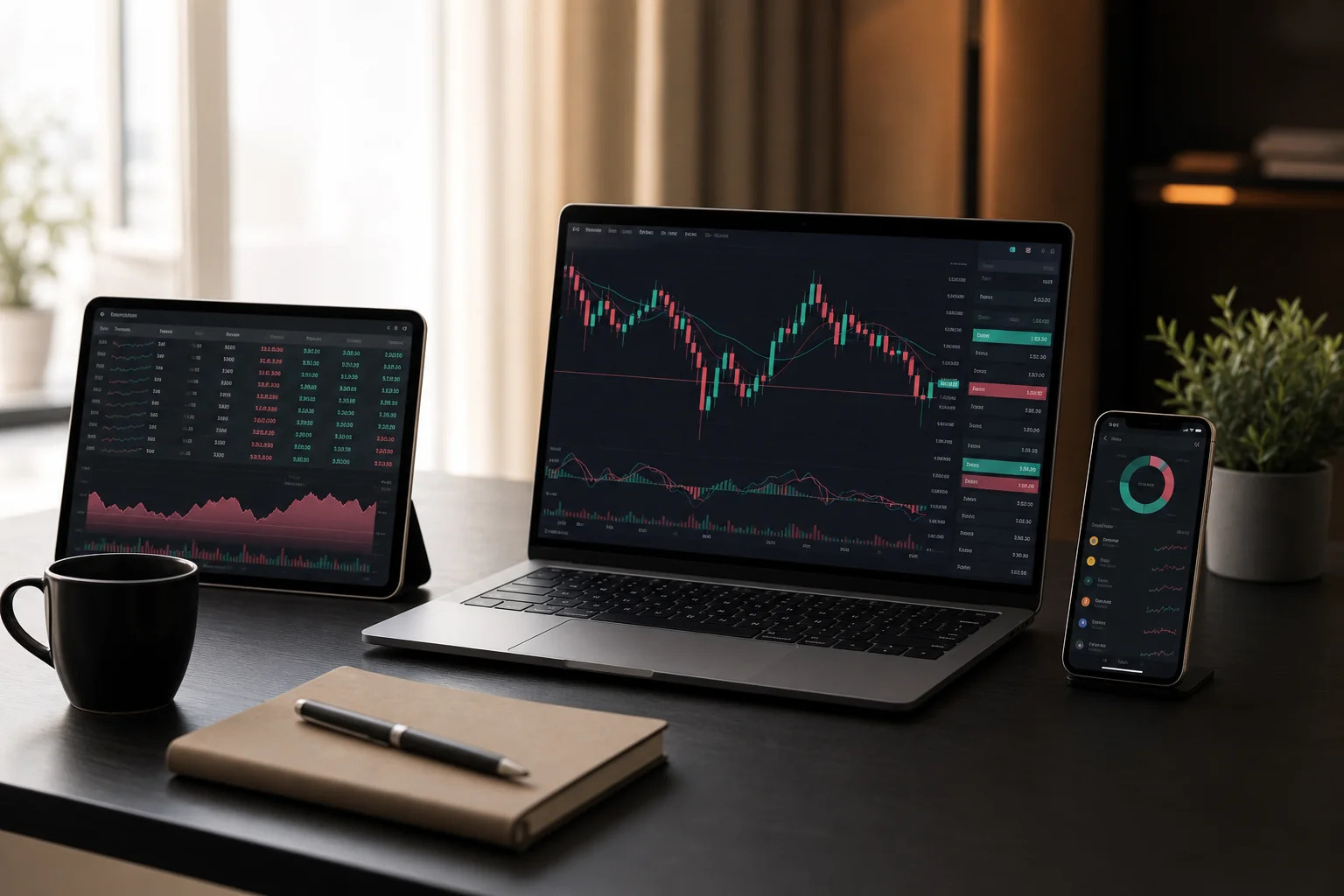
Confirm the trader's room can support:
- Multi-asset account structures, letting a single client manage forex, equities, and commodities positions without separate logins.
- Copy trading and PAMM/MAM visibility, so clients can view managed account performance and allocation directly in their dashboard.
- Cross-platform single sign-on across web, desktop, and mobile trading apps, since clients switch devices constantly.
Building this in from the start costs less than retrofitting it once your brokerage has already scaled past forex-only offerings. If multi-asset support is even a possibility for your business in the next two to three years, raise it during the initial vendor scoping call, not after launch.
7. Customization and White-Label Branding Flexibility
Vendor lock-in is one of the quietest ways brokers lose leverage. A trader's room should let you fully rebrand the interface, adjust workflows to match your operational process, and integrate new tools as your business evolves, without needing the original vendor for every change.
Before signing, get clear answers on:
- Whether you'll have API access to build future integrations independently.
- Whether the architecture is modular, allowing features to be added without touching the entire codebase.
- Who owns the source code and intellectual property once development is complete.
Custom forex software built with a modular structure protects you from having to start over every time your business needs change. It's a much better long-term position than being tied to one vendor's roadmap and pricing decisions indefinitely.
Must-Have Trader's Room Features: Quick Comparison Table
Not all trader's room builds are created equal. Here's how a typical off-the-shelf template compares against a custom-built solution and an enterprise-grade build like the ones Alpharive delivers for growing brokerages.
Feature Area | Off-the-Shelf Template | Custom-Built Trader's Room | Enterprise Custom Build (Alpharive-Style) |
|---|---|---|---|
KYC/AML Workflow | Basic single-provider check | Configurable tiers, one or two providers | Multi-provider, tiered, full audit trail |
Multi-Currency Wallets | Limited to 1-2 currencies | Fiat + select crypto support | Full fiat/crypto wallet with live FX conversion |
Reporting & Analytics | Static reports, manual export | Real-time dashboards, basic exports | Live MT4/MT5 sync, compliance-ready exports |
IB/Affiliate Management | Single-level commissions only | Multi-level, manual payout | Multi-tier, automated payout scheduling |
Security | Basic 2FA, shared hosting | 2FA, role-based access | 2FA, RBAC, encryption, penetration testing |
Multi-Asset Support | Forex only | Forex + limited crypto | Forex, stocks, commodities, crypto in one room |
Customization & Ownership | No source code access | Partial ownership, vendor dependency | Full source code ownership, modular API access |
The gap between the first and last column is exactly where brokers get burned. A template looks cheaper up front but costs more in lost clients, manual workarounds, and eventual rebuild fees. This is the same pattern seen when evaluating forex CRM software more broadly, where feature depth matters more than the initial quote.
Questions to Ask a Vendor Before You Sign
Use this list during vendor calls to separate genuine capability from marketing language:
- How long has the KYC module been in production, and which verification providers does it currently integrate with?
- Can we see a live demo of multi-currency wallet reconciliation, not just a mockup?
- What's the average development timeline for adding a new payment gateway after launch?
- Who owns the source code once the project is delivered, and is that documented in the contract?
- What's the support SLA for critical issues, like a broken withdrawal flow during business hours?
- Has the platform undergone independent security testing, and can we review a summary of results?
- Can the trader's room support additional asset classes later without a full rebuild?
Any vendor confident in their build will answer these directly. Vague answers, especially around source code ownership and security testing, are the clearest red flag you'll get before signing anything.
Frequently Asked Questions
What is a trader's room in forex CRM software?
A trader's room is the client-facing portal within a forex CRM where traders manage their accounts. It typically includes KYC verification, deposit and withdrawal tools, trade history, reporting, and often IB or affiliate tracking for referral commissions.
How long does custom trader's room development take?
Timelines vary based on scope, but a custom trader's room with KYC, multi-currency wallets, and reporting typically takes several months from discovery through deployment. Modular builds can sometimes launch core features faster, with additional modules added in phases.
Can a trader's room support multi-asset brokers, not just forex?
Yes, when architected correctly. A multi-asset broker platform can let clients manage forex, stocks, commodities, and crypto positions from a single trader's room login, which is increasingly expected as brokerages diversify beyond forex-only offerings.
Do I own the source code with a custom build?
This depends entirely on the contract. Source code ownership should be confirmed in writing before development begins. Brokers who skip this step often find themselves dependent on a single vendor indefinitely, with no ability to switch providers or self-manage the platform later.
Building a Trader's Room That Won't Need a Rebuild in a Year
The brokers who avoid painful vendor switches are the ones who ask hard questions before signing, not after launch. A trader's room with weak KYC workflows, single-currency wallets, or static reporting will slow your growth no matter how polished the sales demo looked. Every feature covered here, from tiered verification to multi-tier IB commissions to full source code ownership, exists because brokers before you learned these lessons the expensive way.
Alpharive builds custom trader's room solutions, forex CRM systems, and broker platforms designed around this exact checklist, with full source code ownership, modular architecture, and support for brokers operating across the US, UK, Canada, Australia, Saudi Arabia, and beyond. If you're evaluating vendors for a new build or planning to replace a trader's room that's holding your brokerage back, contact us to discuss your requirements. We'll review your brokerage's needs and recommend the right architecture for your business. The right vendor conversation today can save you an expensive rebuild tomorrow...