The global forex market now processes trillions in daily trading volume, and a significant share of client acquisition comes through IBs and affiliates. Yet many brokers still rely on manual systems or rigid tools that fail to keep up with growing partner networks. This gap creates delays, errors in commission payouts, and missed opportunities to scale efficiently.
An IB & affiliate automation system for forex brings structure, accuracy, and real-time visibility into partner operations. From multi-tier commission tracking to automated rebates and seamless CRM integration, it transforms how brokers manage relationships and drive growth. In this guide, we’ll walk through how these systems work, what features matter, and how custom-built solutions give brokers complete control over their partner ecosystem.
What Is an IB & Affiliate Automation System in Forex?
An IB & affiliate automation system in forex is a specialized software solution that manages and automates every aspect of a broker’s partner ecosystem. It handles onboarding, tracks referrals, calculates multi-level commissions, distributes rebates, and provides real-time performance insights through dedicated dashboards. Unlike traditional tools, it connects directly with trading platforms and Forex CRM Software systems to ensure every client action is accurately captured and rewarded.
In a market where partner networks drive a large share of revenue, relying on manual tracking or disconnected systems often leads to errors and delays. Automation brings consistency, transparency, and scalability into the process, allowing brokers to manage complex IB hierarchies without operational strain. As partner expectations continue to rise, having a centralized system becomes essential for maintaining trust and staying competitive.
Introducing Brokers (IBs) vs Affiliates
Introducing Brokers and affiliates both play a role in client acquisition, but their approach and incentives differ significantly. IBs typically build long-term relationships with traders and earn ongoing commissions based on trading activity, making them deeply invested in client performance. Affiliates, on the other hand, focus on driving traffic and conversions, usually earning a one-time payout when a user signs up and funds an account.
This difference impacts how brokers structure their systems and payouts. IB relationships require continuous tracking, multi-tier commission logic, and long-term attribution, while affiliate programs focus more on conversion tracking and campaign performance. A well-designed automation system supports both models within a single framework, ensuring flexibility without operational complexity.
Why Manual IB Management Is Killing Broker Profitability in 2026
Manual IB management is becoming a major bottleneck for brokers aiming to scale in 2026. Handling commissions through spreadsheets or fragmented tools increases the risk of calculation errors, delayed payouts, and disputes with partners. Even small inaccuracies can damage trust, especially when IBs rely on consistent earnings from active trading volumes.
As networks grow across regions and tiers, manual processes simply cannot keep up with the volume and complexity. Teams spend more time reconciling data than focusing on growth, which slows down expansion efforts. Automation eliminates these inefficiencies by ensuring every trade, referral, and commission is tracked and processed instantly, creating a smoother and more reliable partner experience.
The $9.6 Trillion Opportunity: How Automation Unlocks Scale
With the forex market handling over $9.6 trillion in daily volume, the opportunity for brokers to expand through IB and affiliate channels is massive. However, tapping into this scale requires infrastructure that can handle high transaction volumes, complex commission models, and global partner networks without breaking down.
Automation acts as the backbone that enables this growth. It allows brokers to onboard more partners, manage deeper commission structures, and operate across multiple regions without increasing operational overhead. By removing manual limitations, brokers can focus on building stronger partnerships and expanding into new markets with confidence.
Core Features of a Robust IB & Affiliate Automation System
A robust IB & affiliate automation system defines how efficiently a forex broker can scale partner operations without increasing manual workload. It goes beyond basic tracking and focuses on building a connected ecosystem where every trade, referral, and commission is processed in real time. The strength of such a system lies in its ability to handle complexity while still offering clarity to both brokers and partners.
At the same time, modern brokerages require systems that are flexible enough to adapt to unique business models. Whether it's supporting different commission structures or integrating with multiple trading platforms, the feature set must align with long-term growth. A well-built system does not just automate tasks it creates a reliable foundation for expanding IB networks globally.
Multi-Tier IB Commission Engine (Unlimited Levels)
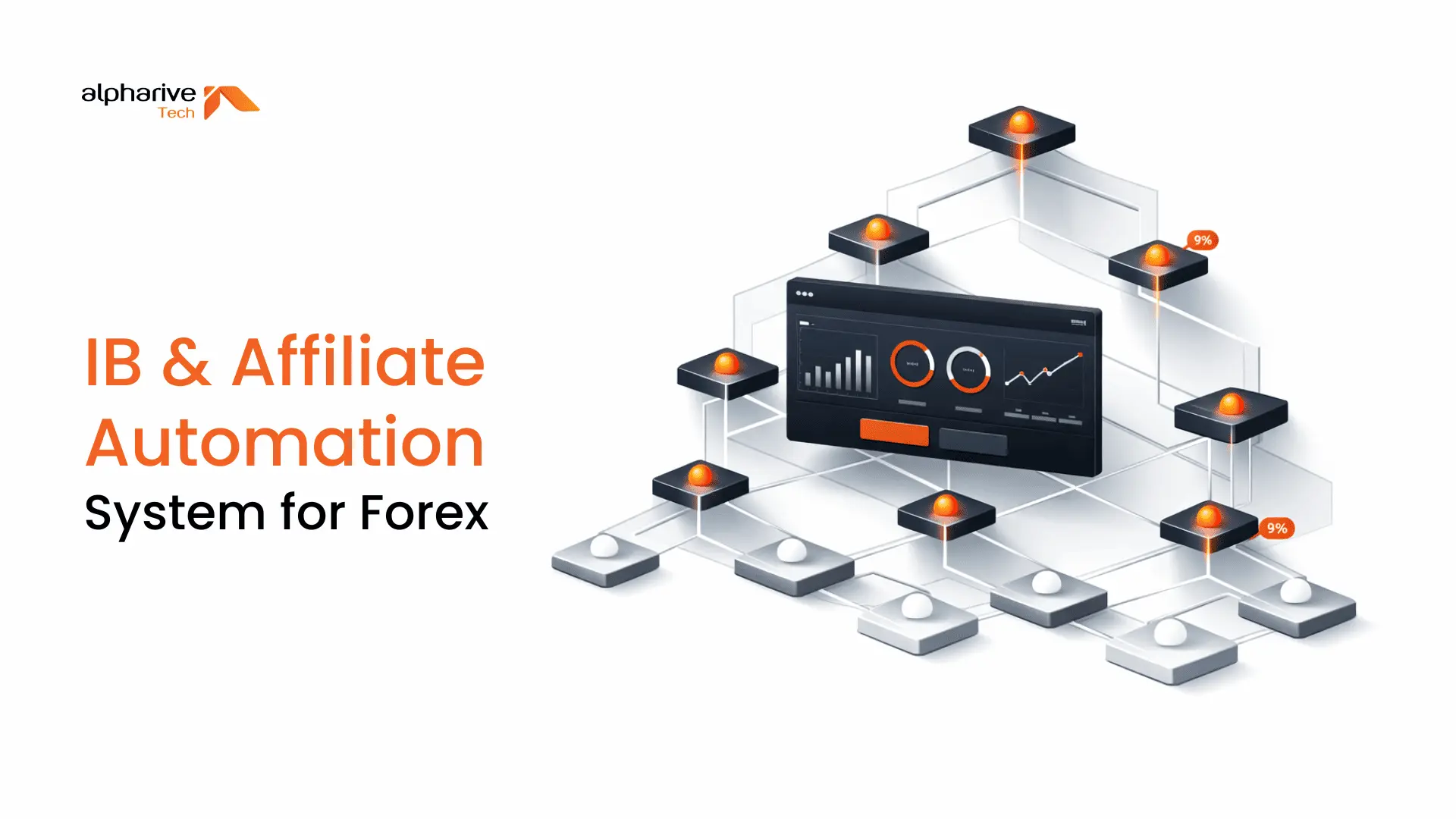
The commission engine sits at the core of the system, managing how earnings are distributed across different levels of IB hierarchies. It supports unlimited tiers, allowing master IBs to earn from sub-IBs while maintaining accurate tracking of every client trade within the network.
This structure is essential for brokers working with large partner ecosystems where multiple layers of referrals exist. With configurable rules, volume thresholds, and dynamic rates, the system ensures that commissions are calculated correctly without manual intervention, even as the network grows.
Automated Rebate Calculation Tied to Real-Time Trading Volumes
Automated rebate calculation ensures that commissions are generated instantly based on live trading activity. As soon as a referred client executes a trade, the system calculates the rebate using predefined rules and assigns it to the respective IB account.
This real-time processing removes delays and eliminates the need for manual reconciliation. It also builds transparency, as partners can view their earnings immediately, strengthening trust and reducing the chances of disputes over payouts.
CPA, RevShare, and Hybrid Commission Models
A flexible system supports multiple commission models, including CPA, revenue share, and hybrid structures. This allows brokers to work with different types of partners, from digital marketers to long-term IBs, without needing separate systems.
Each model can be configured based on business needs, enabling brokers to offer competitive and customized deals. This flexibility makes it easier to attract high-value partners while maintaining control over overall commission costs.
Dedicated IB Portal with Live Dashboards and Performance Reports
A dedicated IB portal gives partners direct access to their performance data through intuitive dashboards. It displays key metrics such as referrals, trading volumes, earnings, and payout history in real time.
Having this visibility empowers IBs to track their growth and optimize their strategies. For brokers, it reduces support queries and improves overall partner satisfaction by providing a transparent and self-service environment.
Fraud Detection, Permission Controls, and Abuse Prevention
Security features within the system help protect brokers from fraudulent activities and misuse of commission structures. Built-in validation checks, traffic monitoring, and permission controls ensure that only genuine trading activity is rewarded.
These safeguards are especially important in large networks where tracking every action manually is not feasible. By automating fraud detection and enforcing strict controls, the system maintains integrity across the entire partner ecosystem.
MT4 / MT5 / cTrader Integration for Seamless Data Sync
Integration with trading platforms like MT4, MT5, and cTrader allows the system to capture trading data directly from the source. Every trade executed by a referred client is instantly linked to the corresponding IB, ensuring accurate commission calculations.
This seamless data flow eliminates dependency on manual imports or delayed updates. It also ensures consistency across all systems, enabling brokers to maintain real-time accuracy in reporting, payouts, and performance tracking.
Build vs Buy: Why Custom IB Automation Outperforms SaaS Platforms
Build vs buy decisions for IB & affiliate automation systems often determine how far a forex broker can scale without operational friction. While SaaS platforms offer quick setup and lower upfront costs, they come with limitations that become more visible as partner networks grow. Brokers aiming for flexibility and long-term control often find themselves constrained by pre-built systems.
On the other hand, custom-built solutions are designed around specific business models, allowing brokers to shape commission structures, integrations, and workflows without compromise. This shift from dependency to ownership plays a key role in building a scalable and competitive partner ecosystem in today’s market.
The Hidden Costs of Off-the-Shelf IB Software
Off-the-shelf IB software may seem cost-effective initially, but hidden limitations start to surface as operations expand. Fixed commission logic, limited customization, and dependency on vendor updates can restrict how brokers structure their partner programs.
Over time, additional costs such as licensing fees, feature upgrades, and integration limitations begin to add up. More importantly, the inability to adapt quickly to new business requirements can slow down growth and reduce competitiveness in dynamic markets.
How Custom Development Gives You Full White-Label Control
Custom development allows brokers to build a system that fully aligns with their brand, operations, and long-term vision. From commission structures to user interfaces, every element can be tailored to match specific business requirements without relying on third-party constraints.
This level of control extends to data ownership, integrations, and scalability. Brokers can seamlessly connect with preferred CRMs, trading platforms, and payment systems while maintaining full authority over their infrastructure, creating a more cohesive and future-ready ecosystem.
When Should a Forex Broker Invest in a Custom System?
Deciding when to invest in a custom IB automation system depends on the scale and complexity of the broker’s operations. As partner networks grow beyond basic structures, the need for flexibility, automation, and advanced tracking becomes more critical.
Brokers managing multiple IB tiers, operating across regions, or offering unique commission models often reach a point where SaaS solutions no longer meet their needs. At this stage, investing in a custom system becomes a strategic move toward building a stronger, more adaptable foundation for growth.
How Alpharive Builds IB & Affiliate Automation Systems
Our custom Forex development services follow a structured approach that aligns technology with a broker’s business model. Each stage focuses on building a system that is scalable, accurate, and fully integrated with trading and operational infrastructure. The goal is not just to develop software, but to create a system that supports long-term partner growth.
At the same time, successful implementation depends on careful planning, the right technology stack, and seamless integrations. This ensures that the system performs reliably under high trading volumes while maintaining flexibility for future expansion and regulatory requirements.
Successful implementation depends on the right technology partner. As a Forex CRM provider, Alpharive can help brokers connect CRM systems with trading platforms, payment gateways, and IB automation workflows.
Our Development Process: From Requirements to Go-Live
The development journey begins with understanding the broker’s business model, commission structures, and integration needs. This stage involves mapping workflows, identifying technical requirements, and defining how the system will interact with existing platforms.
Once the foundation is clear, the process moves into design, development, integration, and testing. Each phase is executed with precision to ensure that the final system operates smoothly, handles complex commission logic, and is ready for real-world trading environments from day one.
Technology Stack: What Powers a Scalable IB System
A strong technology stack forms the backbone of a scalable IB automation system. Backend technologies handle high-volume data processing, while databases ensure accurate storage of commission records and trading activity.
Modern frontend frameworks create responsive dashboards and portals, giving both brokers and IBs a seamless user experience. Security layers, including encryption and role-based access, protect sensitive financial data while maintaining compliance with global standards.
Integrations We Build: CRM, Trading Platforms, Payment Gateways
Integrations play a critical role in ensuring that all systems work together without friction. A well-connected IB automation system links directly with mt5 CRM or any CRM platforms, trading systems, and payment gateways to create a unified flow of data.
This connectivity allows real-time tracking of client activity, automated commission calculations, and smooth payout processing. It also reduces operational silos, enabling brokers to manage their entire ecosystem from a single interface.
Post-Launch: Ongoing Support, Upgrades, and Compliance Monitoring
After deployment, continuous support ensures that the system remains stable and up to date with evolving business and regulatory needs. Regular monitoring helps identify performance issues, security risks, and opportunities for improvement.
Ongoing upgrades allow brokers to introduce new features, refine commission models, and adapt to market changes without disruption. This long-term support ensures that the system continues to deliver value as the business grows and evolves.
Multi-Level IB Commission Structures: Models and Best Practices
Multi-level IB commission structures define how earnings are distributed across different layers of a broker’s partner network. These structures are essential for supporting hierarchical relationships where master IBs, sub-IBs, and affiliates all contribute to client acquisition. A well-designed model ensures that every participant is rewarded fairly based on their role and performance.
At the same time, choosing the right commission structure directly impacts partner motivation and long-term retention. Brokers need to balance profitability with attractive payouts, ensuring that top-performing IBs stay engaged while maintaining sustainable margins across the network.
Per-Lot Rebate Model: Fixed $ Per Lot Traded
The per-lot rebate model is one of the most commonly used structures in forex IB programs. In this model, IBs earn a fixed amount for every lot traded by their referred clients, creating a direct link between trading activity and earnings.
This approach is simple, transparent, and easy to track, making it highly attractive for active IBs who focus on long-term client engagement. It also allows brokers to predict commission costs more accurately based on trading volumes.
Revenue Share (RevShare): % of Spread Per Trade
Revenue share models reward IBs with a percentage of the spread generated from each trade executed by their referred clients. This creates a performance-driven structure where earnings grow alongside trading activity.
Such models are ideal for long-term partnerships, as IBs are incentivized to bring in high-quality traders who remain active over time. It aligns the interests of both brokers and partners, encouraging sustainable growth.
CPA Model: One-Time Fixed Payout Per Funded Account
The CPA model offers a one-time fixed payout to affiliates when a referred client opens and funds an account. This structure is widely used in affiliate marketing campaigns focused on quick client acquisition.
While it provides immediate results, it does not create long-term engagement between the broker and the partner. Brokers often use CPA models alongside other structures to balance short-term acquisition with long-term value.
Hybrid CPA + Rebate: The High-Value Partner Model
Hybrid models combine the benefits of CPA and rebate structures, offering an upfront payout along with ongoing earnings based on trading activity. This makes it one of the most attractive options for high-value partners.
By blending immediate rewards with long-term incentives, brokers can attract experienced IBs who are willing to invest in building strong client relationships. It also provides flexibility in structuring deals for different partner segments.
How to Set Commission Tiers That Retain Top IBs
Setting effective commission tiers requires a strategic approach that considers partner performance, trading volumes, and long-term engagement. Tiered structures allow IBs to unlock higher earnings as they bring in more active traders or generate higher volumes.
This not only motivates partners to scale their efforts but also creates a sense of progression within the network. When designed correctly, commission tiers can significantly improve retention and encourage consistent performance from top IBs.
Global Compliance and Regulatory Considerations for IB Systems
Global compliance and regulatory considerations for IB systems play a critical role in how forex brokers design and operate their partner networks. Each region has its own legal framework governing IB activities, commission structures, and client onboarding processes. A well-built system must be capable of adapting to these varying requirements without disrupting operations.
As brokers expand into multiple markets, maintaining compliance becomes more complex. From licensing requirements to data protection laws, every aspect of the IB lifecycle must be monitored and recorded accurately. Automation helps ensure that compliance is not treated as an afterthought but embedded into the system from the start.
Measuring the ROI of an IB & Affiliate Automation System
Measuring the ROI of an IB & affiliate automation system helps brokers understand how effectively their partner network contributes to growth and profitability. It goes beyond tracking commissions and focuses on evaluating performance across acquisition, engagement, and long-term revenue generation. A well-implemented system provides clear visibility into these metrics, making it easier to make informed decisions.
In addition, automation reduces operational inefficiencies that often go unnoticed in manual setups. By minimizing errors, speeding up payouts, and improving partner transparency, brokers can see both direct and indirect returns. This makes ROI not just a financial measure, but a reflection of overall system efficiency and partner satisfaction.
Key Metrics Every Broker Should Track in Their IB Dashboard
Tracking the right metrics is essential for understanding how each IB contributes to business growth. Metrics such as client referrals, funded account conversions, trading volume, and partner retention provide a clear picture of performance.
These insights help brokers identify top-performing IBs and optimize their strategies accordingly. With real-time dashboards, decision-making becomes faster and more data-driven, allowing brokers to refine their partner programs continuously.
How Automation Reduces Commission Disputes by 80%+
Commission disputes are one of the most common challenges in IB management, often caused by calculation errors or lack of transparency. Automation eliminates these issues by ensuring that every commission is calculated accurately based on predefined rules.
With real-time tracking and instant reporting, partners can verify their earnings without relying on manual updates. This transparency builds trust and significantly reduces conflicts, creating a more stable and reliable partner ecosystem.
Alpharive - Your Partner in Forex Platform Development
Alpharive software solutions help brokers build powerful, scalable, and fully customized IB & affiliate automation systems. With deep expertise in fintech and trading infrastructure, every solution is designed to align with real business models, not generic templates. This approach allows brokers to operate with greater flexibility, control, and long-term confidence.
From complex commission engines to seamless platform integrations, the focus remains on delivering systems that perform reliably under real market conditions. Every project is built with scalability, compliance, and user experience in mind, ensuring that both brokers and their partners benefit from a smooth and transparent ecosystem.
Choosing the right development partner can define how effectively a brokerage grows in competitive markets. With a strong understanding of global forex operations and modern technology, Alpharive helps transform ideas into systems that truly support expansion. Build your solution with us.